
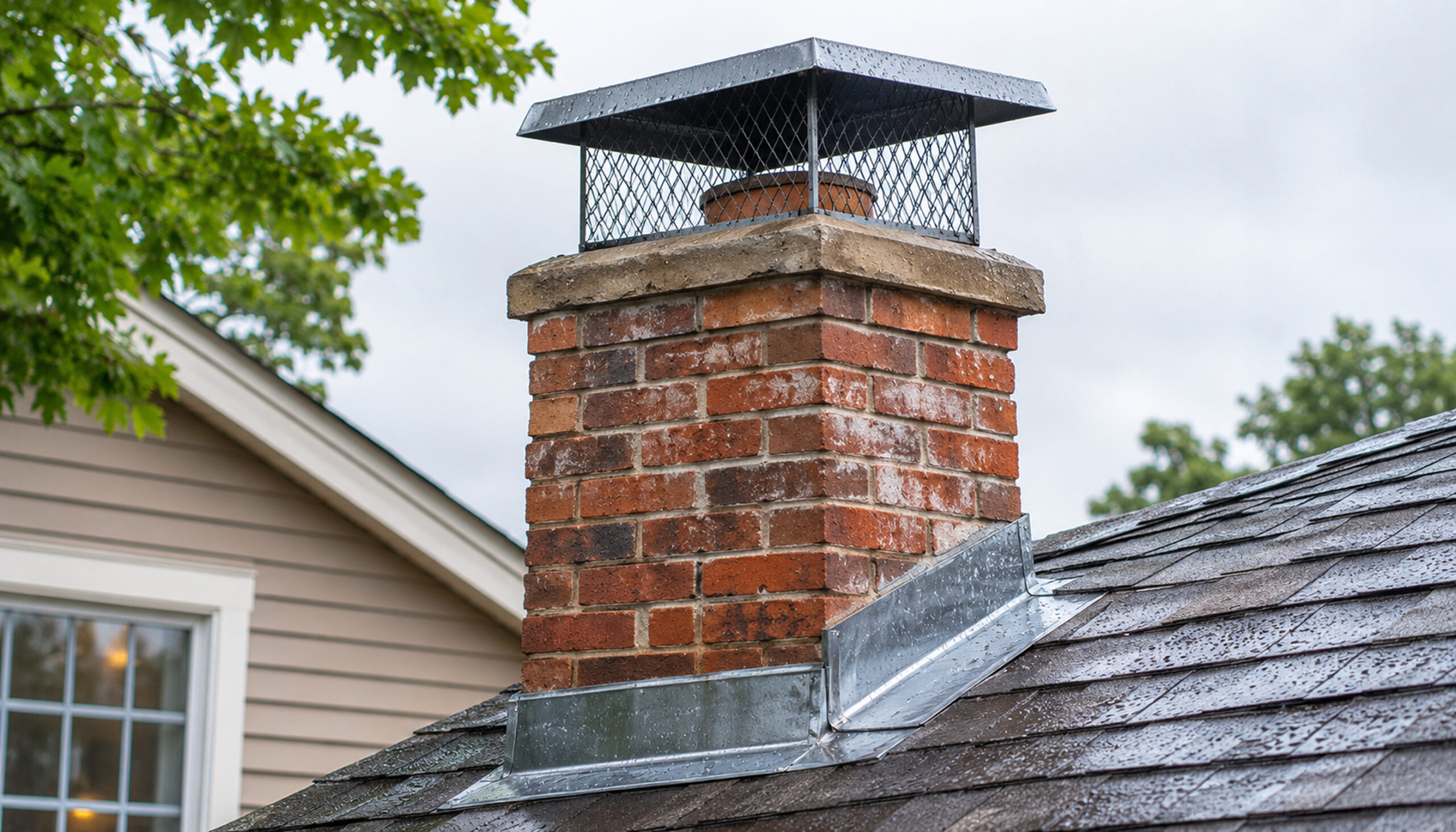
A chimney flashing leak and a problem with the chimney cap can both lead to moisture indoors, but they involve different parts of the system. Flashing protects the roof-to-chimney connection. A rain cap covers the flue opening while allowing exhaust to escape.
The location of a stain can provide a clue, but it cannot confirm where the water entered. Before choosing a repair, the affected areas need examination.
When arranging chimney cleaning in New York, mention any dripping, damp patches, or staining separately. Routine sweeping does not necessarily include investigating a roof or chimney leak.
What Is Chimney Flashing?
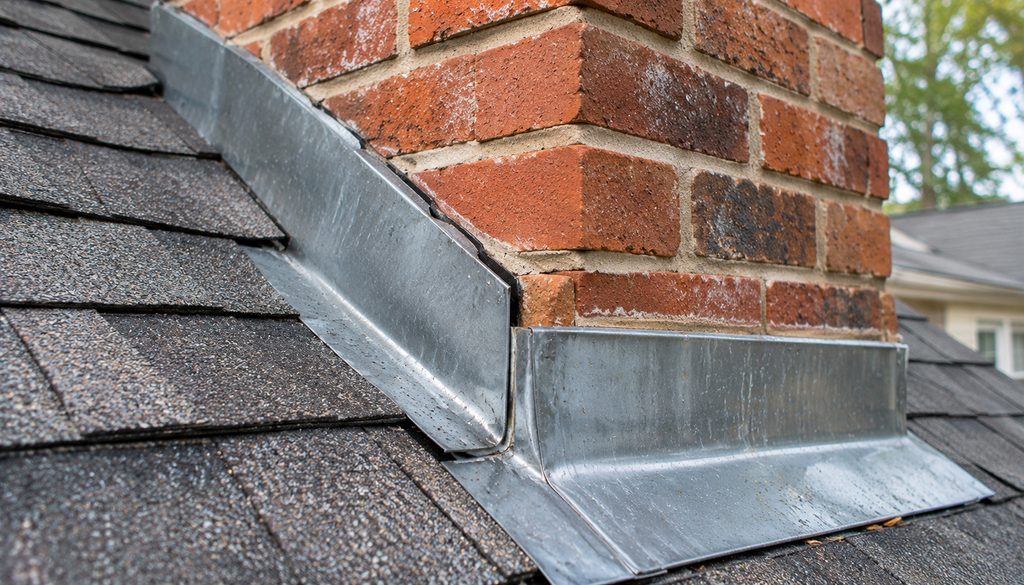
Flashing is the water-management detail where the chimney passes through the roof. Its arrangement depends on the roofing material, chimney construction, and roof shape.
On many sloped roofs, several overlapping metal components work together to direct water onto the roof surface and away from the joint. Counterflashing protects the upper edges of the roof flashing.
The Brick Industry Association explains that a chimney’s roof penetration needs proper flashing to prevent water entering the building.
A problem here may involve damaged metal, failed joints, unsuitable detailing, or a poor connection with the surrounding roofing. A bead of sealant cannot automatically correct every flashing defect.
What Does a Chimney Cap Protect?
In this guide, “chimney cap” means the rain cap above the flue opening.
It helps limit direct rain entry while allowing the connected fireplace or appliance to vent. The correct design depends on the chimney system.
The cap is separate from:
- The crown: the protective top surface of a masonry chimney.
- The chase cover: the cover over a framed chimney enclosure.
- The roof flashing: the detail around the chimney’s roof penetration.
These terms sometimes get used interchangeably in conversation. Ask a contractor to identify the exact component when explaining a defect or quotation.
How Do Flashing and Cap Problems Differ?
| Component | Location | Main area protected |
| Roof flashing | Where the chimney meets the roof | The roof penetration and surrounding building |
| Rain cap | Above the flue opening | The open flue |
| Masonry crown | Across the top of a masonry chimney | The masonry beneath it |
| Chase cover | Over a framed chimney enclosure | The enclosure around the chimney system |
Replacing one component does not repair a defect in another.
For example, a new rain cap will not restore damaged roof flashing. New flashing will not repair an opening in the crown higher up the chimney.
Can You Identify the Source From the Water Stain?
A stain is useful evidence, but water can travel before becoming visible.
Dampness near the chimney at ceiling level may prompt examination of the roof connection. Water inside the fireplace may prompt examination of the chimney top and interior. Neither observation proves a single cause.
Moisture can also enter higher in masonry and travel behind apparently sound flashing. IIBEC describes how water moving through brickwork can bypass inadequate counterflashing details and affect the surrounding building.
The investigation should therefore consider the whole affected area rather than focusing only on the nearest visible defect.
What Should You Record Before Booking an Inspection?
You can provide useful information without climbing onto the roof.
From safely accessible indoor areas, note:
- Where moisture first becomes visible.
- Whether it appears during rain or afterward.
- Whether wind direction seems to affect it.
- Whether the fireplace, ceiling, or nearby wall becomes wet.
- Whether the problem started after roofing or chimney work.
- Whether previous repairs changed the symptoms.
Take dated photographs and keep any earlier repair invoices.
Do not enter unsafe attic spaces, lean out of windows, or attempt a roof inspection yourself. In a rented or managed property, notify the landlord or building manager.
Latest Blog: Pieces of Tile Falling Into Your Fireplace?
If you have also noticed fragments inside the fireplace, read Pieces of Tile Falling Into Your Fireplace? NYC Homeowner’s Guide.
That article explains why the material’s source needs identification before another fire. Falling fragments and a leak may require investigation together, but neither symptom establishes the cause of the other.
What Should a Professional Inspection Cover?
The inspection scope should reflect the symptoms and the building’s construction.
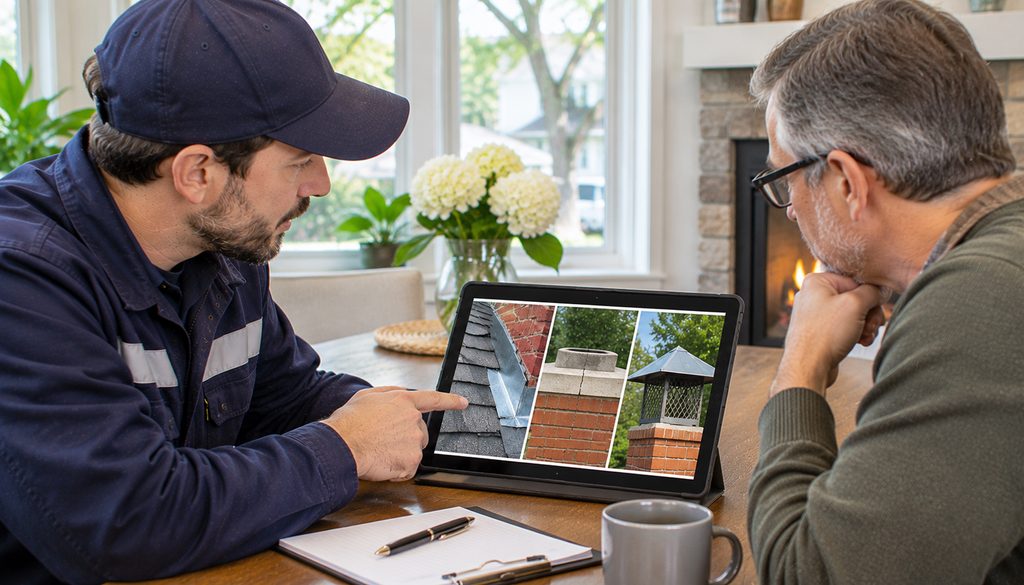
A chimney inspection in New York can help assess the chimney components and identify whether roofing expertise or further investigation is needed.
Ask the provider to explain:
- Which components were examined.
- What evidence indicates a likely entry point.
- Whether more than one defect was found.
- Which areas were inaccessible.
- Whether additional testing is necessary.
If a controlled water test is proposed, ask how it will isolate different areas and how the findings will be documented. Simply wetting the whole chimney may make the source harder to distinguish.
When Is Flashing Repair Appropriate?
Flashing work is appropriate when the investigation identifies a defect in the roof-to-chimney connection.
The proposed scope should explain whether the work involves a local repair or replacement of affected components. It should also address how those components connect with the roof covering and chimney.
When discussing chimney leak repair, ask who will handle any necessary roofing work. Some projects require coordination between chimney and roofing professionals.
Avoid assuming that applying more sealant over an old patch will provide a lasting repair. The underlying construction and condition matter.
When Does the Cap or Crown Need Attention?
A missing, damaged, or unsuitable rain cap may justify replacement. Crown deterioration may require a separate repair.
If the findings point to these areas, chimney crown and cap services should address the identified component rather than treating “the chimney top” as one interchangeable part.
Ask how the proposed cap suits the flue and whether it leaves the exhaust path unrestricted. A cap should not be selected only because its dimensions appear to fit.
Also ask whether masonry defects need attention before installation.
What If the Leak Continues After Repair?
Report the continuing symptoms and refer to the original findings and scope.
A recurring leak may require reassessment of the repaired area, another entry route, or a separate moisture source. It does not automatically mean the next step is replacing every chimney component.
Keep photographs of new moisture and record the weather conditions. Ask the provider to explain what the follow-up examination shows before agreeing to additional work.
Arrange an Assessment Before Choosing a Repair
Flashing, caps, crowns, and surrounding masonry protect different areas. Identifying the entry route helps match the work to the problem.
Contact Chimney Experts NY to discuss the moisture you have noticed. Share photographs, previous repair details, and whether the issue appears during rainfall.
Frequently Asked Questions
Will a new chimney cap stop a flashing leak?
No. A rain cap does not repair the roof-to-chimney connection. Flashing defects need their own assessment and repair.
Does a ceiling stain beside the chimney prove the flashing is faulty?
No. Water may travel from another location before appearing indoors. The stain helps guide the investigation but does not confirm the source.
Can both the flashing and cap have problems?
Yes. More than one component can be damaged. Ask the inspector to document each finding separately.
Should I call a roofer or a chimney professional?
Explain the symptoms when booking. Chimney components may need a chimney professional, while roof-system defects may require a roofer. Some repairs need both.
Is chimney waterproofing enough to stop every leak?
No. A surface treatment does not replace damaged flashing, repair every masonry defect, or correct an unsuitable cap. The work should follow the diagnosis.

Chimney Experts Cleaning & Repair
Lorem ipsum dolor sit ametLorem ipsum dolor sit amet, consectetur adipiscing elit, sed do eiusmod tempor incididunt ut labore et dolore magna aliqua.
See All Blog