
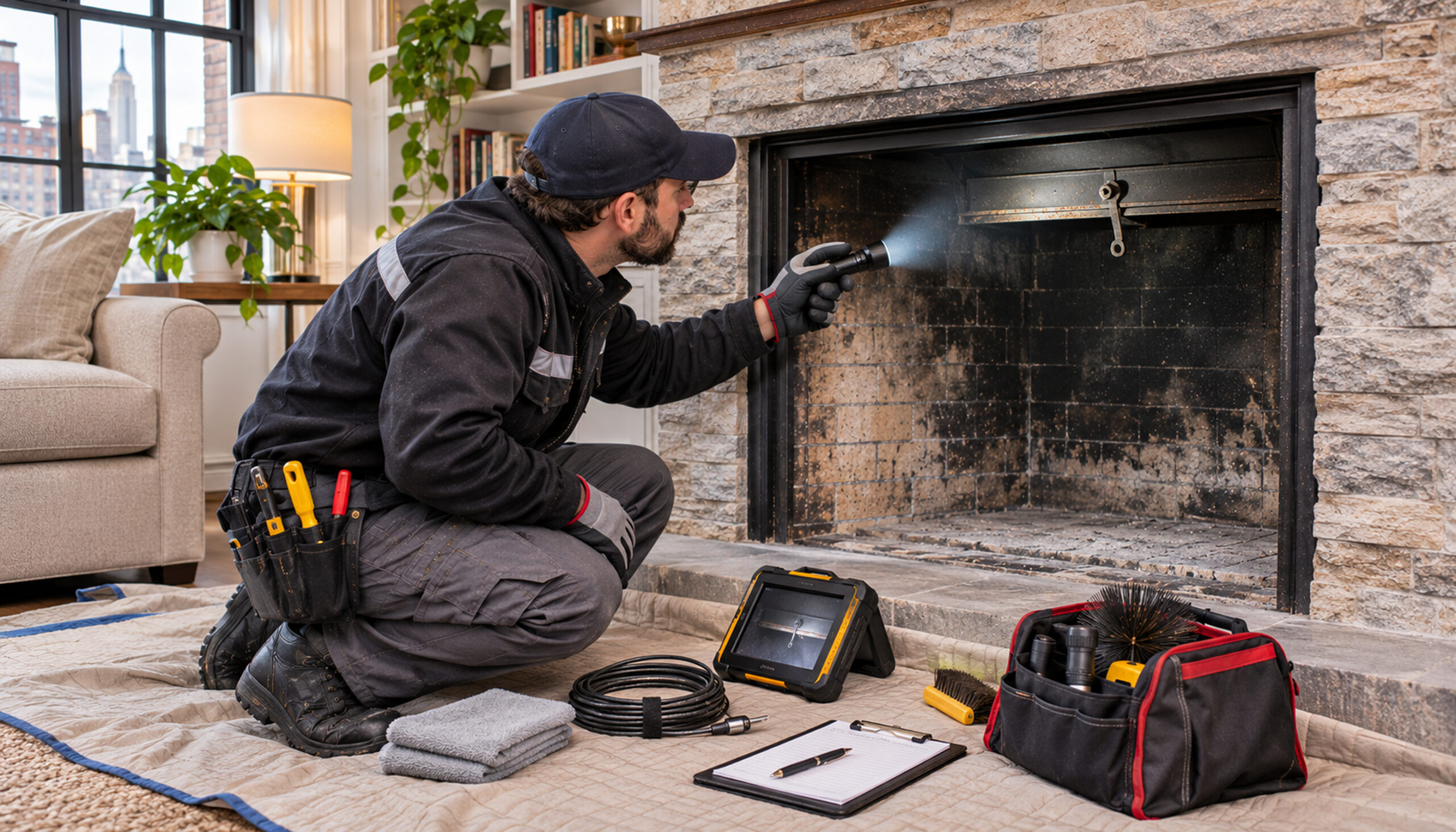
Rust in your fireplace can appear as orange marks, rough metal surfaces, or flakes collecting beneath the damper. Although the visible damage may seem small, its location and condition matter. A rusty removable grate raises different questions from corrosion affecting a built-in fireplace component.
Before scrubbing away the marks, find out which part is affected and whether moisture is still reaching it. Cleaning the surface alone may leave the underlying problem unresolved.
Homeowners arranging chimney cleaning in New York should mention rust, damp patches, or falling metal flakes when booking. This helps the technician understand what needs attention alongside routine cleaning.
Where Can Rust Appear in a Fireplace?
Rust affects iron-containing metal, so start by identifying the surface showing damage.
Possible locations include:
- The fireplace grate that supports the logs.
- The damper plate or its surrounding frame.
- Metal doors, hinges, or screens.
- An ash-dump door.
- Metal components inside a factory-built fireplace.
Orange staining on nearby brickwork may have washed off a corroding metal part. The stain alone does not identify its source.
Fireplace construction also matters. A masonry fireplace and a factory-built metal fireplace have different components and repair requirements. Replacement parts or treatments suitable for one should not automatically be used on the other.
Why Is There Rust in My Fireplace?
Rust develops when susceptible metal is exposed to moisture and oxygen. The important question is how that moisture reached the affected area.
Rainwater entering the chimney
A damaged chimney top, deteriorated masonry, or a problem around the roof connection may allow water into the system. An absent or damaged cap is another possibility, but rust alone does not prove that the cap caused it.
Notice whether dampness or new staining appears after rainfall. That information can help guide the investigation.
Condensation or persistent dampness
Moisture does not always come from a direct rain leak. Condensation or humid conditions may contribute, depending on the fireplace, chimney, and surrounding building.
A technician should assess the circumstances rather than assuming every rusty fireplace needs the same repair.
A wet or previously exposed accessory
A removable grate may have been stored somewhere damp or exposed to water during cleaning. Its corrosion could be separate from the condition of the chimney.
However, recurring rust after replacement deserves further investigation, especially if surrounding surfaces are also damp.
Is Fireplace Rust Only a Cosmetic Problem?
A discolored surface does not reveal how much sound metal remains underneath.
The assessment depends on the component, the extent of corrosion, and whether it still works correctly. CSIA inspection guidance includes checking fireplace components for deterioration and checking that movable accessories operate properly.
Light surface corrosion on a replaceable accessory may require a different response from:
- Metal that is thinning or developing holes.
- A damper that will not open fully.
- Loose or falling pieces.
- Distorted components.
- Repeated wetness around the fireplace.
Do not judge the whole system’s condition from a photograph or the color of one stain.
What Should You Check Before Booking a Visit?
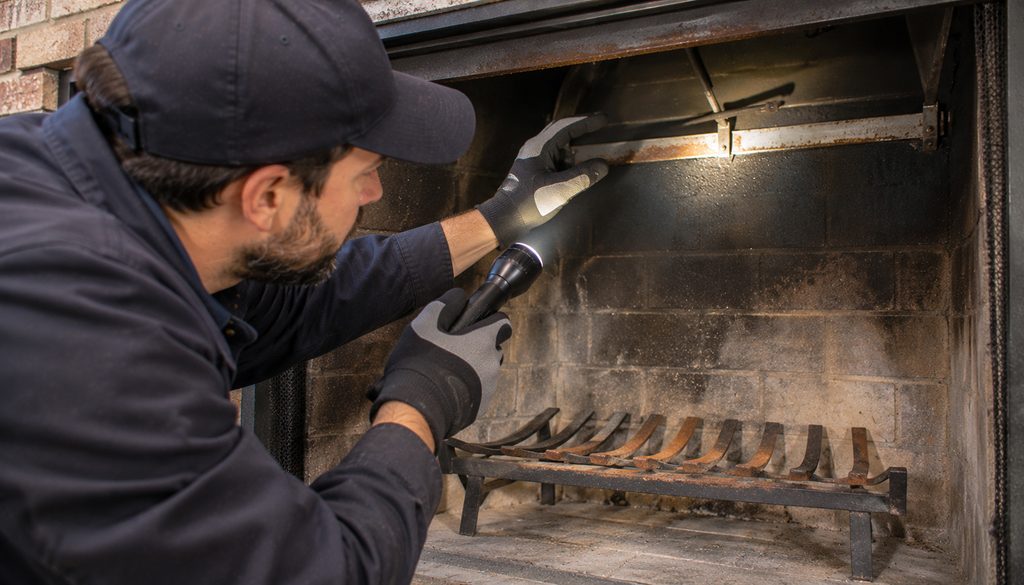
Keep observations simple and make them only when the fireplace is completely cold.
From the room, note:
- Where the rust appears.
- Whether the surface looks damp.
- Whether flakes collect on the fireplace floor.
- Whether the problem changes after rain.
- Whether the damper handle moves normally without force.
- Whether there are nearby stains or damaged surfaces.
Take clear photographs from outside the fireplace opening. Avoid reaching into the chimney, removing fixed components, or climbing onto the roof.
If you rent or live in a managed building, report the issue to the landlord or building manager before arranging alterations.
Latest Blog: Dust Coming From Your Air Vents?
Noticing dust around your heating vents as well? Read Dust Coming From Your Air Vents? What NYC Homeowners Should Check.
That guide explains what to observe around supply and return vents, how filters fit into the investigation, and when a professional assessment may be useful. Fireplace corrosion and dusty vents should be assessed as separate concerns.
When Should You Arrange a Chimney Inspection?
An inspection is useful when the source of moisture is unclear, rust keeps returning, or a built-in component appears damaged.
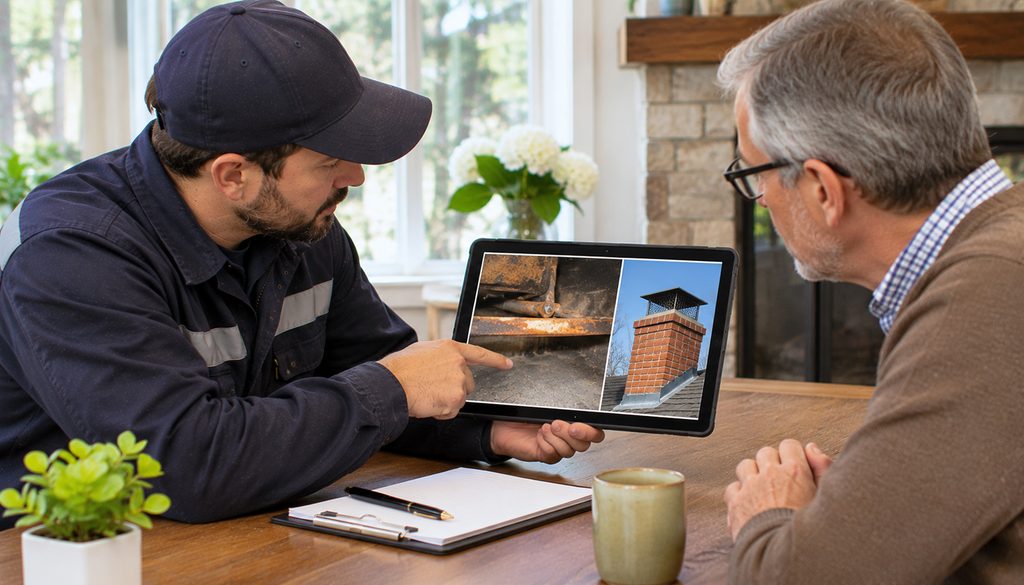
When booking a chimney inspection in New York, explain whether the fireplace is masonry or factory-built, if known. Share photographs and describe any connection with rainfall or recent changes.
Ask the technician to explain:
- Which component is affected.
- Whether the damage is superficial or affects its function.
- What evidence points to the moisture source.
- Whether additional inspection is needed.
- What repairs are necessary before further use.
The inspection scope should match the findings. A visible rusty grate does not automatically mean the entire chimney needs rebuilding.
What If the Damper Is Rusty or Stuck?
A damper controls the opening through which a traditional fireplace vents. Corrosion affecting its plate, frame, or moving parts needs attention if it prevents proper operation.
Do not force a resistant handle or light a fire to “loosen” the mechanism. If you cannot confirm that the damper opens fully, leave the fireplace unused until it has been assessed.
Depending on its condition and design, chimney damper repair or replacement may be appropriate. The technician should also investigate why the component became wet rather than treating replacement as the complete answer.
Can You Remove the Rust Yourself?
Avoid applying household rust removers, lubricants, sealants, or paint inside the fireplace without confirming that the manufacturer permits the product and application.
Factory-built fireplaces have specific components and instructions. Grinding, drilling, or substituting parts can affect the assembly.
For a removable accessory, follow its care instructions or ask whether replacement is more appropriate. For built-in parts, arrange an assessment before attempting treatment.
Do not light a fire to dry out unexplained water entry.
How Is the Underlying Problem Repaired?
The repair should follow the diagnosis. It might involve replacing a damaged accessory, repairing a damper, or addressing a confirmed route of water entry.
If inspection identifies exterior deterioration, chimney repair services can address the affected area. The proposed work should explain which defect was found and how the repair relates to it.
Avoid assuming that coating the outside of the chimney will solve every moisture problem. CSIA cautions against treatments that trap moisture within masonry.
Arrange an Assessment before Your Next Fire
Rust deserves a closer look when it affects fixed components, returns repeatedly, or appears alongside dampness and operating problems.
Contact Chimney Experts NY to discuss what you have noticed and arrange an appropriate assessment. Include photographs and mention whether the marks appeared after rain.
Frequently Asked Questions
Does rust in a fireplace always mean the chimney is leaking?
No. Rainwater is one possibility, but condensation, humid conditions, or a separately affected accessory may also contribute. The source needs investigation.
Can I use my fireplace if the grate is rusty?
Surface appearance alone cannot establish suitability for use. A weakened or damaged grate needs assessment or replacement, and surrounding fireplace components should also be considered.
Will replacing the chimney cap stop the rust?
Only if a cap defect is contributing to the moisture problem and the replacement addresses it. Other entry routes or condensation may require separate attention.
Should I paint over a rusty fireplace damper?
Do not apply paint without confirming that the product and application are permitted for that component. Painting does not repair weakened metal or restore a faulty mechanism.
Can chimney sweeping fix fireplace rust?
Sweeping removes deposits; it does not repair corroded metal or stop water entry. Cleaning, inspection, and repairs serve different purposes.

Chimney Experts Cleaning & Repair
Lorem ipsum dolor sit ametLorem ipsum dolor sit amet, consectetur adipiscing elit, sed do eiusmod tempor incididunt ut labore et dolore magna aliqua.
See All Blog