
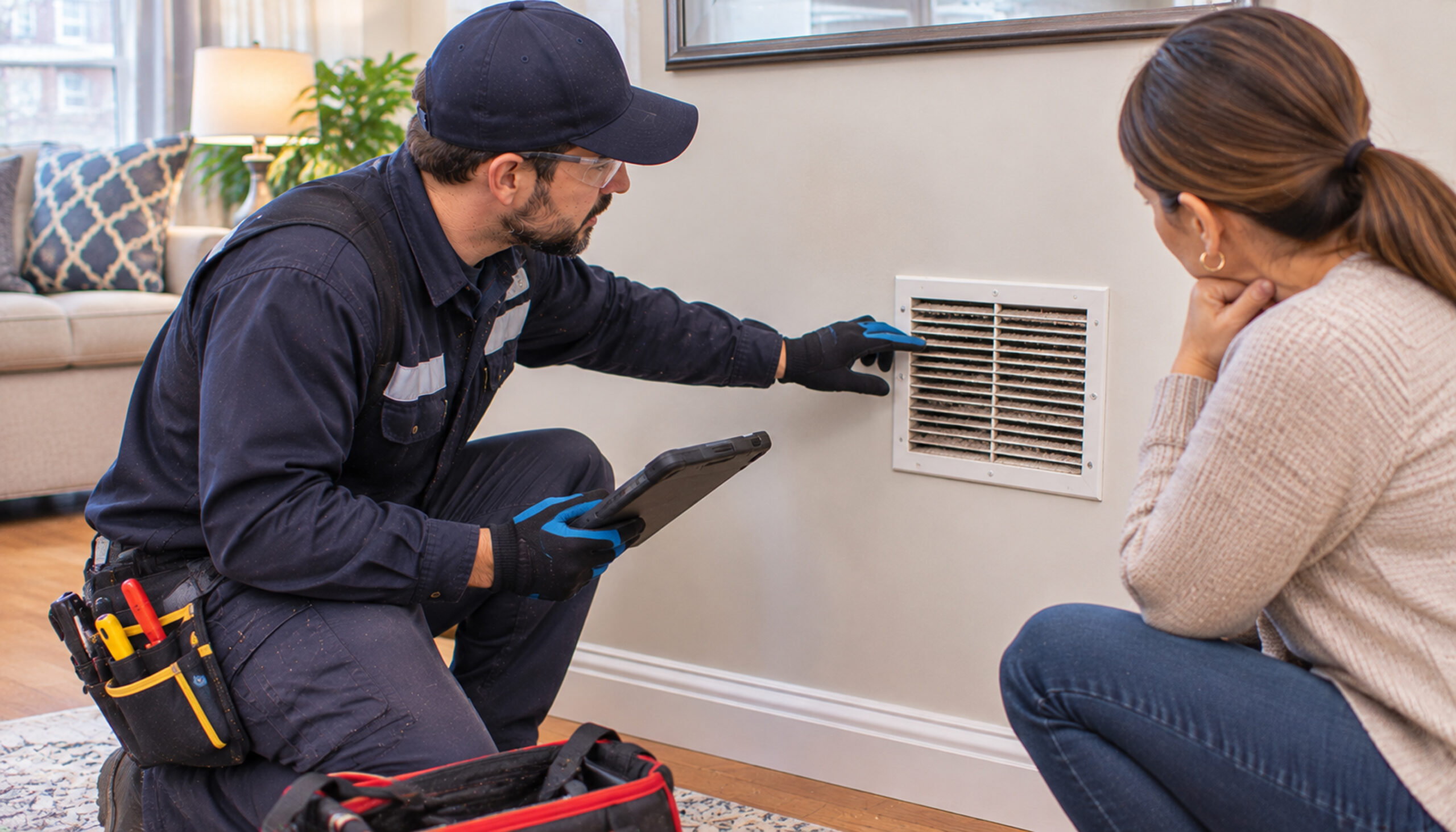
Dust coming from air vents can make homeowners wonder whether the ductwork needs cleaning. However, dust resting on a grille is different from particles visibly blowing into a room.
The first step is to describe what you are seeing. Is there a thin coating on the cover, recurring debris below one outlet, or particles released when the heating or cooling starts? These observations can guide an assessment without establishing the cause.
Homeowners who know Chimney Experts NY for chimney cleaning in New York can also ask about its air duct cleaning service. Explain that the concern involves household heating or cooling vents, rather than a chimney or dryer exhaust.
Is Dust on a Vent Cover Normal?
A return grille draws room air toward the heating or cooling system, so dust can collect on its surface.
That does not automatically mean the duct interior contains excessive contamination. EPA guidance distinguishes ordinary dusty registers from conditions that may justify professional duct cleaning.
Avoid choosing a whole-system cleaning solely because one cover looks dirty. Record what happens after the accessible surface is cleaned according to its care instructions.
Persistent particles emerging from a supply outlet deserve a different discussion from a dusty grille.
1. Identify Which Opening Is Involved
Supply outlets deliver conditioned air into rooms. Return openings carry room air back toward the system.
A dryer exhaust, bathroom extractor, kitchen exhaust, and fireplace opening serve different purposes. Dust near one does not establish a problem in another.
If you are unsure which system serves the opening, take a photograph and ask the professional or building management.
This article concerns ducted heating and cooling. Homes using radiators, ductless equipment, or other arrangements may need a different assessment.
2. Check the Filter Instructions
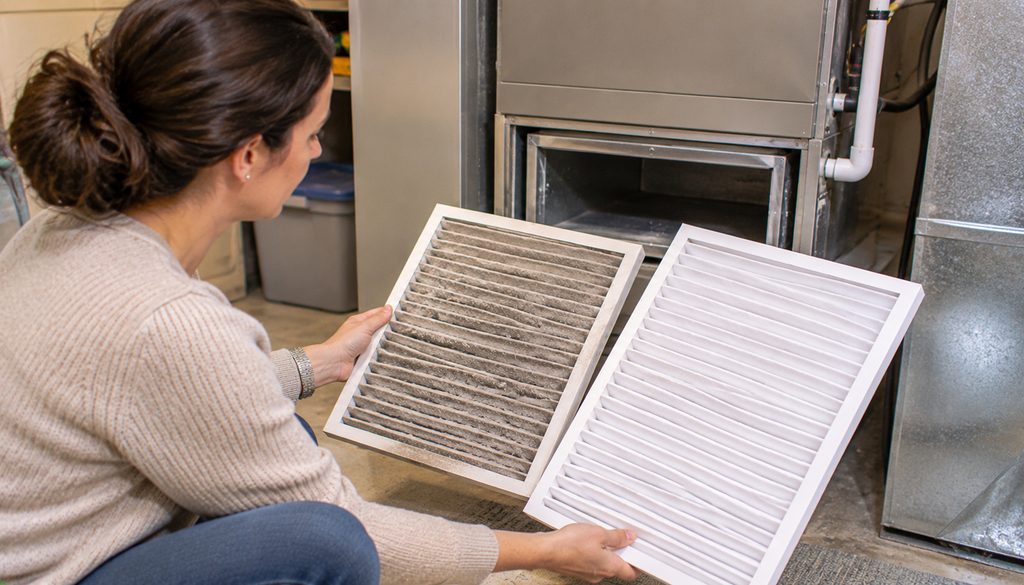
The system’s filter is a sensible maintenance item to review. A clogged filter can restrict airflow, although that alone does not prove why particles appear near a vent. Department of Energy guidance identifies restricted airflow as a consequence of a dirty filter.
Follow the equipment instructions for filter location, replacement, and safe access. Use the specified size and an appropriate filter type.
Do not remove service panels or substitute a more restrictive filter without checking compatibility.
If the filter is inaccessible or the arrangement is unfamiliar, ask a qualified HVAC professional. In a managed building, filter maintenance may be management’s responsibility.
3. Mention Recent Renovation Work
Sanding, demolition, and other construction activities can generate dust. Tell the assessor whether the problem began during or after work.
Useful details include which rooms were renovated, whether openings were protected, and whether the heating or cooling operated during dusty activities.
EPA renovation guidance recommends protecting registers in work areas during dust-producing tasks. Building-science guidance also describes protecting existing air-distribution systems during major renovations.
A renovation does not automatically mean every duct needs cleaning. Ask for an assessment of the affected areas rather than assuming the entire system is contaminated.
4. Record Whether the Problem Affects One Room or Several
A problem at one outlet may require a different investigation from particles appearing throughout the home.
Without opening ductwork, note:
- Which outlets are affected?
- Whether particles appear during startup or throughout operation.
- Whether the issue began suddenly.
- Whether recent maintenance changed anything.
- Whether the material looks like ordinary dust or something unfamiliar.
Do not identify mold, insulation, or another material from color alone.
When discussing air duct cleaning in NYC, share these observations and ask what examination is needed before cleaning is recommended.
Latest Blog: Chimney Cap Missing After Wind?
Looking after another part of your home’s venting systems? Read Chimney Cap Missing After Strong Winds? NYC Homeowner’s Guide.
That article explains safe ground-level observations and why replacement compatibility matters. A chimney and household air ducts are separate systems, so concerns about each require the appropriate service.
When Might Professional Duct Cleaning Be Appropriate?
EPA recommends considering duct cleaning on an as-needed basis. Examples include excessive deposits that obstruct ducts, particles being released from supply registers, or certain pest and contamination conditions requiring professional assessment.
Ask the provider to show the findings supporting its recommendation. A photograph should identify the location and relevant component.
Cleaning should have a defined scope. It should not be sold as a guaranteed cure for household dust, allergies, or every indoor-air concern.
What if the Problem Needs HVAC Repair?
Duct cleaning and HVAC repair address different issues.
A damaged connection, unsuitable filter arrangement, or equipment fault may need attention beyond removing deposits. If the assessor identifies a concern outside its scope, ask which qualified professional should investigate.
Cleaning alone cannot seal a damaged connection or repair a failed component.
Ask for a clear explanation of what was checked, what was found, and whether cleaning, repair, or further examination is recommended.
Avoid Disturbing Unknown Material
Do not push a household brush deep into ductwork or use compressed air to blow material into rooms.
Avoid spraying fragrances, disinfectants, or other chemicals into vents. Ask for a product-specific explanation before agreeing to any treatment.
If unfamiliar insulation or other potentially hazardous material is present, leave it undisturbed and obtain appropriate specialist advice.
A photograph or musty smell alone cannot confirm mold. Any moisture source also needs attention if dampness is identified.

What Should You Ask Before Booking?
Confirm that the proposed service matches your system and concern.
Ask which components are included, how accessible areas will be protected, and how the provider will document the work. Clarify whether filters, equipment servicing, or repairs are included or separate.
Avoid agreeing to additional work based only on a dramatic photograph without an explanation of where it was taken.
In an apartment, obtain management approval before anyone accesses shared or concealed systems.
Arrange an Assessment Based on What You See
Start with clear observations rather than assuming every dusty cover means the same problem.
Contact Chimney Experts NY to discuss visible particles, recurring debris, or concerns following renovation. Explain which rooms are affected and ask whether an air duct assessment is appropriate.
If there is smoke, a burning smell, a carbon monoxide alarm, or another suspected emergency, leave the affected area and contact the appropriate emergency service.
Frequently Asked Questions
Does a dusty vent cover prove the ducts need cleaning?
No. Surface dust alone does not establish excessive buildup inside the system.
Should air ducts be cleaned every year?
EPA recommends cleaning when conditions justify it, rather than a blanket routine schedule.
Will replacing the filter remove existing duct debris?
No. Filter maintenance and removing existing deposits are different tasks.
Does duct cleaning replace HVAC maintenance?
No. Equipment servicing, filter care, and necessary repairs may require separate work.
Should I book cleaning after every renovation?
Not automatically. Describe the work and symptoms, then have the relevant areas assessed.

Chimney Experts Cleaning & Repair
Lorem ipsum dolor sit ametLorem ipsum dolor sit amet, consectetur adipiscing elit, sed do eiusmod tempor incididunt ut labore et dolore magna aliqua.
See All Blog