Signs you need a new chimney liner can include damaged flue tiles, deteriorated metal, or inspection findings showing gaps inside the chimney. However, symptoms such as smoke entering the room do not automatically mean the liner needs replacement. A professional assessment should identify the cause before any work begins.
For homeowners arranging chimney cleaning in New York, checking the condition of the flue is an important part of ongoing maintenance. A clean fireplace does not reveal whether the lining farther up the chimney is intact.
What Does a Chimney Liner Do?
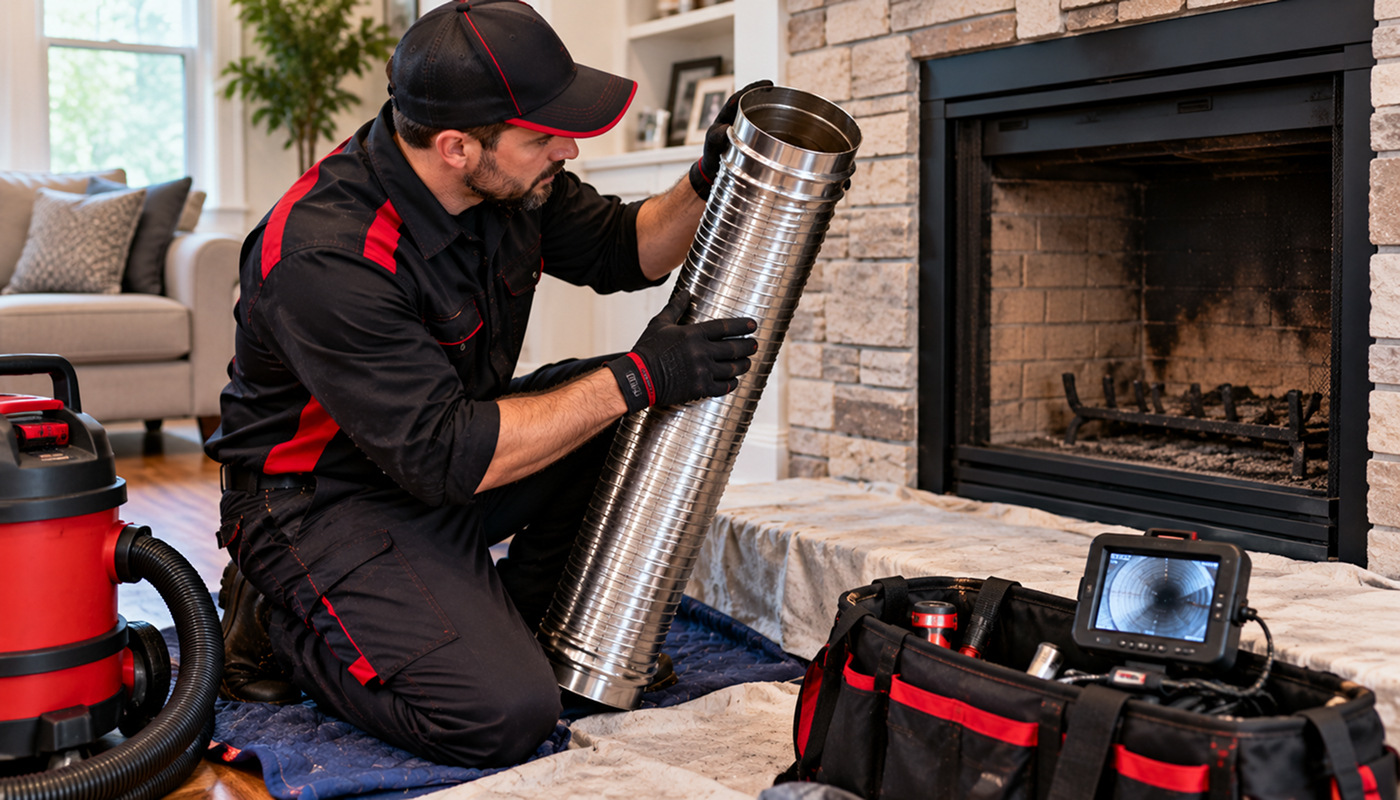
A chimney liner forms the inner passage that carries combustion gases through the chimney. Depending on the system, it may consist of clay tiles, a metal lining system, or another approved material.
The liner helps contain combustion products and protects the surrounding chimney structure from their effects. Its size and suitability also matter because the venting system must match the connected fireplace or appliance.
A liner is different from the firebox, where a fire burns, and the chimney cap, which covers the opening above the roof. Damage to one component does not necessarily mean all three need replacement.
Signs Your Chimney Liner Needs Assessment
1. Broken Tile Pieces Appear in the Fireplace
Fragments of clay tile appearing near the base of a chimney may indicate deterioration somewhere in the flue lining.
However, loose material can also come from other masonry components. Avoid assuming that every piece of debris is a broken liner tile.
Leave the material undisturbed when practical, take photographs, and arrange an inspection. The location and extent of any damage will help determine whether a repair or replacement is appropriate.
2. An Inspection Finds Cracks or Open Joints
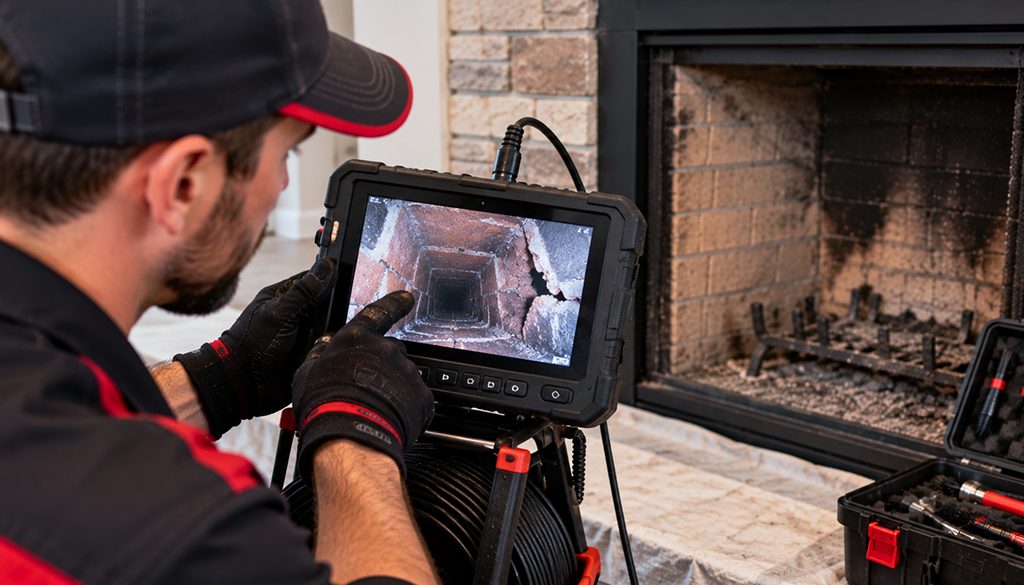
Some liner defects are difficult to see from the fireplace opening. Cracks, missing mortar between tiles, or displaced sections may require closer examination.
CSIA’s masonry chimney inspection guidance includes examining the liner and documenting cracks or gaps. These findings provide a clearer basis for recommendations than symptoms alone.
Professional chimney inspection services can help assess accessible components and determine whether a more detailed examination is needed. Ask for photographs and an explanation of any defect identified.
3. A Metal Liner Shows Significant Deterioration
Metal liners can develop corrosion, damaged connections, or other defects. Their condition depends on the material, installation, operating conditions, and suitability for the appliance.
Surface discoloration alone does not establish that replacement is necessary. A technician should assess whether deterioration affects the liner’s integrity and explain the available options.
4. The Chimney Has Experienced a Fire
A suspected chimney fire is a reason to stop using the affected system and arrange an assessment before reuse.
Heat can damage flue tiles and other chimney components, including areas that are not visible from the room. CSIA explains that the necessary work depends on the damage; possibilities can include replacing individual tiles, installing a liner system, or rebuilding damaged sections.
A previous fire does not establish the exact repair required. Inspection findings should guide that decision.
Latest Blog: Do You Need a Chimney Cap?
Protecting the chimney opening is another part of caring for the system. Our latest article, do you need a Chimney Cap? Benefits and Warning Signs for NYC Homes, explains how a suitable cap helps reduce direct rain entry and limits access for animals and debris.
Does Smoke in the Room Mean You Need a New Liner?
Smoke entering the room deserves attention, but it is not a reliable diagnosis of liner failure.
Possible causes include an obstruction, damper problems, airflow conditions, or a mismatch between the appliance and its venting system. Replacing the liner without investigating could leave the original problem unresolved.
Stop using a fireplace that spills smoke into the room and arrange an assessment. If a carbon monoxide alarm activates, leave the building and contact emergency services from outside.
Changing an Appliance May Require a Liner Review
Installing a different stove, fireplace insert, or heating appliance can change the venting requirements.
An existing liner should not be assumed suitable simply because it served the previous appliance. Its dimensions, material, condition, and installation need to match the new equipment’s requirements.
Professional chimney liner installation should follow an assessment of the complete application. Choosing a liner involves more than selecting a diameter or buying a stainless steel product.
Can a Damaged Chimney Liner Be Repaired?
Sometimes a repair is possible. In other cases, the extent or location of deterioration may make relining more appropriate.
The decision depends on the liner material, accessibility, condition of the surrounding chimney, and suitability of the proposed repair system.
Ask the contractor to explain:
- What damage was found and where it is located.
- Whether it affects a limited area or multiple sections.
- Why repair or replacement is being proposed.
- Whether other chimney defects also need attention.
Age alone is not enough to establish that a liner must be replaced. Likewise, a recently installed liner still needs assessment if damage or installation problems are suspected.
Will Relining Fix Exterior Chimney Damage?
A new liner does not repair cracked crowns, deteriorated brickwork, or defective flashing.
If moisture entry or structural deterioration is also present, those issues need their own assessment. Otherwise, installing a liner may leave other problems unresolved.
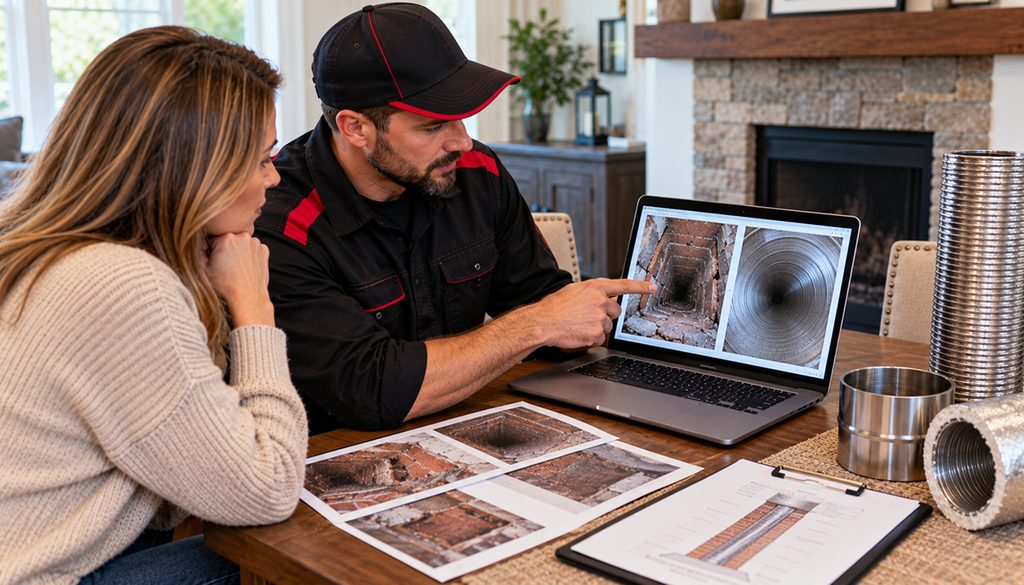
Depending on the findings, chimney repair and restoration services may be needed alongside liner work. The estimate should distinguish the work inside the flue from repairs to the surrounding chimney.
Arrange a Chimney Liner Assessment
If you notice loose fragments, recurring venting problems, or have an inspection report identifying liner damage, contact Chimney Experts Cleaning & Repair. Share photographs, previous reports, and details of the connected appliance so the team can discuss an appropriate assessment.
Frequently Asked Questions
How do I know whether my chimney has a liner?
Previous installation records may help, but an inspection is the appropriate way to identify the lining and assess its visible condition.
Does every old chimney need a new liner?
No. Age can justify closer attention, but replacement should depend on condition, suitability, and inspection findings.
Is a stainless steel liner suitable for every appliance?
No. The liner system must be suitable for the fuel, appliance, and installation requirements. Material alone does not establish compatibility.
Does chimney cleaning repair a damaged liner?
No. Cleaning removes deposits and obstructions as appropriate. It does not repair cracks, open joints, corrosion, or damaged connections.
Can I keep using a chimney with confirmed liner damage?
Follow the inspecting professional’s recommendations. If the system has been identified as unsafe to use, keep it out of service until the necessary work is completed.

Chimney Experts Cleaning & Repair
Lorem ipsum dolor sit ametLorem ipsum dolor sit amet, consectetur adipiscing elit, sed do eiusmod tempor incididunt ut labore et dolore magna aliqua.
See All Blog