
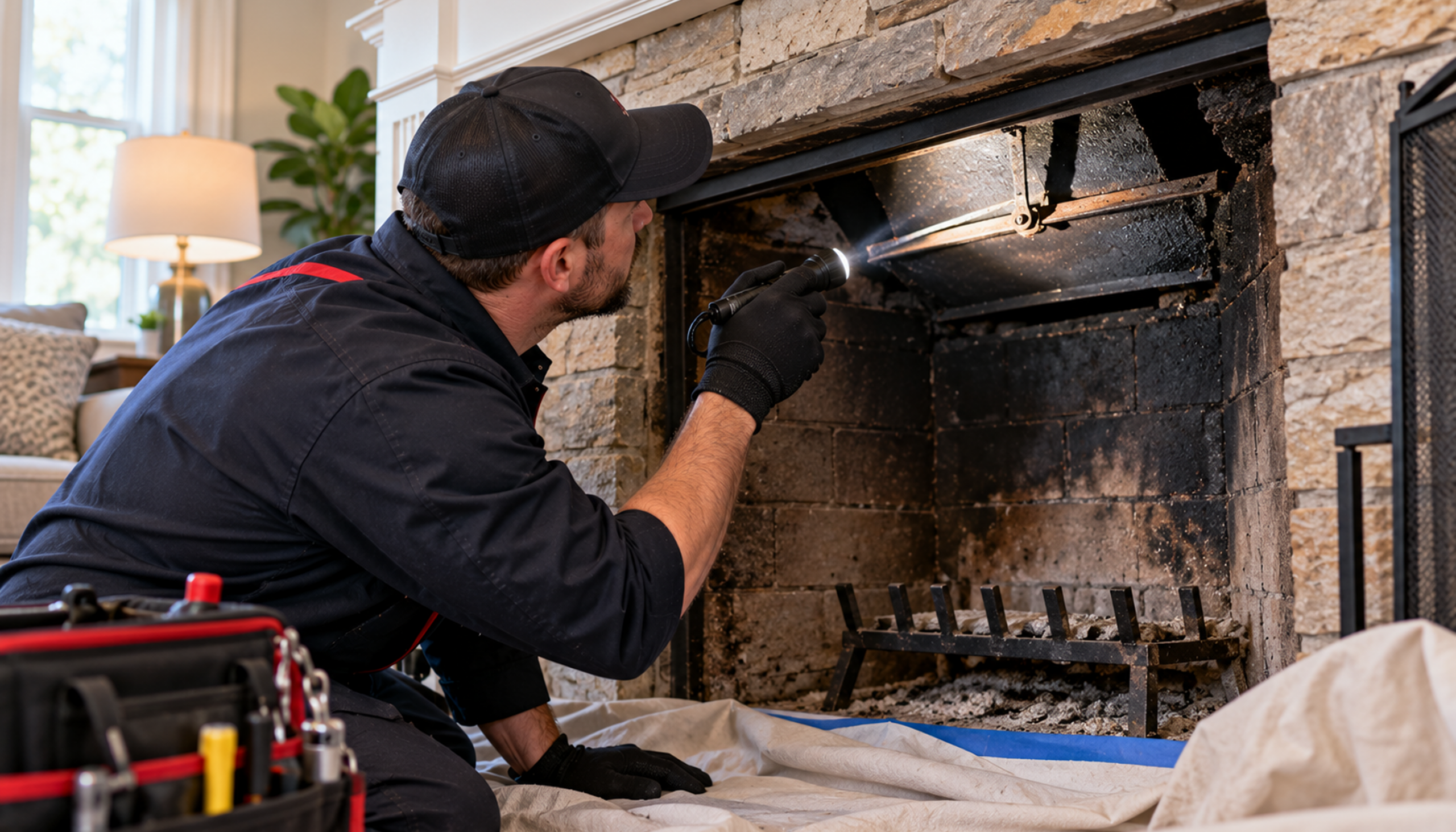
Why is my fireplace drafty? Cold air entering through an unused fireplace can result from an open or poorly fitting damper, a cold chimney, or differences in air pressure inside the home. The right solution depends on where the air is entering and how the fireplace system operates.
For homeowners arranging chimney cleaning in New York, mentioning persistent drafts helps the technician understand the concerns that need assessment. Cleaning removes deposits, but a damaged damper or an airflow problem may require separate attention.
What Does a Fireplace Damper Do?
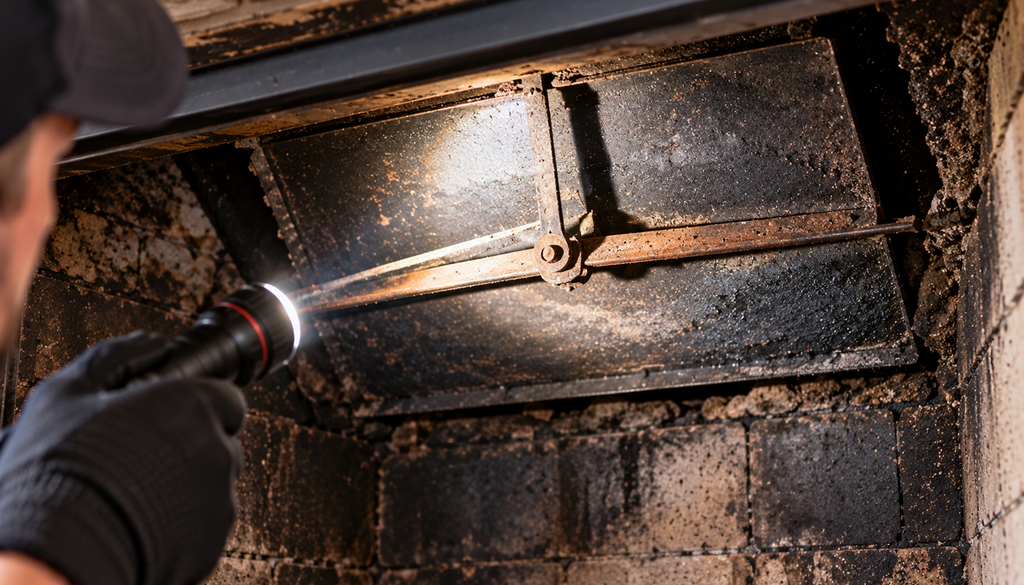
A fireplace damper is a movable component that opens or closes the passage between the firebox and chimney. In many traditional masonry fireplaces, it sits just above the firebox. Some compatible systems use a damper installed at the top of the chimney.
For a conventional wood-burning fireplace, the damper must be open during use so combustion gases can escape. Once the fire and embers are completely extinguished and cold, closing a suitable damper can help limit airflow through the unused fireplace.
Gas fireplaces and gas log installations can have different requirements. Some require the damper to remain secured open. Always follow the appliance instructions rather than applying wood-burning fireplace advice to every system.
Common Reasons Your Fireplace Feels Drafty
The Damper Is Left Open
An open damper leaves a passage between the room and outdoors. Depending on temperature and pressure conditions, warm indoor air may escape or cold air may enter.
If the fireplace is completely cold and unused, check the damper’s position using its normal operating control. Do not force a stiff handle or reach into the chimney.
Before closing it, confirm that doing so is appropriate for your fireplace and any appliance connected to it.
The Damper Does Not Close Properly
A handle can appear to be in the closed position while the damper plate remains partly open. Deposits, damaged operating parts, corrosion, or distortion may interfere with its movement.
Older metal dampers may also allow some air leakage even when closed. A draft does not automatically establish that the entire assembly needs replacement.
Professional chimney damper repair or replacement can address confirmed defects. The technician should explain whether cleaning, an adjustment, repair, or a compatible replacement is appropriate.
Air Pressure Is Pulling Air Down the Chimney
A chimney’s airflow is affected by conditions inside the house as well as outdoors. Exhaust fans and other equipment that remove indoor air can contribute to pressure differences.
A cold chimney is particularly vulnerable to reverse airflow. U.S. Department of Energy guidance explains that natural-draft fireplaces can backdraft when the chimney is cool or a fire is burning low.
If the draft becomes stronger when a kitchen hood, bathroom fan, or dryer operates, mention that pattern during the assessment. It is a useful clue, although it does not establish the cause by itself.
Is the Air Coming Through the Fireplace or Around It?
A cold hearth does not always mean air is traveling down the flue. Gaps around the fireplace opening, nearby trim, or other parts of the building can create a similar sensation.
Observe where you feel the air without dismantling components. Note whether it comes from inside the firebox or around the surrounding wall.
Avoid filling gaps with ordinary foam, caulk, or insulation near a fireplace. Materials and repairs must suit the location, required clearances, and fireplace system.
Latest Blog: Signs You Need a New Chimney Liner
A damper and a liner perform different jobs, so a draft alone does not prove that the liner is damaged. Our latest article, Signs You Need a New Chimney Liner: A Guide for NYC Homeowners, explains the findings that may justify closer examination of the flue lining.
Will a Chimney Cap Stop Cold Drafts?
A standard chimney cap primarily helps protect the opening from rain, animals, and debris. It is not an airtight closure and should not be expected to stop every draft.
Some specialized termination designs address particular wind conditions, but choosing one requires understanding the system and the problem. Installing a random cap can leave the cause unresolved.
If the existing cap is missing or damaged, chimney cap installation may be appropriate for that issue. The damper and airflow conditions still need separate consideration.
When Should You Arrange an Inspection?
Arrange an assessment if the draft persists, the damper cannot operate normally, or the problem starts after changes to your home.
Useful details to share include:
- Whether the fireplace is unused when the draft occurs.
- Whether wind or outdoor temperature affects it.
- Whether exhaust fans make the problem worse.
- Whether the damper handle moves normally.
- Any recent window replacement, air sealing, or appliance installation.
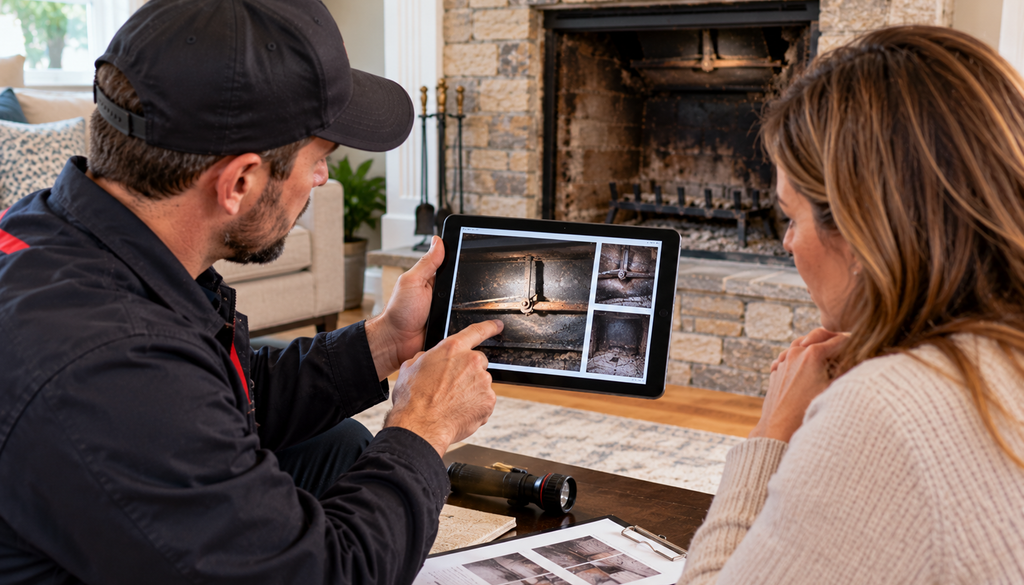
Professional chimney inspection services can assess accessible fireplace and chimney components. Depending on the findings, a separate evaluation of household ventilation or air pressure may also be needed.
What If Smoke Enters the Room?
Smoke entering the home while the fireplace operates is different from a cold draft through an unused fireplace. Stop using a system that spills smoke and arrange an assessment before reuse.
Do not partially close the damper to try to keep heat in while a fire or live embers remain. The chimney needs an appropriate open exhaust path during operation.
If a carbon monoxide alarm activates, leave the building and contact emergency services from outside.
Request a Fireplace Damper Assessment
A drafty fireplace can have more than one contributing cause. Contact Chimney Experts Cleaning & Repair to discuss the symptoms and arrange an assessment. Identifying the source first helps ensure that any proposed damper work addresses the problem.
Frequently Asked Questions
Why is cold air coming through my fireplace when it is not in use?
Possible causes include an open or leaking damper, a cold chimney, and household pressure differences. An assessment can help distinguish between them.
Should I close the damper after using a wood-burning fireplace?
Only after the fire and embers are completely extinguished and cold, and when closing it is appropriate for the system. Never close it over live embers.
Can a damaged damper be repaired?
Sometimes. The appropriate work depends on its condition, operating mechanism, and compatibility with the fireplace.
Will chimney cleaning stop a draft?
Cleaning may help if deposits interfere with damper operation, but it will not resolve every mechanical or airflow problem.
Can I block the fireplace opening myself?
Do not improvise a blockage in an active venting system. Ask a professional about an appropriate solution, particularly if a gas appliance is installed.

Chimney Experts Cleaning & Repair
Lorem ipsum dolor sit ametLorem ipsum dolor sit amet, consectetur adipiscing elit, sed do eiusmod tempor incididunt ut labore et dolore magna aliqua.
See All Blog