
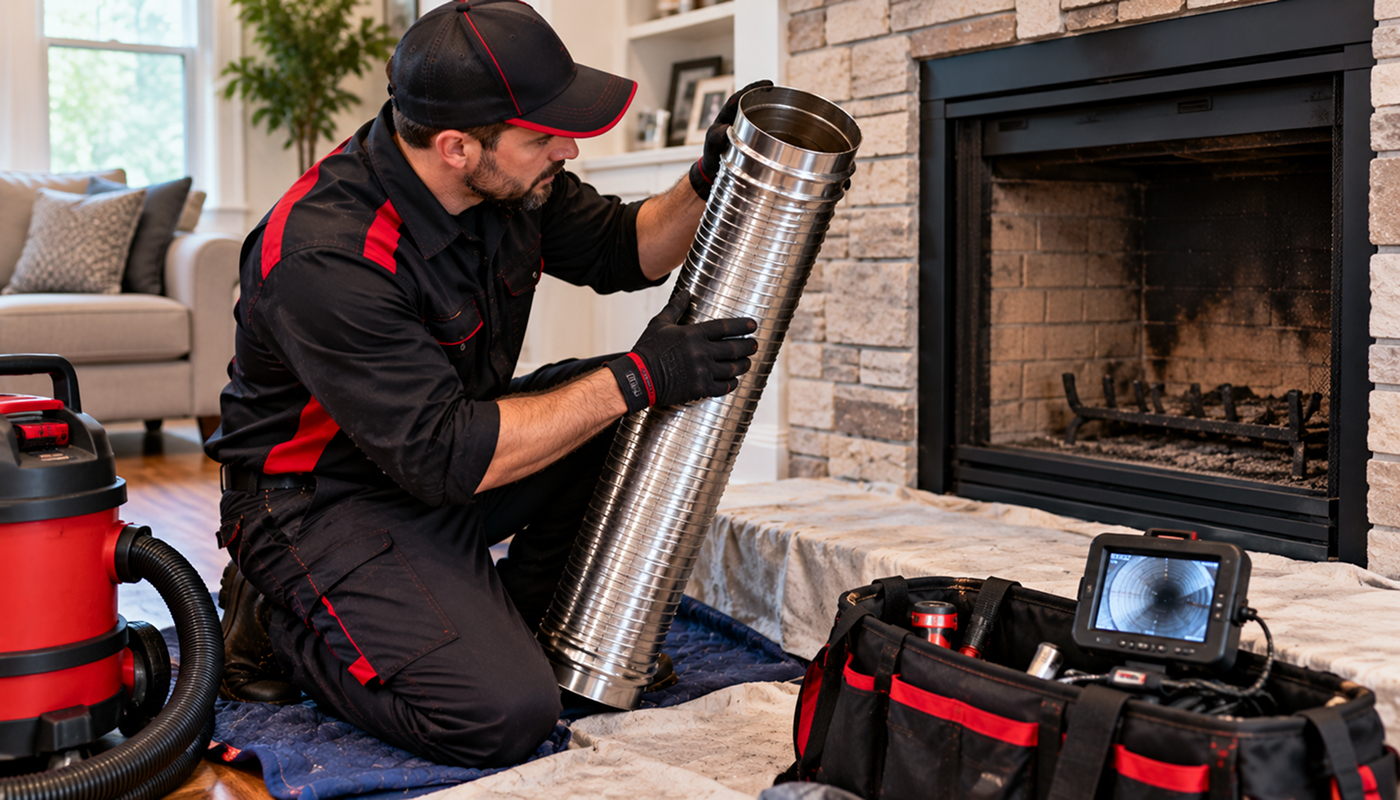
Chimney mortar crumbling between the bricks can be a sign of weathering, prolonged moisture exposure, or deterioration from previous repairs. Although some damage appears minor, the right repair depends on the condition of the joints, the surrounding bricks, and the chimney as a whole.
Homeowners arranging chimney cleaning in New York should mention loose masonry, falling debris, or visible gaps when booking their appointment. Cleaning removes deposits inside the chimney; deteriorated exterior mortar requires a separate assessment.
What Does Chimney Mortar Do?
Mortar fills the joints between masonry units and helps hold the chimney’s brickwork together. Properly formed joints also help shed rainwater from the surface.
Over time, exposure can cause mortar to erode, crack, or separate from the bricks. Open joints can then provide additional routes for moisture to enter.
The National Park Service identifies disintegrating mortar, cracked joints, and loose masonry as signs that may justify repointing. However, the cause of deterioration should be understood before selecting the repair.
Why Does Chimney Mortar Start Crumbling?
Repeated Moisture Exposure
Chimneys stand above the roof and face rain, snow, and wind. Water can reach the masonry through several routes, including deteriorated joints, a damaged crown, or defective details around the chimney.
Repeated wetting can contribute to deterioration. Repairing the visible joint without addressing a continuing source of moisture may leave the underlying problem unresolved.
Freezing and Thawing
When water enters vulnerable masonry and freezes, its expansion can contribute to damage. Repeated freezing and thawing may worsen existing cracks and deterioration.
This makes moisture management important for chimneys exposed to New York winters. However, winter weather alone does not establish why a particular joint failed; the chimney still needs assessment.
Incompatible Previous Repairs
A previous repair may look neat while using mortar that is unsuitable for the surrounding brickwork.
Compatibility matters particularly in older masonry. Selecting mortar involves its properties and the existing construction, rather than simply choosing the strongest available mix.
Professional brick pointing in NYC should address deteriorated joints using suitable materials and methods. The repair should fit the chimney’s condition rather than cover the damage with a thin surface patch.
Movement or Other Underlying Damage
Cracks can also develop where masonry moves or separates. Repeated cracking in the same location may require more investigation than routine joint repair.
A leaning chimney, displaced bricks, or substantial cracks should not be treated as a cosmetic issue. Those conditions may require a broader assessment before repointing is considered.
Warning Signs Homeowners May Notice
Some changes are visible from the ground or an accessible window. Avoid climbing onto the roof or pulling loose material from the chimney.
Look for:
- Gaps where mortar is missing between bricks.
- Joints that appear deeply recessed or uneven.
- Cracks running through several joints.
- Mortar fragments collecting below the chimney.
- Bricks with broken or flaking faces.
- Damp patches or recurring staining near the chimney.
These signs do not all point to the same repair. Broken brick faces, for example, may require different work from deteriorated mortar joints.
Photographs taken from a safe position can help document changes and give the contractor useful context.
Latest Blog: Why Is My Fireplace Drafty?
Chimney maintenance can involve both exterior masonry and components inside the fireplace. Our latest article, Why Is My Fireplace Drafty? Chimney Damper Problems in NYC Homes, explains why cold air may enter through an unused fireplace and when the damper needs attention.
Does Crumbling Mortar Mean the Chimney Needs Rebuilding?
Not necessarily. If the bricks remain sound and deterioration is limited to the joints, repointing may be appropriate.
Repointing involves removing deteriorated mortar to a suitable depth and replacing it with compatible mortar. It is more involved than spreading a new layer across the surface.
Where bricks are damaged, masonry is unstable, or deterioration extends through larger sections, more extensive repairs may be needed.
Professional chimney repair and restoration services can help determine the scope. Ask the contractor to distinguish joint repairs from brick replacement or rebuilding in the estimate.
Can You Seal or Paint over the Problem?
A coating does not replace missing mortar or stabilize damaged brickwork. Applying a product over deteriorated joints may also hide changes that need attention.
Some coatings can interfere with drying, so a generic waterproof paint or sealant should not be assumed suitable.
The repair plan should first address deteriorated materials and any identified sources of water entry. If a water-repellent treatment is proposed afterward, ask why it suits the masonry and how it allows moisture to escape.
What Should a Chimney Assessment Cover?
An assessment should consider the pattern and extent of the deterioration, rather than looking at one loose joint in isolation.
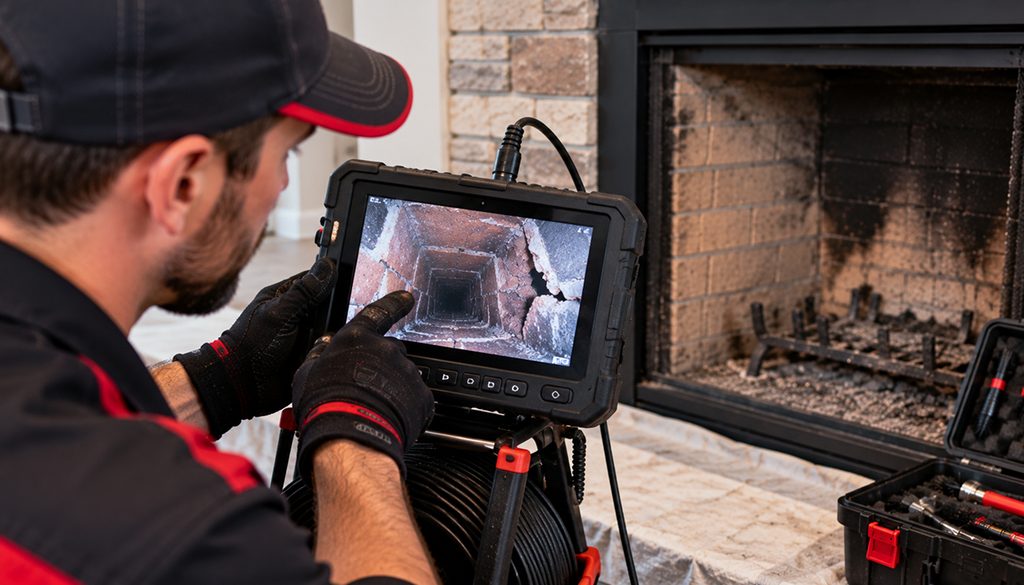
Depending on access and the inspection scope, relevant areas may include the mortar joints, bricks, crown, cap, and flashing. The technician may also recommend further investigation where visible findings suggest a deeper concern.
Professional chimney inspection services can help document the condition and identify which areas need closer examination. Share any history of leaks, previous pointing work, or recurring cracks.
Questions to Ask Before Approving Repairs
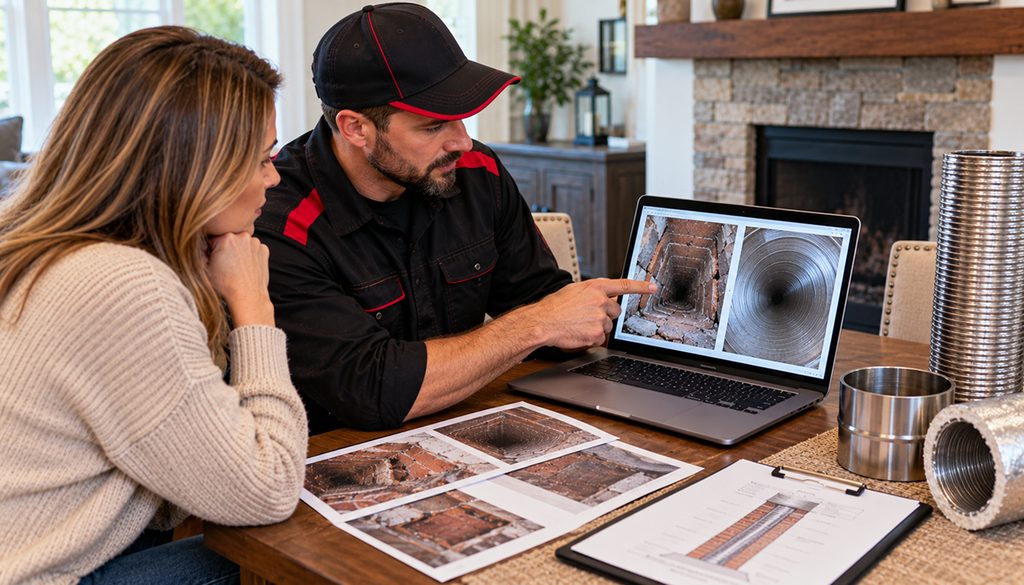
A clear estimate should explain what will be repaired and why. Useful questions include:
- Which joints or sections need work?
- Are the surrounding bricks still sound?
- What may be contributing to the deterioration?
- How will the replacement mortar suit the existing masonry?
- Are crown, flashing, or other repairs also needed?
Photographs and a defined scope make the proposal easier to understand. They also help distinguish localized repairs from work affecting the entire chimney.
Arrange a Chimney Masonry Assessment
If you notice missing mortar, loose fragments, or recurring cracks, contact Chimney Experts Cleaning & Repair to discuss an assessment. Identifying the extent and cause of deterioration helps the team recommend appropriate repairs.
Frequently Asked Questions
Is crumbling chimney mortar always serious?
The extent varies. Localized erosion may need joint repairs, while loose bricks or significant movement can require more extensive attention.
What is the difference between pointing and rebuilding?
Pointing repairs mortar joints where the surrounding masonry remains suitable. Rebuilding involves removing and reconstructing damaged sections.
Can chimney cleaning fix deteriorated mortar?
No. Cleaning removes deposits and obstructions as appropriate. It does not replace missing mortar or repair exterior brickwork.
Should every joint be replaced?
Not automatically. The repair scope should depend on the condition of the existing joints and the surrounding masonry.
Can water damage return after repointing?
Yes, if another source of moisture remains unresolved. Crown defects, flashing problems, and other entry routes may require separate repairs.

Chimney Experts Cleaning & Repair
Lorem ipsum dolor sit ametLorem ipsum dolor sit amet, consectetur adipiscing elit, sed do eiusmod tempor incididunt ut labore et dolore magna aliqua.
See All Blog