
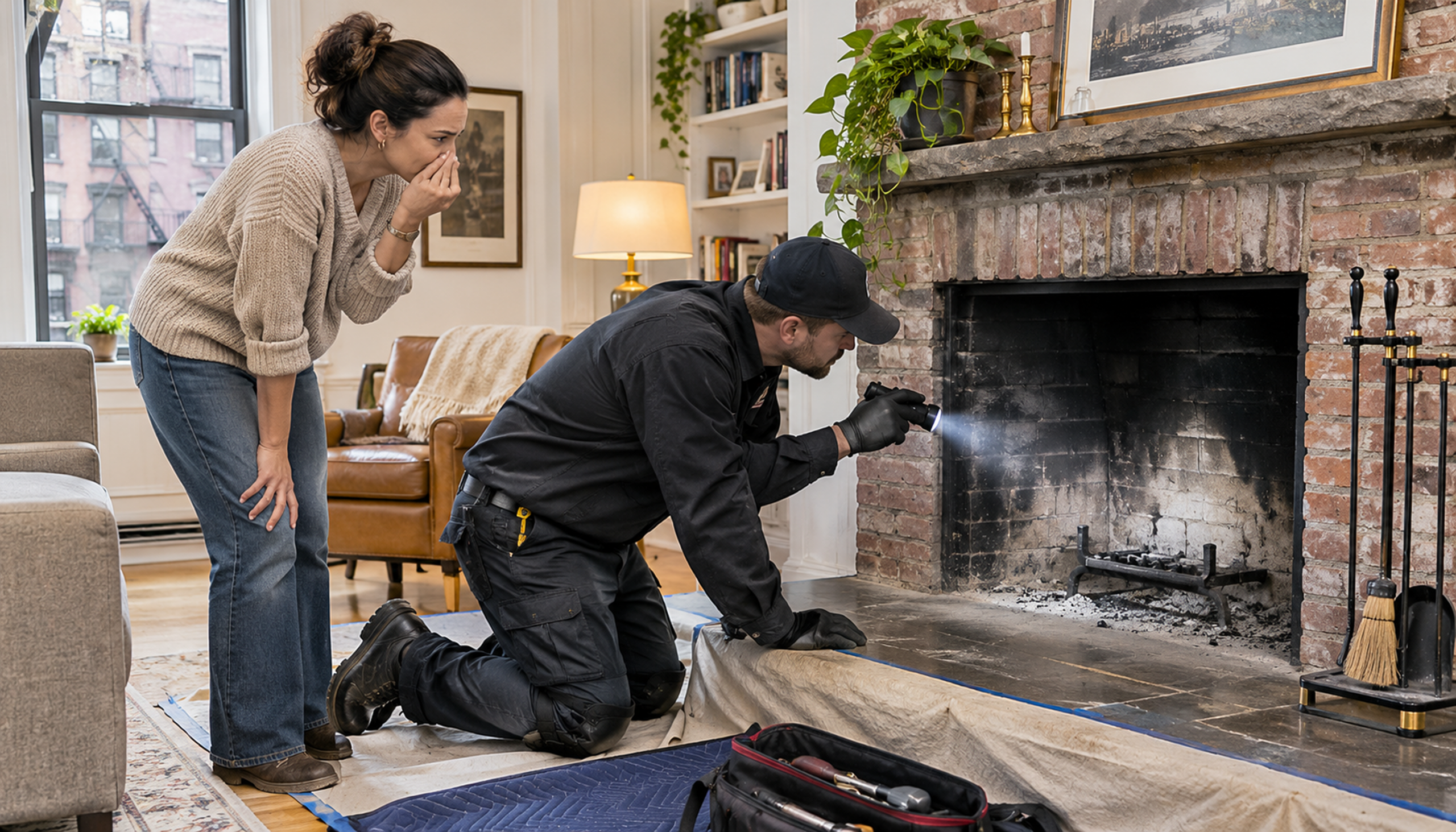
A fireplace smells when not in use for several possible reasons, including leftover wood-burning deposits, moisture, or air moving down the chimney. Animal activity can also contribute. The smell alone cannot identify the cause, and covering it with fragrance does not address the source.
Homeowners arranging chimney cleaning in New York should explain when the odor appears and what seems to make it stronger. A smell that follows rain may require a different investigation from one that becomes noticeable when an exhaust fan operates.
Why Can an Unused Fireplace Smell Smoky?
Wood-burning fireplaces can retain soot and creosote from previous fires. Even when no fire is burning, these deposits can produce an odor.
Whether that odor reaches the room also depends on airflow. Air traveling down the chimney can carry smells from the flue into the house. CSIA identifies creosote deposits and downward airflow as common contributors to odors from unused fireplaces.
That distinction matters: removing deposits may help, but recurring airflow problems can require separate attention.
Common Causes of Fireplace Odors
Leftover Soot and Creosote
Deposits can remain inside the chimney even when the visible firebox looks tidy. Removing old ashes does not clean the full flue.
The amount and type of buildup depend on previous use and burning conditions. Odor strength is not a reliable measurement of how much creosote is present.
Professional chimney sweeping services can remove accessible deposits using methods appropriate to their condition. Ask whether the appointment includes an inspection and what additional work may be needed if hardened deposits are found.
Moisture Inside the Chimney
A smoky or musty smell may become stronger during wet or humid weather. Moisture can intensify existing chimney odors, although the smell does not establish where water is entering.
Look for accompanying observations such as damp firebrick, staining, or water appearing after rainfall. Share these details rather than assuming the chimney simply needs deodorizing.
CSIA’s homeowner guidance explains that damp conditions can make chimney odors more noticeable and that cleaning may only partly address the problem.
Air Moving Down the Flue
An unused chimney does not always carry air upward. Temperature differences and pressure conditions inside the building can influence the direction of airflow.
Notice whether the odor changes when a kitchen hood, bathroom fan, or clothes dryer operates. These patterns can help a professional investigate how air moves through the home.
Do not permanently block a chimney or change the ventilation system to experiment. The flue may serve an appliance, and any proposed changes need to suit the complete system.
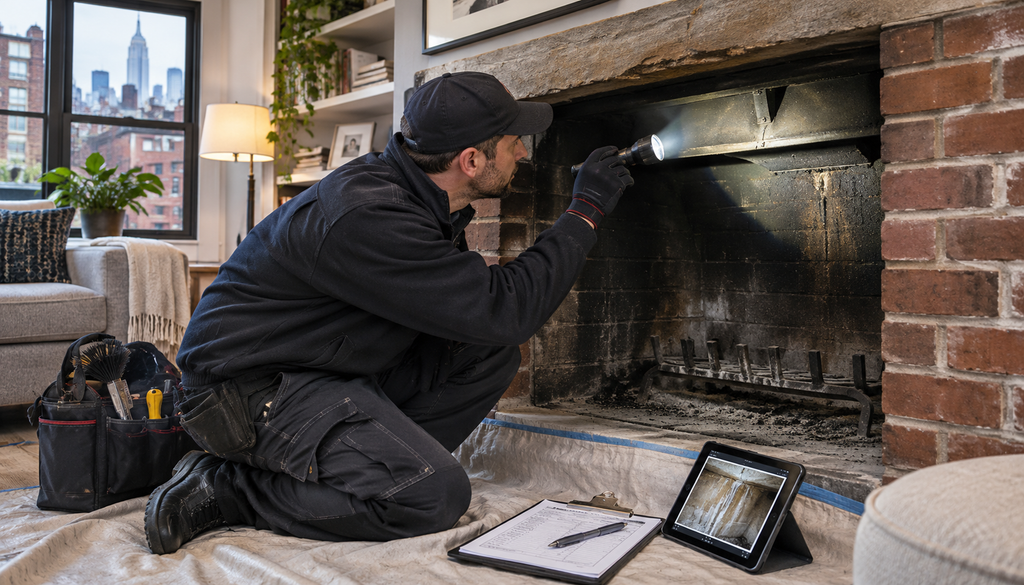
Could Animals Be Causing the Smell?
Animal activity is another possibility, particularly if odors occur alongside scratching sounds, nesting material, or debris appearing in the fireplace.
A strong unfamiliar smell should not automatically be attributed to creosote. An assessment can help identify whether animals or nesting materials are involved.
Professional chimney animal removal can address the situation using methods appropriate to the species and circumstances. Do not light a fire to drive animals out or seal the opening before confirming the chimney is clear.
Latest Blog: Cracks in Your Fireplace Firebox
An unpleasant fireplace smell does not reveal the condition of the firebox. If you also notice cracked bricks, missing mortar, or loose material, read Cracks in Your Fireplace Firebox: When Should NYC Homeowners Worry? To understand what needs assessment and when repairs may be necessary.
Will Chimney Cleaning Remove the Smell Completely?
Cleaning can reduce odor-producing deposits, but it cannot guarantee that every smell will disappear.
Odors can persist where airflow continues to carry chimney air indoors, moisture remains unresolved, or another source has not been identified.
Tell the contractor if the chimney was recently cleaned and the smell returned. Previous service records and photographs can help avoid repeating work without investigating the remaining cause.
Can a Chimney Cap Help?
A suitable cap helps reduce direct rain entry and limits access for animals and debris. It does not prevent outdoor humidity from reaching the chimney or correct every pressure problem.
If the cap is missing or damaged, chimney cap installation may address that specific opening. The technician should still consider other sources of moisture and the direction of airflow.
Should You Close the Fireplace Damper?
For a conventional wood-burning fireplace, an appropriate damper may help reduce airflow while the fireplace is completely cold and unused.
However, this advice does not apply universally. Gas log installations and other appliances may require the damper to remain secured open. Follow the system’s instructions and ask a professional if its requirements are unclear.
A damper that will not operate normally needs assessment. Never force it or close it while a fire or live embers remain.
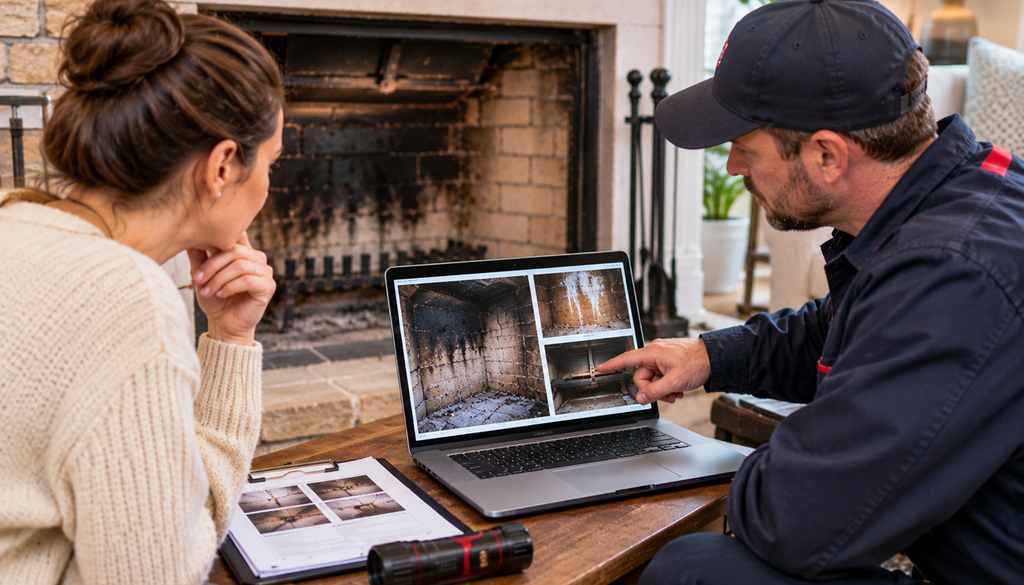
What Should You Record Before Booking?
A few observations can make the appointment more useful:
- Whether the odor is smoky, musty, or unfamiliar.
- Whether it follows rain or humid weather.
- Whether fans or the dryer affect it.
- When the chimney was last inspected and cleaned.
- Whether there are noises, stains, or loose materials.
Observe from an accessible position. Avoid climbing onto the roof or dismantling fireplace components.
An odor from an unused wood-burning fireplace is different from active smoke entering the room. Stop using a fireplace that spills smoke. If you suspect a gas leak or a carbon monoxide alarm activates, leave the building and contact emergency services from outside.
Arrange a Fireplace Odor Assessment
Contact Chimney Experts Cleaning & Repair if your fireplace repeatedly produces an unpleasant smell. Describe the pattern and any related observations so the team can discuss an assessment and the appropriate service.
Frequently Asked Questions
Why does my fireplace smell after rain?
Moisture can intensify odors from existing deposits. Water entry may also need investigation, particularly if you notice dampness or staining.
Can a clean chimney still smell?
Yes. Remaining odor sources and downward airflow can allow smells into the room even after sweeping.
Does a smoky smell mean the chimney is blocked?
Not necessarily. Deposits, moisture, and airflow can contribute. An inspection is needed to assess whether an obstruction is present.
Should I use air freshener to hide the odor?
Fragrance does not address deposits, moisture, animal activity, or airflow. Identify the source before choosing a remedy.
Can I light a fire to remove the smell?
Do not use a fire as a diagnostic test or a way to remove an unexplained odor. Arrange an assessment if the cause is unclear.

Chimney Experts Cleaning & Repair
Lorem ipsum dolor sit ametLorem ipsum dolor sit amet, consectetur adipiscing elit, sed do eiusmod tempor incididunt ut labore et dolore magna aliqua.
See All Blog