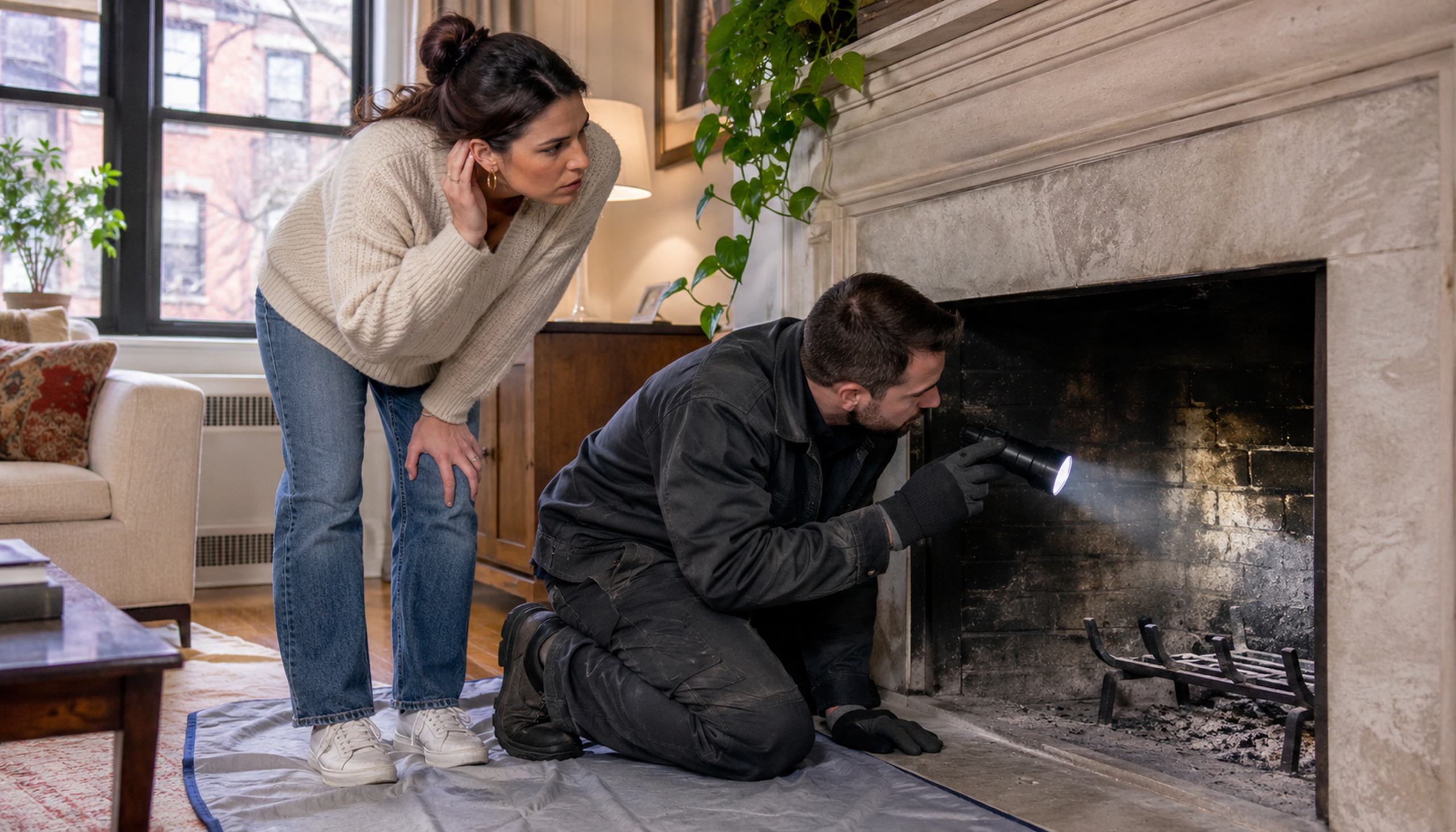
Scratching sounds in chimney spaces can suggest animal activity, but noise alone cannot identify the species or confirm where it is located. Birds, squirrels, and other wildlife may enter accessible openings, while sounds from the roof or nearby building materials can travel through the chimney structure.
Homeowners arranging chimney cleaning in New York should mention unexplained noises before the appointment. Suspected animal activity requires assessment before routine sweeping, fireplace use, or installation of a new chimney cap.
Do Scratching Sounds Always Mean an Animal Is Inside?
Not necessarily. Wind moving a loose component, branches touching the structure, or activity near the roof can produce sounds that seem to come from the flue.
Repeated scratching, fluttering, or calls may suggest wildlife, especially when accompanied by debris or visible movement. However, the timing and sound are clues rather than a reliable identification method.
Avoid reaching into the firebox or climbing onto the roof to investigate. A professional assessment can help distinguish an occupied chimney from another source of noise.
Signs That May Accompany Animal Activity
Repeated Scratching or Movement
Sounds that occur repeatedly in the same area deserve attention. Record when they happen, how long they last, and whether they seem close to the fireplace or farther above it.
A short audio recording from inside the room may help explain the concern. It should not replace an inspection or be used to decide that removal is necessary.
Fluttering, Chirping, or Other Calls
Bird sounds do not automatically mean a bird is trapped. Some species use chimneys for nesting or roosting.
The U.S. Fish & Wildlife Service explains that chimney swifts can nest and roost inside suitable chimneys. Identifying the species matters before arranging work that could disturb birds or restrict their access.
Debris Appearing in the Fireplace
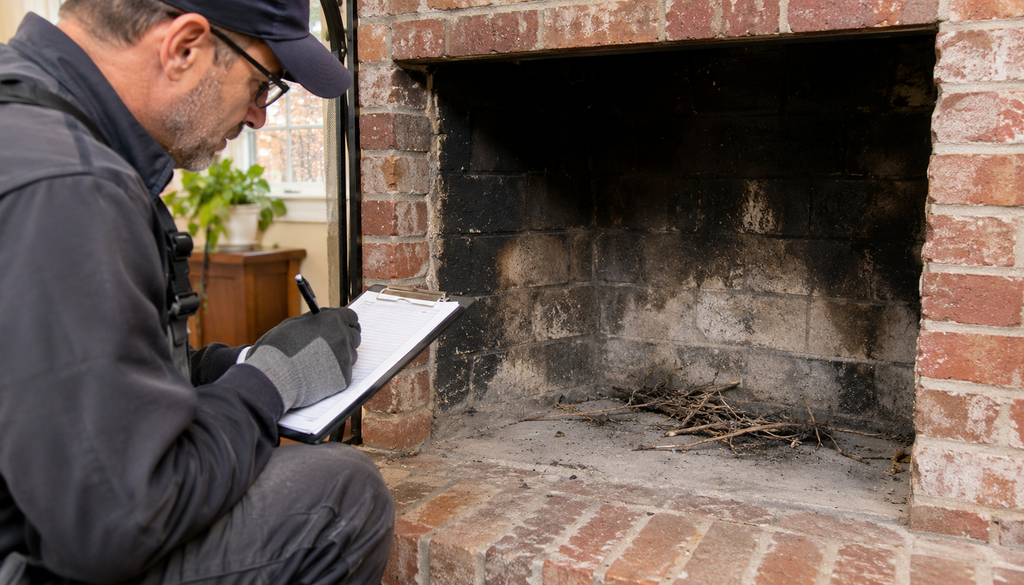
Twigs, leaves, or other unfamiliar material may indicate activity above the firebox. Loose masonry can also fall into the fireplace, so debris should not automatically be assumed to be nesting material.
Take photographs and leave unfamiliar material undisturbed until the situation has been assessed.
Professional chimney animal removal begins with understanding what is present and which next steps are appropriate. Ask whether a licensed wildlife specialist needs to be involved.
What Should You Do When You Hear the Noise?
Keep the Fireplace Out of Use
Do not light a fire or use smoke to drive an animal out. Heat and smoke can injure wildlife, and an animal may be unable to escape.
If the affected flue serves heating equipment, explain that immediately when requesting help. Arrange guidance on the connected appliance before continued operation.
Wildlife guidance specifically advises against lighting a fire when an animal may be inside the chimney.
Keep People and Pets Away
Avoid opening fireplace doors or moving controls to investigate. Keep children and pets away from the area and do not attempt to handle wildlife.
If an animal has entered the room, give it space and contact an appropriate wildlife professional. Attempting to catch it can make the situation harder to manage.
Leave the Chimney Opening Unchanged
Do not install a cap, screen, or temporary cover while activity remains unexplained. Closing an entry point could trap animals or separate dependent young from an adult.
An apparently quiet chimney is not enough to confirm that it is empty. The opening should be assessed before exclusion work begins.
Latest Blog: Why Does My Fireplace Smell When It’s Not in Use?
Unexplained noises sometimes occur alongside unpleasant odors, although smells can have several causes. Our latest article, Why Does My Fireplace Smell When It’s Not in Use? NYC Homeowner’s Guide, explains how deposits, moisture, airflow, and animal activity can contribute.
Can Every Animal or Nest Be Removed Immediately?
No. The appropriate response depends on the species, whether young are present, and the circumstances.
New York’s Department of Environmental Conservation provides species-specific guidance on nuisance wildlife and explains when permits or licensed professionals are required. Homeowners should not assume that trapping and relocating an animal themselves is permitted.
Birds and active nests may also have protections affecting the timing and method of work. A chimney service appointment should not be treated as permission to remove every nest that is found.
What Should an Assessment Cover?
The first priority is understanding the source and location of the activity. Depending on access and the situation, this may involve examining the fireplace, accessible flue areas, and chimney termination.
The professional should consider whether wildlife is present, whether an opening is damaged, and whether further specialist help is needed. Inspection methods should avoid unnecessary disturbance.
Professional chimney inspection services can also help identify masonry deterioration, missing components, or other concerns discovered during the assessment.
When Can a Chimney Cap Be Installed?
A suitable cap can help limit unwanted entry, but it should only be considered after confirming that the chimney is clear and that the proposed work is appropriate for any wildlife involved.
The cap must also suit the chimney system and allow the required exhaust flow. An improvised screen or poorly fitting cover is not a substitute for a compatible installation.
Professional chimney cap installation can address a missing or damaged cover where appropriate. Ask the technician to explain how the selected design fits the chimney and its connected appliances.
What Happens After Animal Activity Is Resolved?
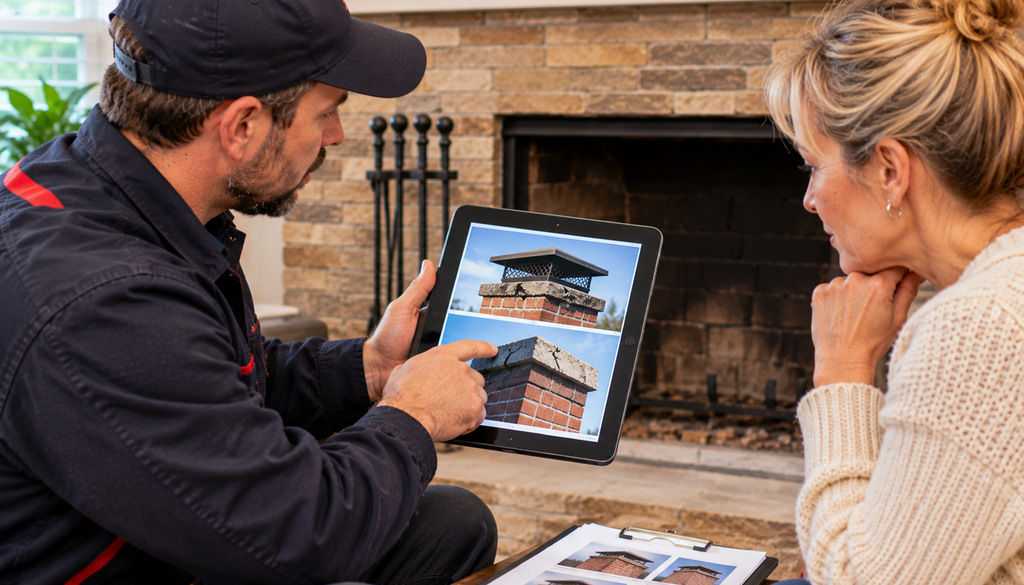
The chimney may still need assessment before returning to use. Depending on the findings, appropriate follow-up could include cleaning, checking for remaining obstructions, or repairing damaged components.
Ask what work is needed and which parts of the system have been checked. Resolving the animal activity does not automatically establish that the full chimney is ready for operation.
Keep photographs and service records so future inspections can refer to the same areas.
Arrange a Chimney Assessment
Contact Chimney Experts Cleaning & Repair if you hear recurring scratching, fluttering, or other unexplained chimney noises. Describe the sounds, any visible debris, and whether the chimney serves a fireplace or heating appliance so the team can discuss the appropriate next step.
Frequently Asked Questions
Can scratching sounds identify the animal?
No. Timing and sound can provide clues, but they are not enough to reliably identify a species or its exact location.
Should I light a fire to make it leave?
No. Do not use fire, smoke, or fumes to force wildlife from a chimney.
Can I cover the chimney once the noise stops?
Not immediately. Confirm that no animals or dependent young remain and that exclusion work is appropriate before closing an opening.
Does every bird in a chimney need rescuing?
No. Some birds use chimneys naturally. A knowledgeable professional should assess whether the bird is trapped, nesting, or roosting.
Can I use the fireplace after an animal leaves?
Arrange appropriate follow-up first. Remaining material, obstructions, or damage may need attention before the fireplace returns to use.

Chimney Experts Cleaning & Repair
Lorem ipsum dolor sit ametLorem ipsum dolor sit amet, consectetur adipiscing elit, sed do eiusmod tempor incididunt ut labore et dolore magna aliqua.
See All Blog