
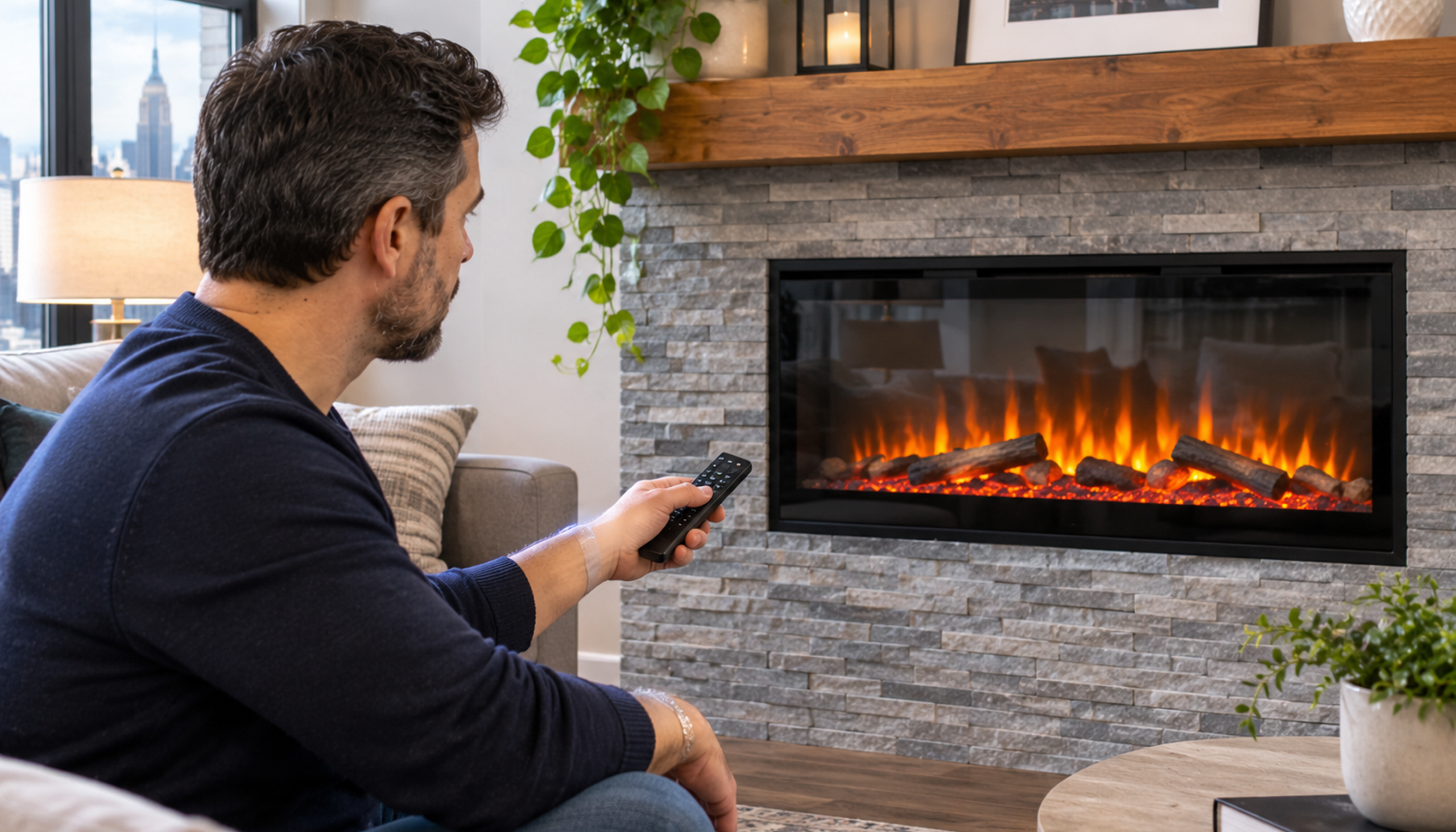
An electric fireplace with no heat does not always have a failed heating element. Many models allow the flame effect to operate independently, and thermostat settings can keep the heater off even while the display remains illuminated.
Before arranging repairs, identify the model and review its operating instructions. Homeowners exploring fireplace services in New York should explain whether the flame effect, fan, controls, and heating function are working. These details help narrow down the appropriate service.
Why Can the Flames Work Without Heat?
Electric fireplaces use electrical components to create their flame effect. In many models, the visual display and heater have separate controls.
This allows homeowners to enjoy the appearance of a fire without warming the room. Dimplex confirms that most of its electric fireplaces can operate the flame effect without heat.
A working display therefore does not prove that the heater is switched on. It also does not establish that every internal component is functioning correctly.
Start With the Correct Model Instructions
Electric fireplaces vary considerably. A wall-mounted unit, freestanding fireplace, and built-in insert may use different controls and installation arrangements.
Find the model number in the paperwork or on an accessible identification label. Do not remove the appliance from its enclosure to locate it.
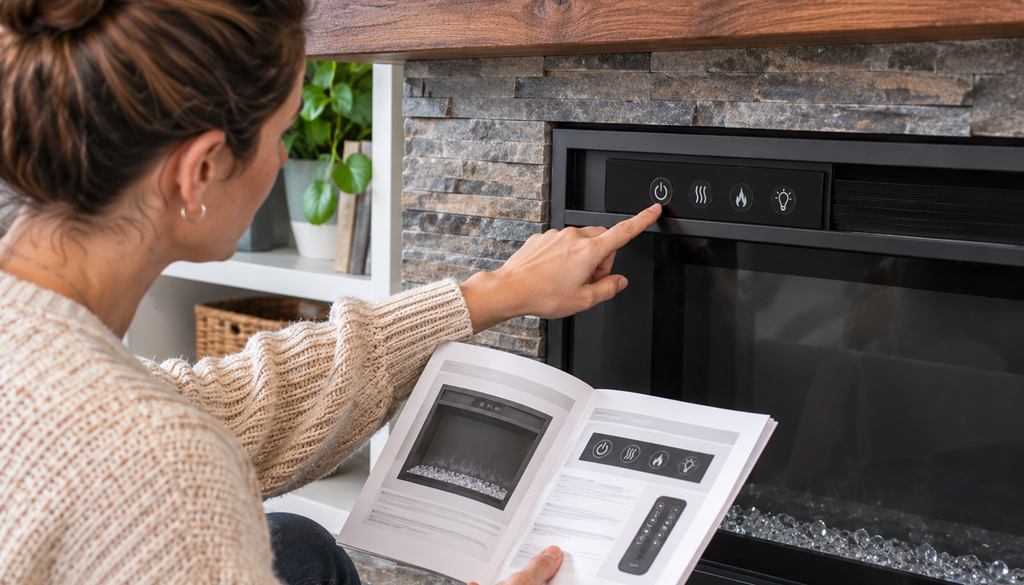
Use the matching manual rather than instructions for a similar-looking product. Reset procedures, error codes, and operating modes are not universal.
Check These Settings First
Make Sure Heat Mode Is Selected
Look for a separate heater button, heat symbol, or operating mode in the manual. Some appliances offer flame-only, fan-only, and heating settings.
Increasing flame brightness may change the appearance without affecting heat output. Likewise, a running fan does not always mean that heating has been selected.
Napoleon’s operating guidance for some models includes separate fan-only and heating modes, illustrating why the selected setting matters.
Review the Thermostat Setting
A thermostat-controlled heater may remain off when the room has reached the selected temperature.
Check the displayed setting and confirm whether the controls use Fahrenheit or Celsius. If the manual permits, select a temperature above the current room temperature and observe normal operation.
Do not expect every appliance to respond in exactly the same way. Some models use different control sequences or display indicators.
Check Remote and On-Unit Controls
If the remote changes the flame effect but not the heating function, check the manual for button combinations, operating modes, or control restrictions.
Some fireplaces have local controls that affect how the remote operates. Replace remote batteries where needed, but avoid repeatedly pressing unfamiliar combinations.
If the correct settings do not restore heating, an electric fireplace repair service can assess the problem. Share the model information when requesting an appointment so service suitability can be confirmed.
Could Airflow Be Affecting Operation?
Electric heaters need the clearances and airflow specified for their installation.
Check from an accessible position whether furniture, curtains, or household items are covering external openings. Do not insert tools through grilles or remove internal covers.
If the manual allows external cleaning, follow its instructions with the appliance switched off, disconnected where appropriate, and completely cool. Cleaning accessible surfaces does not replace diagnosis of a recurring heating fault.
Should You Reset the Fireplace?
Only follow the procedure provided for the actual model.
Some appliances have protective shutdown features, but repeatedly resetting a heater without identifying the cause is not a repair. Dimplex service guidance advises stopping use and seeking support where a heater repeatedly requires resetting.
Do not bypass a safety device, modify wiring, or copy an internal repair procedure from an unrelated fireplace model.
Latest Blog: Chimney Crown vs. Chimney Cap
Electric fireplace heating faults differ from the maintenance needs of masonry chimneys. If your property also has a traditional chimney, read Chimney Crown vs. Chimney Cap: What’s the Difference? to understand the components above the roof and why each may need separate attention.
What Does an Error Code Mean?
An error code should be checked against the correct manual. The same letters or numbers may have different meanings across brands and models.
Photograph the display and note when the message appears. Useful details include whether it occurs immediately, after selecting heat, or after the appliance has operated for a while.
Do not assume a code means the heating element needs replacement. Controls, sensors, and other components may require professional evaluation.
When Should You Stop Using the Fireplace?
Stop using the appliance if you notice smoke, sparks, damaged wiring, a burning-plastic smell, or unusual heat at the plug or outlet.
Repeated breaker trips also need attention. Do not keep resetting the breaker or move the fireplace to an extension cord to continue operating it.
Plug-in and hardwired models have different installation requirements. Where the concern involves the electrical supply or outlet, a qualified electrician may be needed alongside appliance servicing.
Does No Heat Mean the Fireplace Needs Replacement?
Not automatically. Settings, controls, or a repairable component may explain the problem.
The repair decision depends on the diagnosis, appliance condition, parts availability, and manufacturer support. A visible flame effect alone cannot establish whether repair or replacement is the better option.
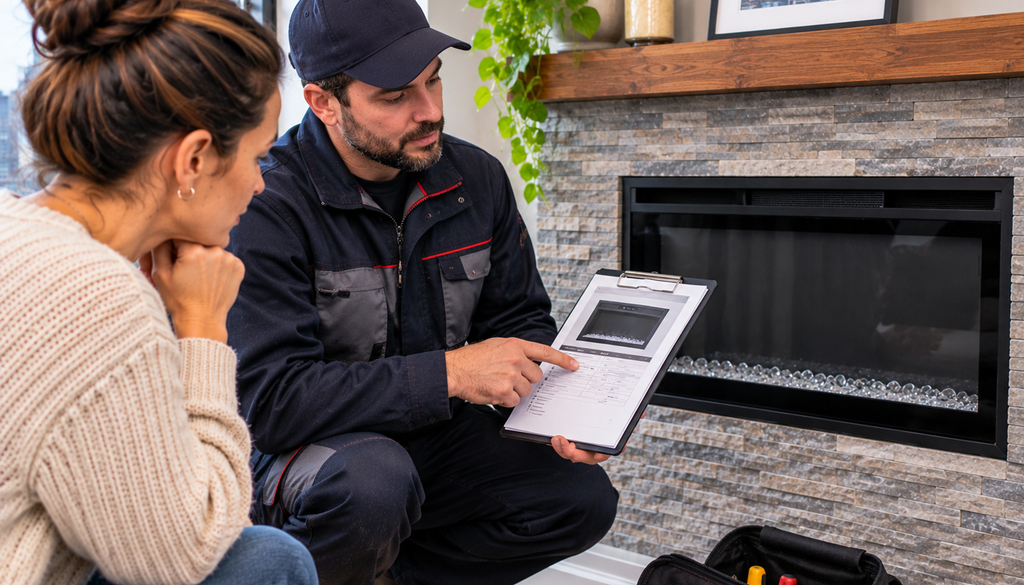
Ask for an explanation of the fault and an estimate before approving work. If the appliance is under warranty, check the manufacturer’s service requirements first.
Does an Electric Fireplace Need Chimney Cleaning?
The electric appliance itself does not burn wood or gas and does not produce combustion exhaust.
However, installing an electric insert in an old masonry opening does not automatically resolve existing chimney leaks, loose masonry, or deterioration elsewhere in the structure.
If those separate concerns are present, chimney inspection services can help assess the existing chimney. That inspection addresses the building’s chimney condition, rather than the electric heater’s internal fault.
Request an Electric Fireplace Assessment
If the correct operating settings do not restore heat, contact Chimney Experts Cleaning & Repair to discuss service availability for your model. Provide the brand, model number, error messages, and a short description of what still works.
Frequently Asked Questions
Can an electric fireplace run without heat?
Many models can. Check whether flame-only mode is selected and follow the operating instructions.
Why the fan run but the air does feels cool?
Some models have fan-only settings. If heat is correctly selected and the problem continues, arrange an assessment.
Does a working flame effect mean the heater is fine?
No. The visual display and heating function can operate separately.
Can I replace the heating element myself?
Leave internal diagnosis and repairs to an appropriately qualified service professional. Do not open the appliance or modify its electrical components.
Will chimney sweeping restore electric fireplace heat?
No. Sweeping does not repair an electric heater. Any existing masonry chimney concerns require separate assessment.

Chimney Experts Cleaning & Repair
Lorem ipsum dolor sit ametLorem ipsum dolor sit amet, consectetur adipiscing elit, sed do eiusmod tempor incididunt ut labore et dolore magna aliqua.
See All Blog