
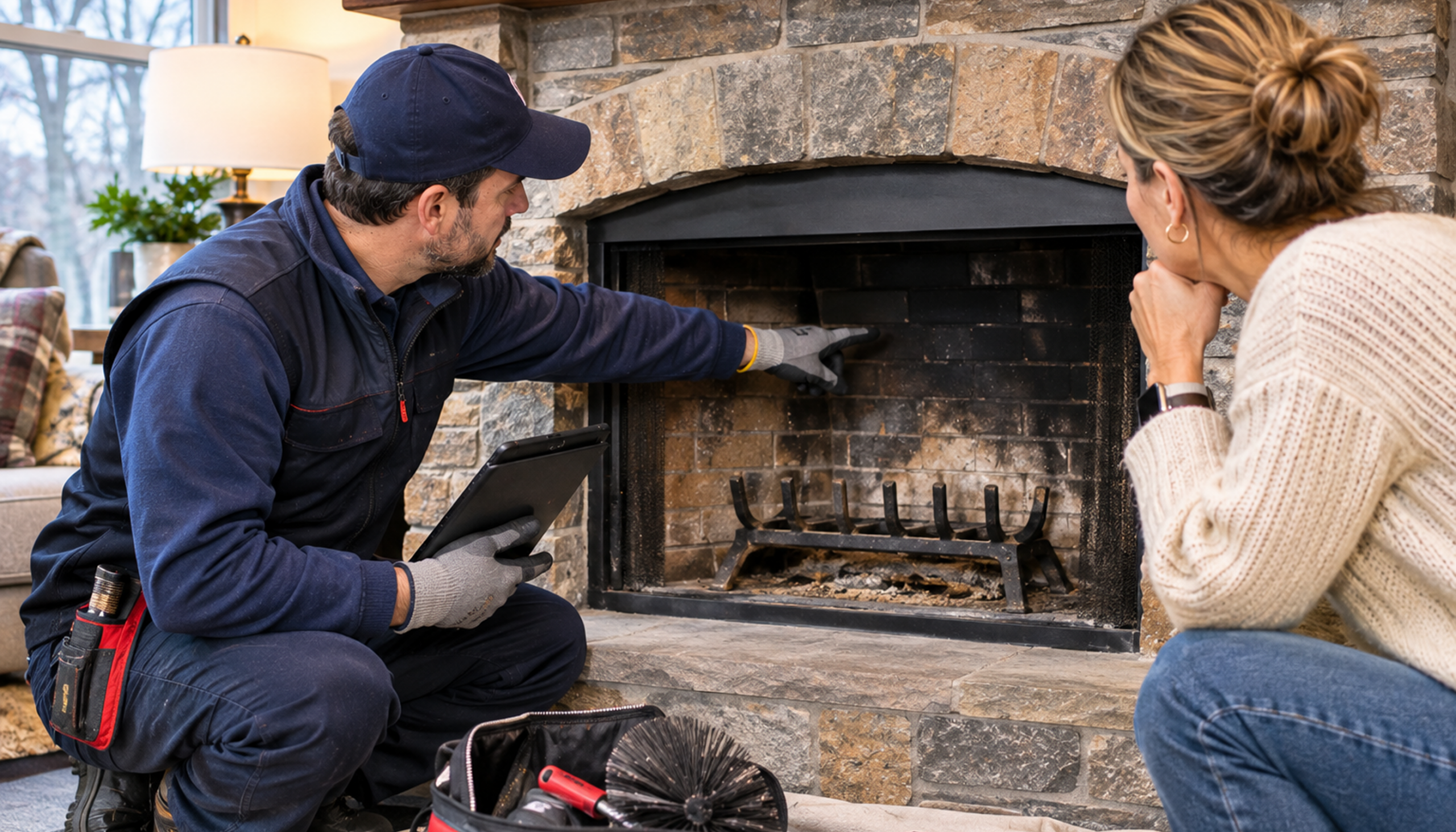
A fireplace checklist before your first fire helps you identify maintenance needs before using a wood-burning fireplace for the season. Start with its inspection history, address any recommended work, and check that the hearth and surrounding area are ready.
Homeowners arranging chimney cleaning in New York should explain when the fireplace was last used and whether anything has changed since then. Leaks, unusual noises, renovations, or missing service records can all affect what needs assessment.
1. Check the Last Inspection Report
Find the most recent chimney inspection report and review any recommendations. A previous inspection does not mean that unfinished repairs can be ignored.
If you do not know when the chimney was last examined, arrange an assessment before lighting a fire. The Consumer Product Safety Commission recommends annual professional inspections of fuel-burning heating systems, including fireplaces, chimneys, flues, and vents.
Professional chimney inspection services can help assess the system and identify whether cleaning, repairs, or further examination are needed. Explain if you recently purchased the property or have no maintenance records.
2. Confirm Whether Cleaning Is Needed
An empty firebox does not establish that the chimney above it is clean. Deposits can remain farther along the exhaust passage, outside your view.
Inspection and cleaning also serve different purposes. The inspection assesses condition; cleaning removes deposits and obstructions as appropriate. Neither automatically substitutes for the other.
Fire-safety guidance recommends professional inspection before the heating season and cleaning where necessary. Do not light a test fire to decide whether the flue needs attention.
Professional chimney sweeping services can address buildup identified during the assessment. Ask the provider to explain the cleaning scope and any concerns requiring separate repairs.
3. Look for Visible Firebox Changes
With the fireplace completely cold, observe accessible surfaces without dismantling components.
Look for loose firebrick, missing mortar, displaced panels, or fragments that have appeared since the last inspection. Take photographs to share with the technician.
A visible crack does not reveal its full depth or significance. Masonry fireplaces and factory-built systems can also have different repair requirements. Avoid patching the area with ordinary mortar or household sealant before it has been assessed.
4. Check That the Damper Operates Normally
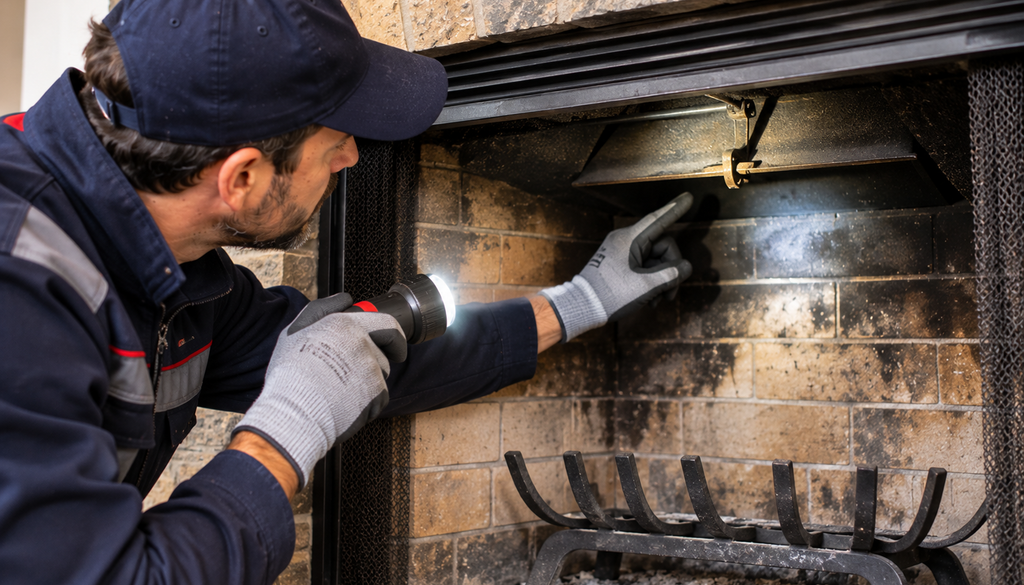
Review the fireplace’s operating instructions and identify its damper control.
For a conventional wood-burning fireplace, the damper needs to be open before lighting and remain appropriately open during use. Do not force a stiff handle or assume that its position confirms the plate has moved correctly.
If the control sticks or the damper appears damaged, arrange an assessment. Chimney damper repair or replacement may be appropriate when a defect is confirmed.
This checklist concerns wood-burning fireplaces. Gas log installations can have different damper requirements, so follow the instructions for the actual system.
5. Treat Noises and Debris as Reasons to Pause
Scratching, fluttering, or unfamiliar debris can indicate activity inside or near the chimney. They can also have other causes.
Do not light a fire to investigate the noise or drive wildlife out. Likewise, do not cover an opening before confirming that the chimney is clear.
Tell the service provider what you have heard or seen. The situation may need a different response from routine sweeping, particularly where wildlife is present.
Latest Blog: Electric Fireplace Turns On but No Heat?
An electric fireplace has different operating and maintenance needs from a wood-burning system. Our latest guide, Electric Fireplace Turns On but No Heat? What NYC Homeowners Should Check, explains heat settings, thermostat controls, and when professional servicing may be needed.
6. Prepare Suitable Firewood
Choose dry, seasoned firewood suitable for the appliance. Store it so it stays protected from rain while allowing appropriate air circulation.
Avoid burning household rubbish, plastic, or treated wood. Use the fireplace according to its instructions rather than building an oversized fire to warm the room faster.
The EPA recommends dry, seasoned wood, keeping flammable items away from fireplaces, and ensuring exhaust is properly vented outdoors.
A fireplace that repeatedly struggles to vent should be assessed rather than managed by adding more fuel.
7. Clear the Hearth and Surrounding Area
Move decorations, packaging, furniture, and other combustible items away from the fireplace according to its required clearances.
Check that a suitable fireplace screen is available where required. Keep children and pets away from the hearth, and avoid leaving items where they could fall toward the opening.
Seasonal decorations deserve particular attention. Remove stockings and similar combustible decorations before using the fireplace. Fire-safety guidance specifically warns against operating a fireplace with these items in place.
8. Check Smoke and Carbon Monoxide Alarms
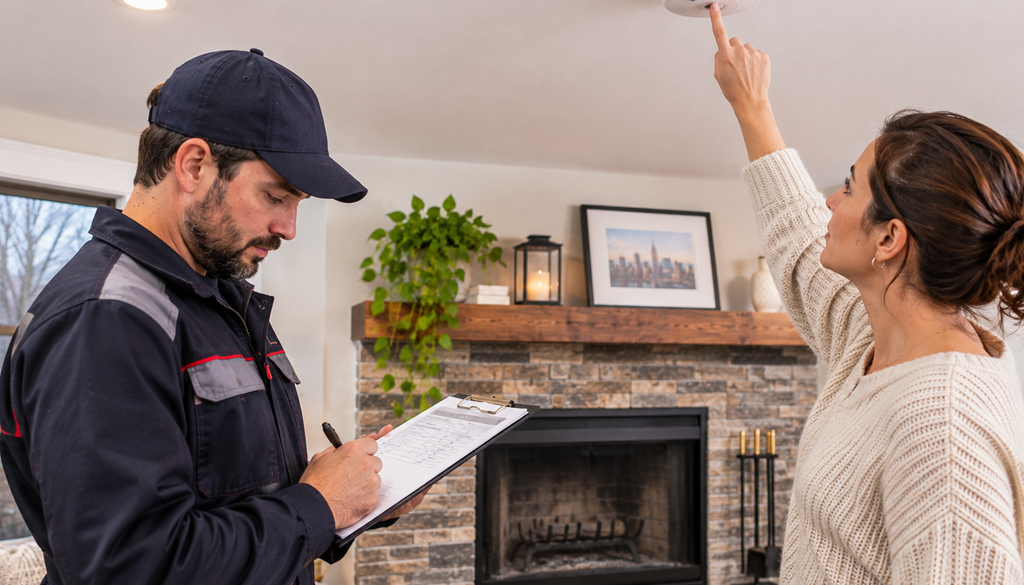
Test alarms using their manufacturer’s instructions. Check replacement dates and address missing or non-working units before relying on the fireplace.
Alarms provide warnings; they do not establish that the chimney is suitable for use. Inspection, maintenance, and correct operation remain necessary.
Do not use the absence of an alarm as proof that smoke spillage or another venting concern is harmless.
9. Know When to Stop
If smoke enters the room, stop using the fireplace and arrange an assessment before reuse. Do not keep adding wood to overcome a suspected venting problem.
Never close the damper over a burning fire or live embers to retain heat. Fire-safety guidance advises keeping it open until the fire is out and the embers are cold.
If you suspect a chimney fire or a carbon monoxide alarm activates, leave the building and contact emergency services from outside.
Arrange Your Pre-Use Assessment
Contact Chimney Experts Cleaning & Repair if the fireplace’s inspection history is unclear or you have noticed changes since its last use. Share previous reports and describe any leaks, unusual noises, damaged components, or smoke problems so the team can discuss the appropriate service.
Frequently Asked Questions
Does an unused fireplace still need inspection?
Yes. Limited use does not rule out deterioration, animal activity, or other changes. Regular professional assessment remains important.
Should I clean the fireplace before an inspection?
Ask the provider how to prepare. Keep access clear and the fireplace completely cold, but do not dismantle components or disturb unfamiliar debris.
Can I light a small fire to test the chimney?
Do not use a fire to diagnose an unknown condition. Arrange an assessment first if maintenance history or suitability for use is unclear.
Does this checklist apply to electric fireplaces?
No. Electric fireplaces require their own operating and maintenance instructions. They do not produce wood-burning deposits.
Is the fireplace ready once cleaning is finished?
Only if any other identified concerns have also been addressed. Ask the provider whether repairs or further assessment are required before use.

Chimney Experts Cleaning & Repair
Lorem ipsum dolor sit ametLorem ipsum dolor sit amet, consectetur adipiscing elit, sed do eiusmod tempor incididunt ut labore et dolore magna aliqua.
See All Blog