
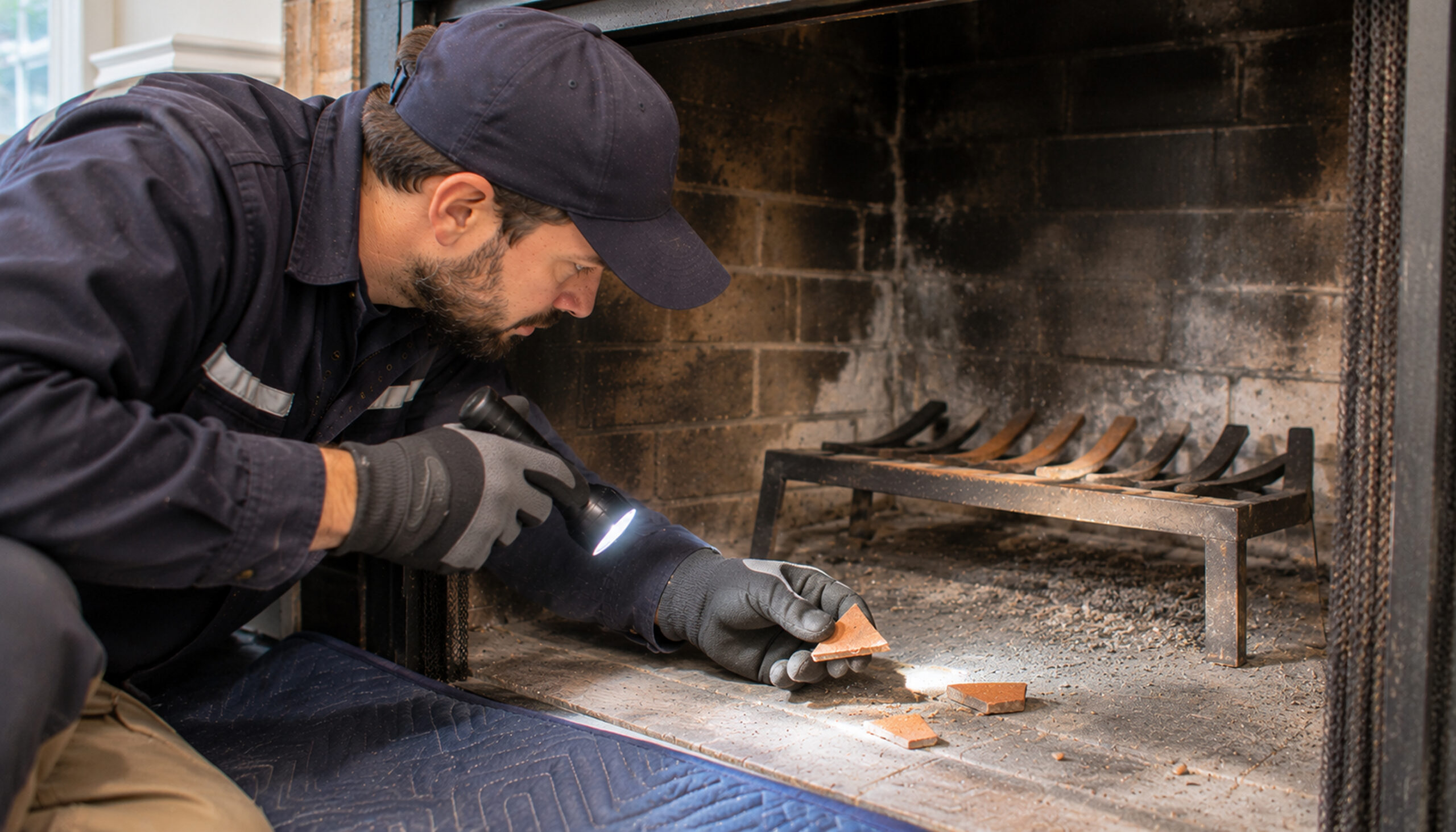
Finding chimney tile falling into your fireplace can be unsettling. The pieces might come from a clay flue liner, damaged firebrick, or another part of the fireplace assembly. Their appearance alone cannot confirm the source or the extent of the damage.
Leave the fireplace unused until a qualified professional has identified the material and assessed the affected area. Sweeping away the fragments does not establish that the chimney is suitable for another fire.
If you are arranging chimney cleaning in New York, mention the falling material when booking. Explain whether it appeared once, keeps returning, or followed a recent fire or service visit.
What Could the Pieces Be?
Different fireplace materials can look similar after exposure to soot and heat. Color and shape provide clues, but they are not a reliable diagnosis.
Clay flue tile
Some masonry chimneys contain clay tiles that form the lining of the flue. Fragments may look like pieces of fired ceramic, sometimes with a curved surface.
A professional needs to determine whether they came from the liner and locate the damaged section.
Firebrick or refractory material
The firebox contains materials designed for its operating conditions. Traditional masonry fireplaces commonly have firebrick, while factory-built models may use refractory panels.
Damage in this area requires a different assessment from a defect farther up the flue.
Mortar or other masonry material
Small, gritty pieces may come from deteriorated joints or masonry. However, fragments on the fireplace floor do not reveal which joint or component released them.
Do not assume that every reddish piece is a flue tile or every gray fragment is harmless mortar.
Why Does the Source Matter?
The firebox and the flue perform different jobs. Repairing one does not automatically address damage in the other.
For example, replacing damaged firebrick would not repair a broken tile higher in the chimney. Similarly, relining the flue would not necessarily resolve a defective firebox.
Ask the technician to identify the component, show where the damage is located, and explain how the proposed work addresses it. A recommendation should connect the observed defect to a specific repair.
Does Falling Tile Mean There Was a Chimney Fire?
Not necessarily. Finding fragments does not establish the cause of the damage.
However, chimney fires can crack clay tiles and damage mortar joints. CSIA includes cracked or collapsed flue tiles among the conditions professionals look for when investigating possible chimney-fire damage.
Tell the inspector about any unusual event, such as:
- A previous chimney or building fire.
- An unusually intense fire.
- Loud roaring or cracking sounds during use.
- Smoke appearing where it normally does not.
- Recent work involving the fireplace or chimney.
These details help guide the assessment. They do not replace examination of the system.
What Should You Do Before the Inspection?
Keep the fireplace unused and avoid disturbing the area unnecessarily.
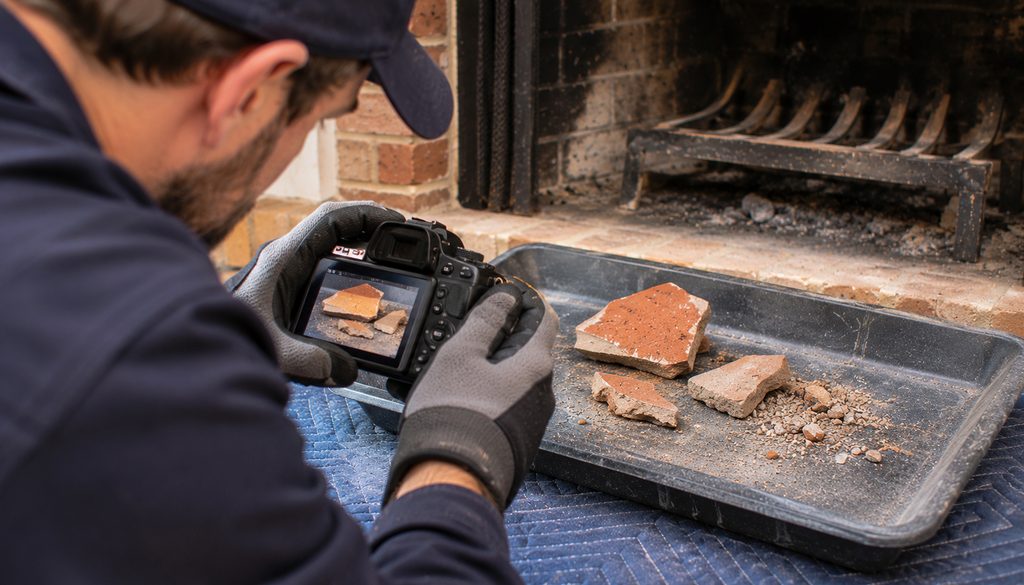
Once everything is completely cold, photograph the fragments where they were found. Take a wider photograph showing their location within the fireplace, followed by a closer view.
Record when you first noticed them and whether more pieces have appeared. If they were discovered after sweeping or repair work, tell the service provider.
Avoid reaching above the damper, removing fixed parts, or attempting to knock loose material down. Do not climb onto the roof to inspect the flue opening.
If you rent or live in a managed building, report the issue to the landlord or building manager.
How Can an Inspection Find the Problem?
A chimney inspection in New York can help determine which areas need examination and whether the visible damage extends beyond the fireplace opening.
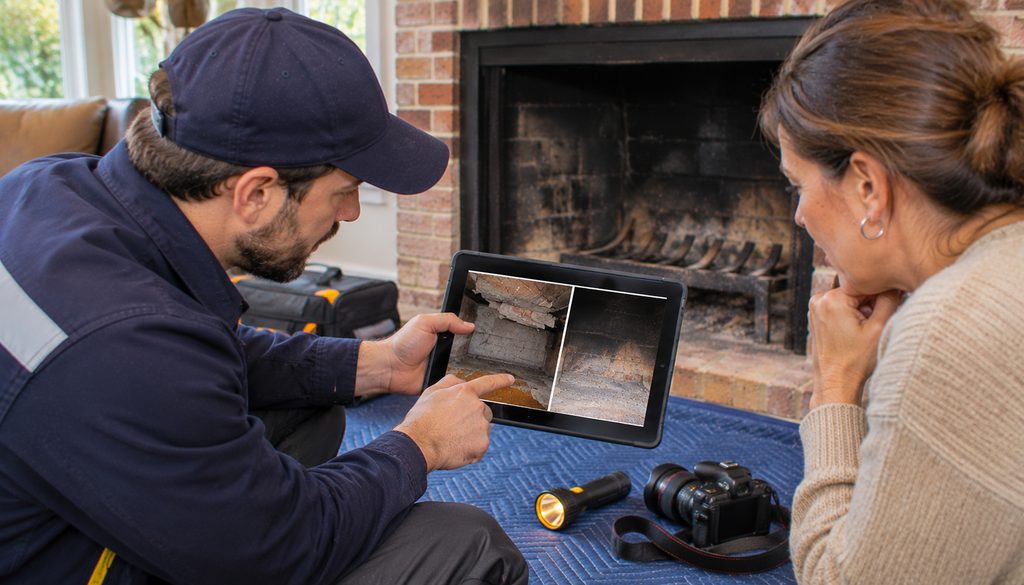
Depending on the findings, an interior camera examination may be appropriate. CSIA’s Level 2 inspection guidance includes video scanning or a similar examination of the chimney interior, with access limitations documented when applicable. Ask for photographs and a clear explanation of:
- The material that appears to have fallen.
- The location of the suspected defect.
- Any cracks, gaps, missing sections, or displaced components.
- Areas that could not be inspected.
- The work required before further use.
An inspection should help separate confirmed findings from areas that require additional investigation.
Latest Blog: Dryer Vent Flap Not Opening Outside?
For a separate home maintenance concern, read Dryer Vent Flap Not Opening Outside? What NYC Homeowners Should Check.
That guide explains why a closed exterior flap may involve the hood, exhaust route, or appliance. Dryer exhaust and chimney problems need separate assessments, even when both require professional attention.
Will the Chimney Need a New Liner?
Falling material does not automatically mean every chimney needs the same repair.
If inspection confirms liner damage, the proposed approach should account for its location and extent, the chimney’s construction, and the appliance or fireplace it serves.
Where chimney liner installation or replacement is appropriate, ask why the selected system suits the installation. CSIA guidance states that listed liners must follow their manufacturer’s instructions and be appropriately sized and suitable for the service involved.
Do not select a liner purely by material or price. Ask what preparation, access, connections, and completion checks the quoted work includes.
What If the Damage Is in the Firebox?
If the fragments come from the fireplace chamber, the repair should match its construction.
A masonry firebox and a factory-built fireplace panel are different assemblies. Ordinary mortar, an improvised patch, or a replacement panel chosen only by appearance may be unsuitable.
For confirmed damage in this area, firebox repair services can address the affected components according to the findings. Ask whether the damage is limited to one area and whether other parts of the fireplace also need attention.
Avoid covering the defect before it has been documented and assessed.
Can Chimney Cleaning Solve the Problem?
Cleaning removes deposits and debris. It does not restore a cracked tile, replace missing masonry, or repair a damaged panel.
Sweeping may form part of the assessment or repair preparation, but the provider should explain its purpose. Ask whether the service includes investigating the source of the fragments or only removing loose material.
If pieces continue to appear after cleaning, report that finding rather than assuming the remaining debris is normal.
Arrange an Assessment before another Fire
Material falling into the fireplace deserves investigation before further use. Identifying its source helps avoid repairing the wrong component or overlooking damage farther up the chimney.
Contact Chimney Experts NY to discuss what you have found. Share photographs, the fireplace type if known, and details of any recent use or work.
Frequently Asked Questions
Are orange pieces in my fireplace definitely chimney liner tiles?
No. Several fireplace materials can have a similar color. Their source needs confirmation through inspection.
Can I use the fireplace after removing the pieces?
Removing the debris does not repair its source. Leave the fireplace unused until the affected area has been assessed.
Does falling tile always require a complete chimney rebuild?
No. The appropriate work depends on the confirmed damage and the chimney’s overall condition. Ask for documented findings supporting the proposed repair.
Can a camera inspection identify every defect?
No inspection can reveal every concealed condition. Ask what was examined, what could not be accessed, and whether further investigation is needed.
Should I keep photographs of the fragments?
Yes. Photographs showing their original location and appearance can help the technician understand what you noticed before the visit.

Chimney Experts Cleaning & Repair
Lorem ipsum dolor sit ametLorem ipsum dolor sit amet, consectetur adipiscing elit, sed do eiusmod tempor incididunt ut labore et dolore magna aliqua.
See All Blog