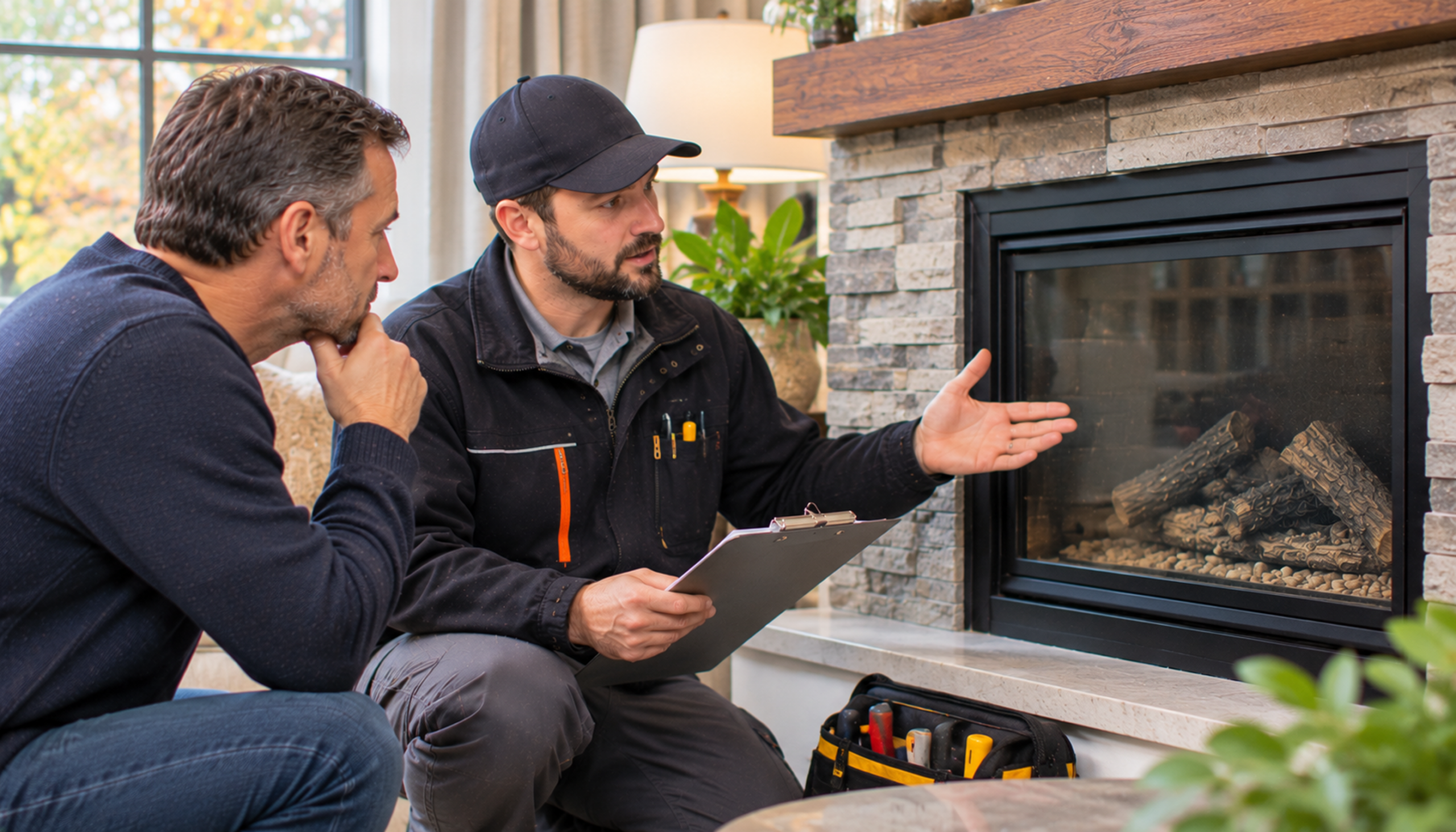
A chimney inspection before buying a house can help you understand the fireplace and venting system before taking responsibility for maintenance or repairs. An attractive hearth and clean fireplace opening cannot establish the condition of the flue above.
A seller may describe the fireplace as working, but that statement does not explain when it was inspected, what was examined, or whether earlier recommendations were completed.
Buyers researching chimney cleaning in New York should explain that the visit relates to a property purchase. A cleaning appointment and an inspection for a home sale have different purposes.
Why Check the Chimney Before Buying?
A chimney can contain areas that are difficult to examine from the living room or ground level. Previous alterations, connected heating appliances, and maintenance history may also affect the assessment.
Arranging the inspection early gives you time to review findings, ask questions, and obtain estimates where necessary.
The purpose is to understand the system’s condition and limitations. An inspection does not guarantee that every concealed defect will be found or that future repairs will never be needed.
Is a General Home Inspection Enough?
A general home inspection and a dedicated chimney inspection may have different scopes.
Ask your home inspector exactly what their visit includes. Do not assume that a general inspection includes an internal flue-camera examination or a detailed assessment of every connected appliance.
Similarly, a brief look inside the fireplace is not automatically equivalent to a comprehensive chimney inspection.
When arranging a chimney inspection in New York, explain that you are buying the property. Confirm the proposed inspection level, systems included, access requirements, and written documentation before booking.
What Is a Level 2 Chimney Inspection?
CSIA guidance recommends a Level 2 inspection when a property is being sold. This builds on a Level 1 inspection and involves a broader examination of accessible areas and the chimney interior.
Ask the provider how this scope applies to the property you are considering. A home may have more than one flue, fireplace, or connected heating appliance.
Avoid treating “Level 2” as a promise that every hidden part will become visible. Access limitations and conditions affecting the examination should be recorded.
An industry inspection recommendation should also not be confused with a statement about every local legal or transaction requirement. Discuss those requirements with the appropriate professionals handling your purchase.
What Records Should You Request From the Seller?
Ask for available inspection reports, cleaning records, repair invoices, and installation documents.
Useful information includes:
- When the chimney was last inspected and cleaned.
- Whether recommended repairs were completed.
- Whether an insert, stove, boiler, or furnace was changed.
- Whether there have been leaks, smoke problems, or a chimney fire.
- Whether the fireplace has been unused for an extended period.
Documents are more useful than an informal statement that everything was serviced.
Missing records do not automatically establish a defect. They do mean the inspector has less history to work with.
What Should the Inspection Report Explain?
A useful report should identify the systems examined and describe significant findings in clear language.
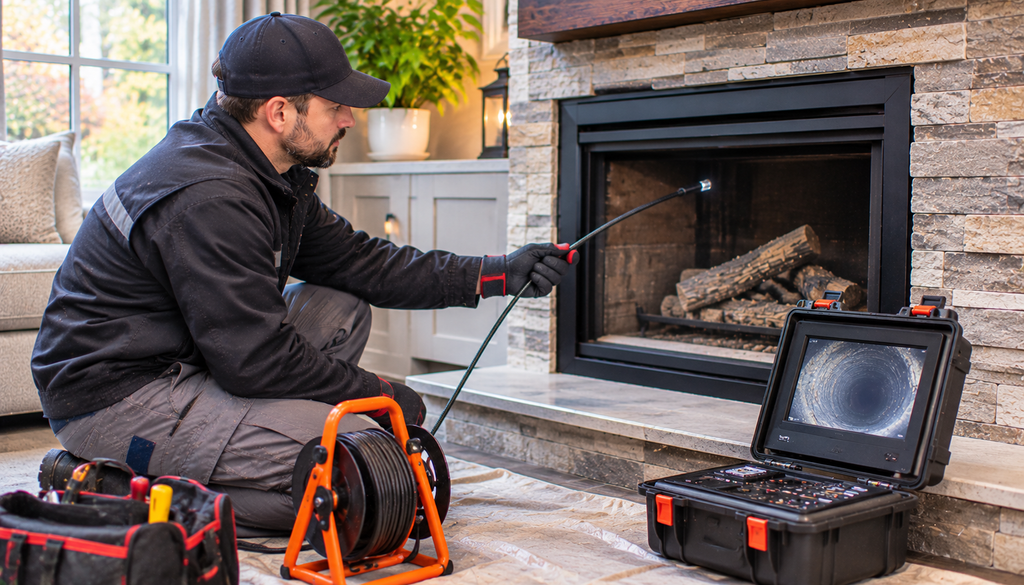
Ask for photographs supporting recommendations and an explanation of any areas that could not be examined. The report should distinguish observed damage from a concern requiring further investigation.
For each recommendation, ask:
- Where is the issue?
- What evidence supports the finding?
- Does further examination need to happen first?
- What work is recommended before use?
- Who should carry out that work?
Avoid interpreting one photograph without its location and context. The same-looking mark can have different implications depending on the component involved.
Latest Blog: Is Your Firewood Too Wet?
Planning to use a wood-burning fireplace after the purchase? Read Is Your Firewood Too Wet? A Winter Guide for NYC Homeowners.
That guide explains how to check fuel moisture and store logs appropriately. Suitable firewood supports proper operation, but it does not replace an assessment of the fireplace and chimney.
What if the Inspector Finds Repairs?
First, ask for an explanation of the findings and proposed scope. A repair recommendation should identify the affected component rather than simply describe the entire chimney as needing work.
For exterior masonry or other repair findings, an assessment for chimney repair and restoration can help establish the appropriate work and estimate.
Keep the inspection findings and repair quotation together. Check whether the quotation includes access arrangements, related work, and any further examination.
Discuss transaction decisions with your buyer’s representative or attorney. The inspector provides condition information; they do not decide how the purchase should proceed.
Does a Liner Recommendation Mean Complete Rebuilding?
Not necessarily. The liner and exterior masonry are different parts of the chimney.
Ask the inspector to explain the liner’s condition, what appliance it serves, and why replacement or further evaluation is recommended.
A proposal for chimney liner installation should reflect the actual installation and connected equipment. It should not follow solely from the chimney’s age or appearance.
Likewise, a repair to exterior brickwork does not establish that the interior lining is suitable for continued use.
How Should Access Be Arranged?
Coordinate with the seller, agent, or building management before the appointment.
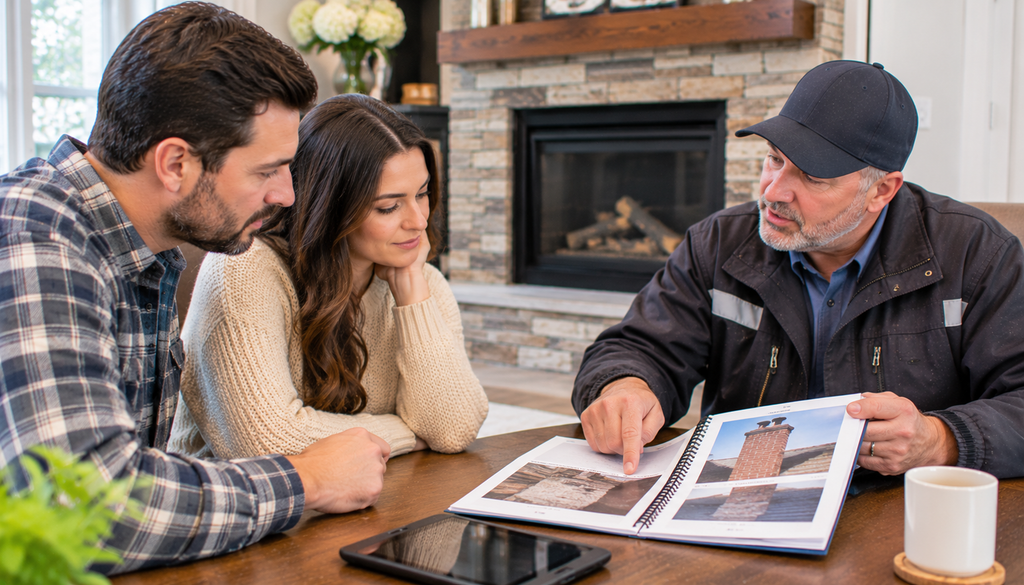
The provider may need access to the fireplace, utility areas, and other relevant parts of the property. Roof conditions, locked spaces, stored belongings, or shared building arrangements can affect the examination.
Ask the provider how long the appliance must remain unused beforehand. Keep children and pets away from the work area.
Do not climb onto the roof or remove panels yourself to prepare for the inspection.
Can You Test the Fireplace During a Viewing?
Do not light a fire simply to see whether smoke goes up the chimney.
A short demonstration cannot establish the condition of concealed components or prove that the system is suitable for continued use.
If the seller offers a demonstration, ask for inspection documentation instead. Follow the inspecting professional’s recommendations before operating the appliance.
Smoke entering the room, a carbon monoxide alarm, or suspected fire requires immediate action. Leave the property and contact emergency services from outside when necessary.
Arrange the Inspection Early
Booking before the final stages of the purchase leaves more time to understand findings and obtain any necessary follow-up.
Contact Chimney Experts NY to discuss the property, fireplace type, and available records. Explain that the appointment is for a home purchase and confirm the required inspection scope.
A clear report helps you plan maintenance and understand outstanding work before using the system.
Frequently Asked Questions
Should I inspect a chimney that looks clean?
Yes, appearance alone cannot establish its interior condition or suitability for use.
Does a seller’s cleaning receipt replace an inspection report?
No. A cleaning receipt may document maintenance, but it does not necessarily describe inspection scope or findings.
Should an unused fireplace still be checked?
Yes. Lack of recent use does not establish that the chimney is clear, undamaged, or appropriate to operate.
Will the inspector find every concealed problem?
No inspection can guarantee that. Ask the provider to explain access limitations and whether further investigation is recommended.
Can I use the fireplace immediately after moving in?
Follow the inspection findings and complete any work recommended before use. Moving in does not change the condition of the system.

Chimney Experts Cleaning & Repair
Lorem ipsum dolor sit ametLorem ipsum dolor sit amet, consectetur adipiscing elit, sed do eiusmod tempor incididunt ut labore et dolore magna aliqua.
See All Blog