
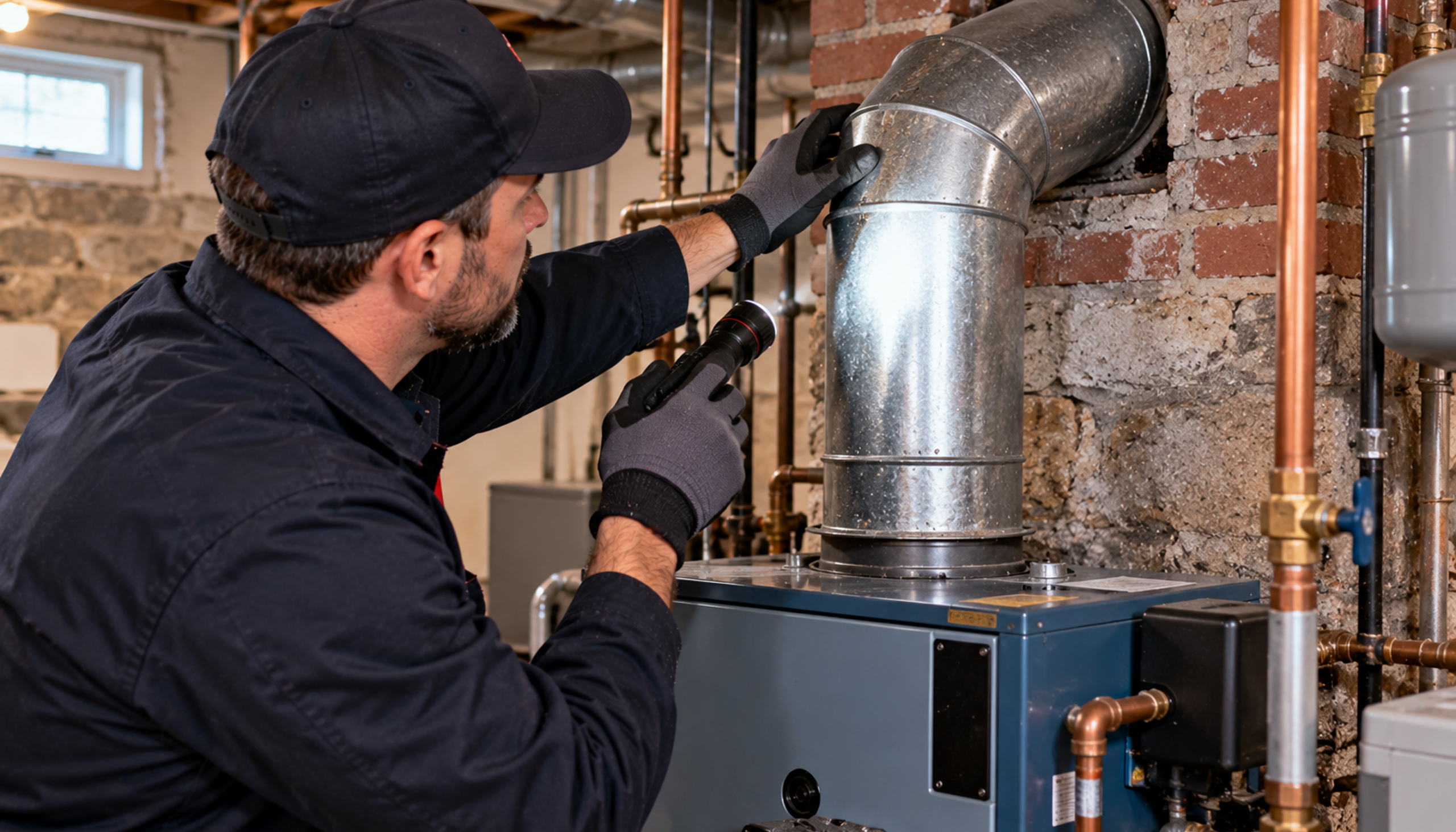
Boiler flue cleaning addresses deposits and obstructions in the passage that carries combustion gases away from a fuel-burning boiler. Whether cleaning is needed depends on the appliance, fuel, venting arrangement, and inspection findings. A boiler producing heat does not automatically mean its exhaust system is in good condition.
Homeowners arranging chimney cleaning in New York should mention whether the chimney serves a fireplace, boiler, or another appliance. This helps the technician understand which parts of the venting system need assessment.
What Is a Boiler Flue?
The flue is the passage through which combustion gases leave the heating system. In some homes, a metal connector joins the boiler to a lined masonry chimney. Other boilers use a different manufacturer-approved venting arrangement.
The visible pipe beside the boiler is therefore only one part of the exhaust route. A problem may occur at the connection, farther inside the chimney, or near the termination.
Electric boilers do not produce combustion exhaust and do not require a combustion flue. This guide concerns fuel-burning boilers with venting systems.
Does Every Boiler Flue Need the Same Cleaning?
No. Different fuels and appliances produce different operating conditions.
Oil-fired systems can accumulate soot. A gas-fired system may have less visible buildup, but its venting still needs attention for deterioration, obstructions, and unsuitable connections.
Modern condensing boilers can use venting materials and arrangements that differ considerably from traditional chimney-connected systems. Their maintenance must follow the equipment manufacturer’s instructions.
Professional boiler and furnace cleaning services should be matched to the equipment and the areas requiring work. When booking, explain what type of system you have and ask which components the visit covers.
Signs Your Boiler Flue Needs Assessment
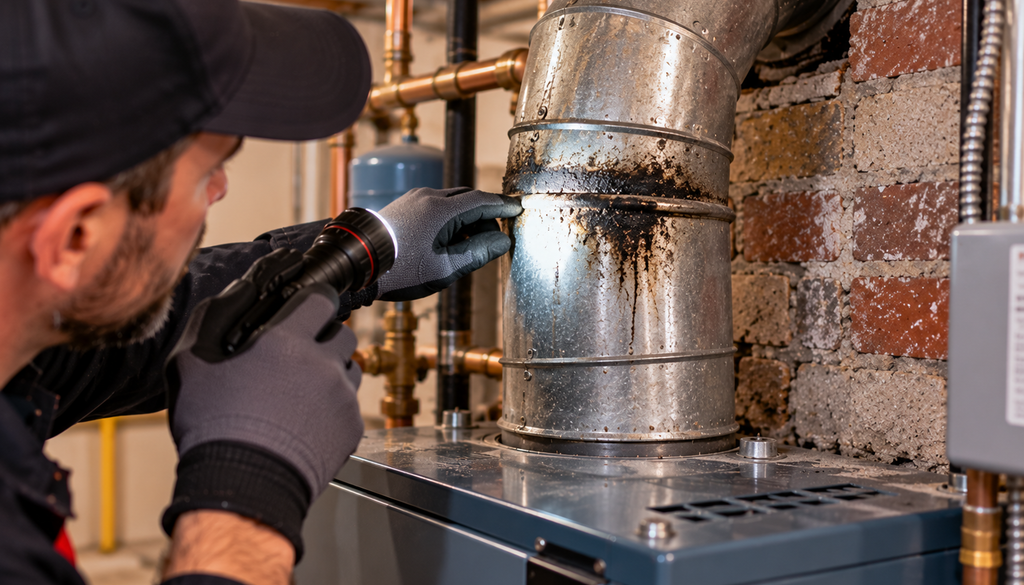
Soot Appears Around the Flue Connection
Black deposits around a connector, opening, or nearby surface deserve investigation. They may indicate a combustion or venting problem rather than simply an overdue cleaning.
Do not brush away recurring soot and assume the issue is resolved. Photograph the area and arrange professional attention.
Cleaning may be part of the required work, but an appliance problem or defective connection could also need correction.
The Connector Looks Rusted, Loose, or Damaged
Visible corrosion, separated joints, holes, or an insecure connection can affect the exhaust route.
These are repair concerns. Cleaning cannot restore damaged metal or secure a poorly supported connector.
Avoid moving the pipe or attempting to cover a damaged area with household tape. The connection needs assessment using the requirements appropriate to the appliance and venting system.
Debris Appears Near a Chimney Access Opening
Loose masonry, nesting material, or other debris can indicate a problem somewhere in the chimney.
The source should be identified before deciding that sweeping alone is sufficient. Deteriorating lining, animal entry, or damage above the roof may require separate work.
Do not open unfamiliar access panels or disturb a connection while the heating equipment operates.
Are Higher Heating Bills a Sign of a Dirty Flue?
Higher bills alone cannot diagnose a flue problem.
Weather, thermostat settings, fuel prices, insulation, and appliance condition can all affect heating costs. A noisy boiler or uneven heating can also have causes unrelated to the chimney.
Share these observations with the appropriate heating professional, but avoid assuming that flue cleaning will solve every performance issue. The appliance and its exhaust system may both need evaluation.
Latest Blog: Why Is My Chimney Mortar Crumbling?
A chimney serving a boiler also needs attention to its exterior masonry. Our latest article, Why Is My Chimney Mortar Crumbling? Signs NYC Homeowners Should Know, explains deteriorated joints, moisture exposure, and when brick pointing may be appropriate.
How Is Flue Cleaning Different From Boiler Servicing?
Boiler servicing focuses on the heating equipment and its operation. Depending on the appliance and service agreement, this may include combustion checks, burner maintenance, controls, and other components.
Flue cleaning concerns deposits and obstructions within the exhaust route. A heating service visit should not automatically be assumed to include the full chimney.
Ask both providers what their work covers. Clear scope helps avoid gaps where the appliance has been serviced but the chimney has not been examined.
When Does the Vent Connection Need Separate Work?
A corroded connector, unsuitable installation, or change of appliance may require venting work beyond cleaning.
The pipe arrangement, material, sizing, support, and connection must suit the system. Replacing an old boiler does not automatically make its existing chimney connection suitable for the new equipment.
Professional boiler breaching and venting services can assess the connection and discuss necessary work. Any proposed changes should be coordinated with the appliance’s installation requirements.
How Often Should a Boiler Flue Be Cleaned?
There is no single cleaning interval suitable for every boiler and chimney.
The schedule depends on fuel, usage, appliance condition, deposit accumulation, and manufacturer guidance. Inspection findings should help determine whether cleaning is required.
If the property is new to you or maintenance records are missing, arrange an assessment rather than guessing when the flue was last checked.
Professional chimney inspection services can help evaluate the chimney serving the heating system and identify concerns requiring closer examination.
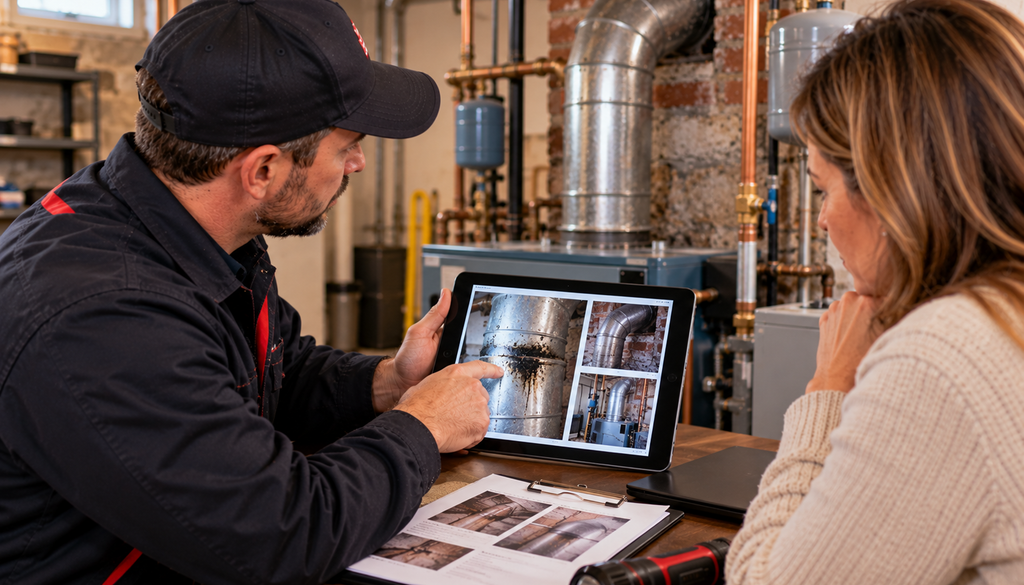
What Should You Tell the Technician?
Before the appointment, gather any available appliance information and maintenance records.
Useful details include:
- Whether the boiler uses gas or oil.
- The approximate age of the equipment.
- When the boiler and chimney were last serviced.
- Any soot, moisture, corrosion, or unusual odors noticed.
- Recent appliance replacements or venting changes.
Keep access to the boiler and chimney cleanout clear. Do not remove covers or dismantle piping in preparation.
If a carbon monoxide alarm sounds, leave the building and contact emergency services from outside. Do not wait for a routine cleaning appointment.
Arrange a Boiler Flue Assessment
Contact Chimney Experts Cleaning & Repair if your boiler’s chimney needs attention or its maintenance history is unclear. Explain the equipment type and any visible concerns so the team can discuss the appropriate service and scope.
Frequently Asked Questions
Does a gas boiler chimney still need inspection?
Yes. Limited visible soot does not rule out blockages, deterioration, or connection problems. Maintenance should suit the appliance and venting arrangement.
Does boiler servicing include chimney cleaning?
Not necessarily. Ask the provider whether the service includes the connector, chimney flue, or only the appliance.
Can cleaning repair a rusty flue pipe?
No. Cleaning removes deposits as appropriate; damaged piping requires a separate assessment and suitable repairs or replacement.
Will flue cleaning lower my heating bills?
It cannot guarantee lower bills. Costs depend on several factors, and any appliance or venting fault must be properly diagnosed.
Can I clean the boiler flue myself?
Arrange professional service. The work involves combustion venting, and incorrect dismantling or reassembly can create problems that are not obvious from appearance alone.

Chimney Experts Cleaning & Repair
Lorem ipsum dolor sit ametLorem ipsum dolor sit amet, consectetur adipiscing elit, sed do eiusmod tempor incididunt ut labore et dolore magna aliqua.
See All Blog