
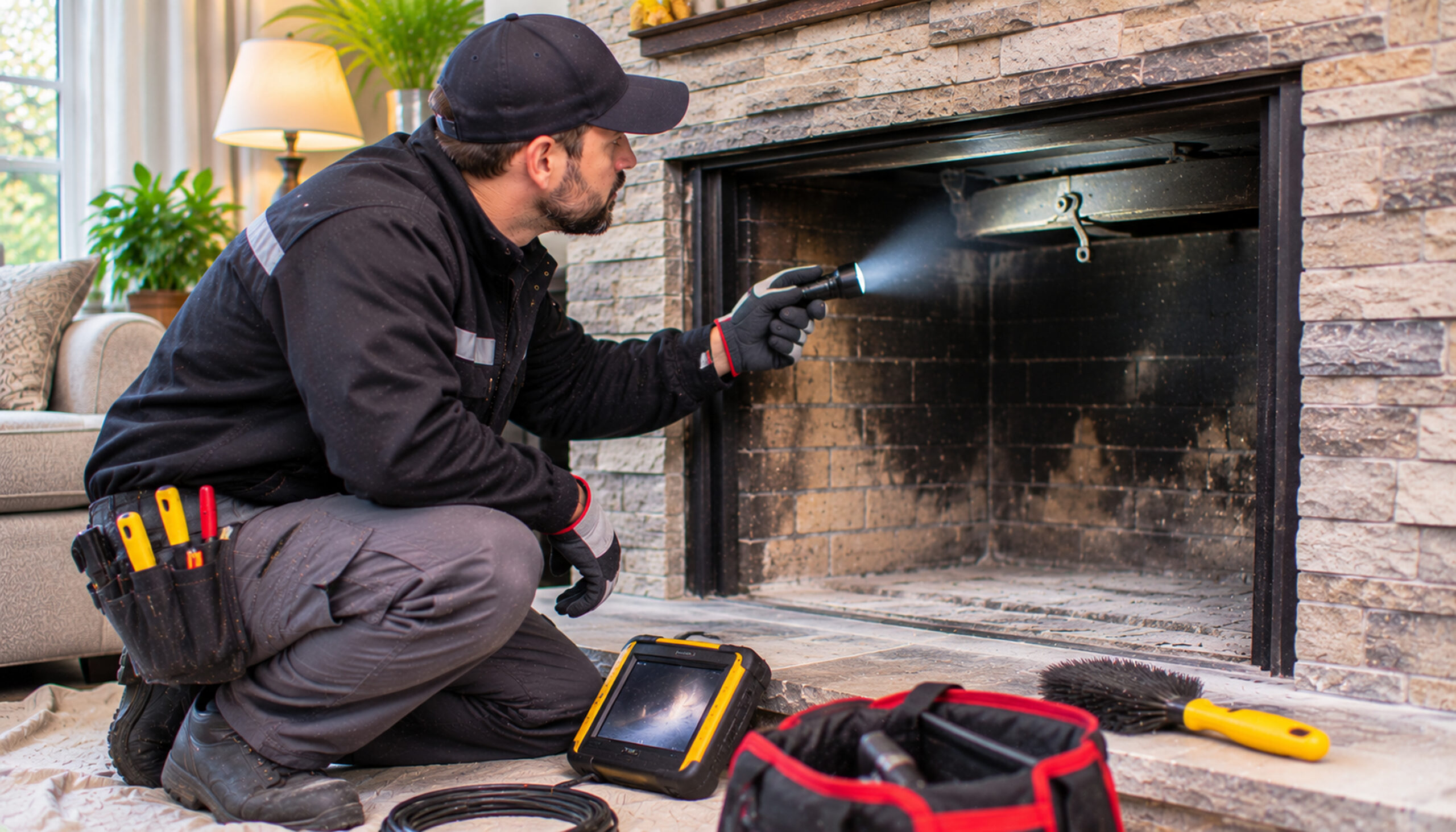
A fireplace damper stuck open or closed can leave homeowners unsure whether the fireplace is suitable to use. The handle may resist movement, feel unusually loose, or appear to operate without moving the damper correctly.
These symptoms can have different causes. Rust, damaged components, or material around the mechanism may need investigation. Forcing the control does not establish that the passage is clear or that the damper opens fully.
Homeowners arranging chimney cleaning in New York should mention damper problems when booking. Cleaning and repairing a mechanical component are different tasks, although both may be relevant during the same visit.
What Does a Fireplace Damper Do?
In a conventional wood-burning fireplace, the damper helps control the opening between the firebox and chimney.
A throat damper is generally located above the firebox. A top-sealing damper sits near the chimney top and may operate through a cable or chain.
The controls and operating instructions depend on the installation. Do not assume that a lever, knob, or hanging chain works the same way as one you have used elsewhere.
This guide focuses on wood-burning fireplaces. Gas appliances and gas-log installations can have different damper requirements, so follow their specific instructions.
What if the Damper Is Stuck Closed?
Do not light a fire if the damper cannot be confirmed open as required.
A closed or malfunctioning damper can restrict the route combustion gases need to escape. CSIA warns that lighting a fireplace with a closed or incorrectly functioning damper can cause indoor smoke and hazardous conditions.
If the control will not move normally, stop. Do not strike it with a hammer, add leverage, or use a fire to heat the mechanism.
Arrange an assessment before using the fireplace again.
What if It Is Stuck Open?
A damper that cannot close needs attention even when the fireplace is unused. However, the immediate response differs from a damper stuck closed.
Do not block the flue with towels, foam, cardboard, or another improvised material. Someone may later use the fireplace without realizing the passage has been obstructed.
If a fire or hot embers are present, do not attempt to close the damper to stop airflow. Follow the fireplace’s operating instructions and keep people away from hot controls.
For a completely cold fireplace, record the problem and arrange service.
Why Might the Damper Become Difficult to Operate?
Rust or Deteriorated Metal
Rust in the damper area deserves assessment, including consideration of possible moisture exposure.
Corrosion does not automatically explain every stuck mechanism. A professional should check the component’s condition and operation rather than recommending replacement from a photograph alone.
Warped or Damaged Components
A plate, frame, or linkage may no longer move as intended. The extent of damage affects whether servicing, component repair, or replacement is appropriate.
Material Around the Mechanism
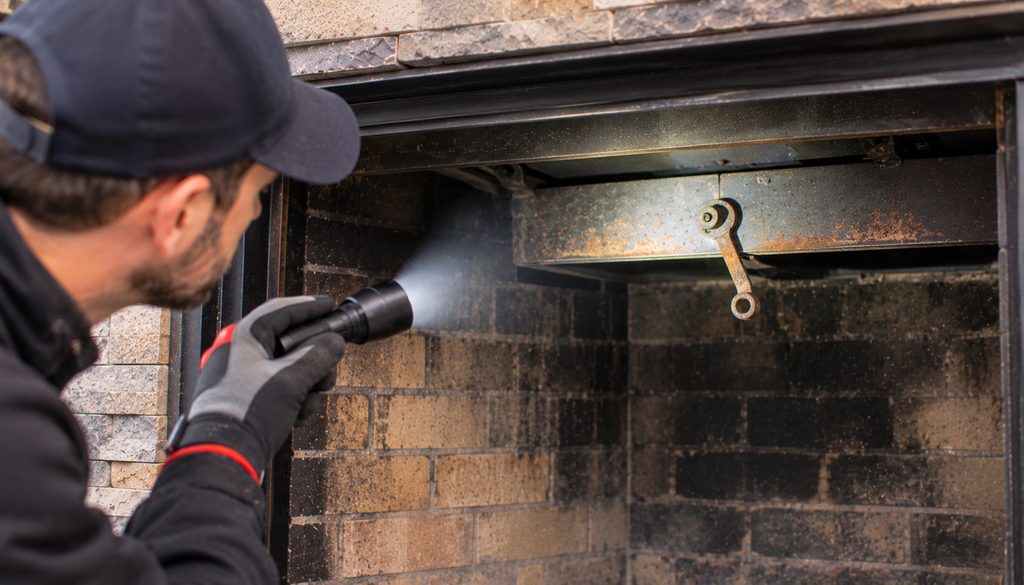
Deposits or debris may interfere with movement. If unfamiliar material is visible, avoid reaching into the chimney or disturbing it yourself.
CSIA’s masonry-fireplace inspection guidance includes checking for rust and warped metal around the firebox and damper.
Does a Moving Handle Mean the Damper Is Open?
Not necessarily. The control and the part it operates may not be moving together correctly.
A loose linkage or damaged mechanism can make the handle’s position misleading. Likewise, partial movement does not establish that the damper reaches its intended position.
Do not light paper or another material to test the airflow. Avoid reaching into inaccessible areas to feel for movement.
When discussing chimney damper repair or replacement, explain whether the control is stiff, loose, or moves without an obvious result. That information helps the professional plan the assessment.
Latest Blog: Adding a Fireplace Insert?
Considering a fireplace upgrade instead? Read Can You Add a Fireplace Insert to an Existing Fireplace? NYC Guide.
That article explains why the existing fireplace and proposed appliance must be assessed together. Do not remove or alter a damper to make room for an insert without an approved installation plan.
What Can You Observe Safely?
With the fireplace completely cold, review any available operating instructions and note the control’s location.
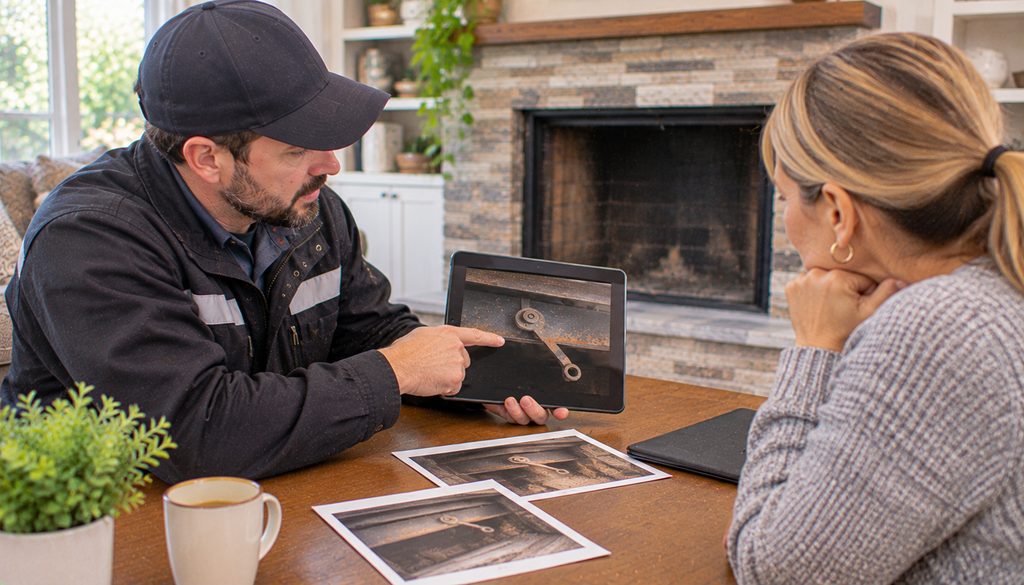
From an accessible position, record visible rust, loose parts, water staining, or material on the firebox floor. Photographs can help document what you noticed.
Do not dismantle the control, pull hard on a cable, or climb onto the roof. Avoid applying household lubricants or cleaners inside the fireplace without specific manufacturer guidance.
In a rented or managed property, notify the owner or building manager before arranging repairs.
Will Chimney Cleaning Solve the Problem?
It may help if deposits are interfering with operation, but cleaning is not a guaranteed repair for a stuck damper.
A broken linkage, deteriorated plate, or distorted frame may require separate work. Moisture contributing to corrosion may also need investigation.
Ask the professional to explain what is preventing normal movement and which findings support the proposed treatment.
A chimney inspection in New York can help establish whether the concern extends beyond the visible mechanism. Explain the operating problem when booking so the scope addresses it.
Repair or Replacement: How Is That Decided?
The decision depends on the damper type, condition, availability of suitable parts, and the installation.
A limited mechanical problem may have a different solution from widespread deterioration. A replacement must also be compatible with the fireplace and its intended use.
Ask for a written explanation identifying the affected components, recommended work, and any additional examination required.
Do not assume that a top-sealing damper is suitable for every chimney or that it resolves every draft or odor problem.
What if Smoke Has Already Entered the Room?
Stop adding fuel and do not close the damper while a fire or hot embers remain.
If smoke is heavy, a carbon monoxide alarm sounds, anyone feels unwell, or you suspect a chimney fire, leave the property and call emergency services from outside.
Repeated smoke spillage requires assessment before further use. A damper may be involved, but blockage, airflow, or other installation conditions can also contribute.
A handle adjustment should not be treated as proof that the whole system is suitable to operate.
Arrange an Assessment before another Fire
A stuck damper needs a clear explanation rather than repeated attempts to force it.
Contact Chimney Experts NY to describe the symptoms and arrange an appropriate visit. Mention any smoke problems, water staining, unusual debris, or previous repair recommendations.
Ask what was checked and what must be completed before the fireplace is used again.
Frequently Asked Questions
Can I use a fireplace with the damper partly open?
Follow the fireplace’s instructions. If the damper cannot reach its required operating position, do not light a fire.
Should I force a stuck handle?
No. Forcing it can damage components without confirming that the damper is operating correctly.
Is rust proof that rain is entering the chimney?
No. Rust warrants investigation, but its appearance alone does not identify the moisture source.
Will replacing the damper fix every fireplace draft?
No. Draft problems can have several causes, so assessment should guide the repair.
Should a gas fireplace damper close like a wood-burning one?
Not necessarily. Gas installations have appliance-specific requirements. Do not change the arrangement without checking the instructions and obtaining qualified advice.

Chimney Experts Cleaning & Repair
Lorem ipsum dolor sit ametLorem ipsum dolor sit amet, consectetur adipiscing elit, sed do eiusmod tempor incididunt ut labore et dolore magna aliqua.
See All Blog