
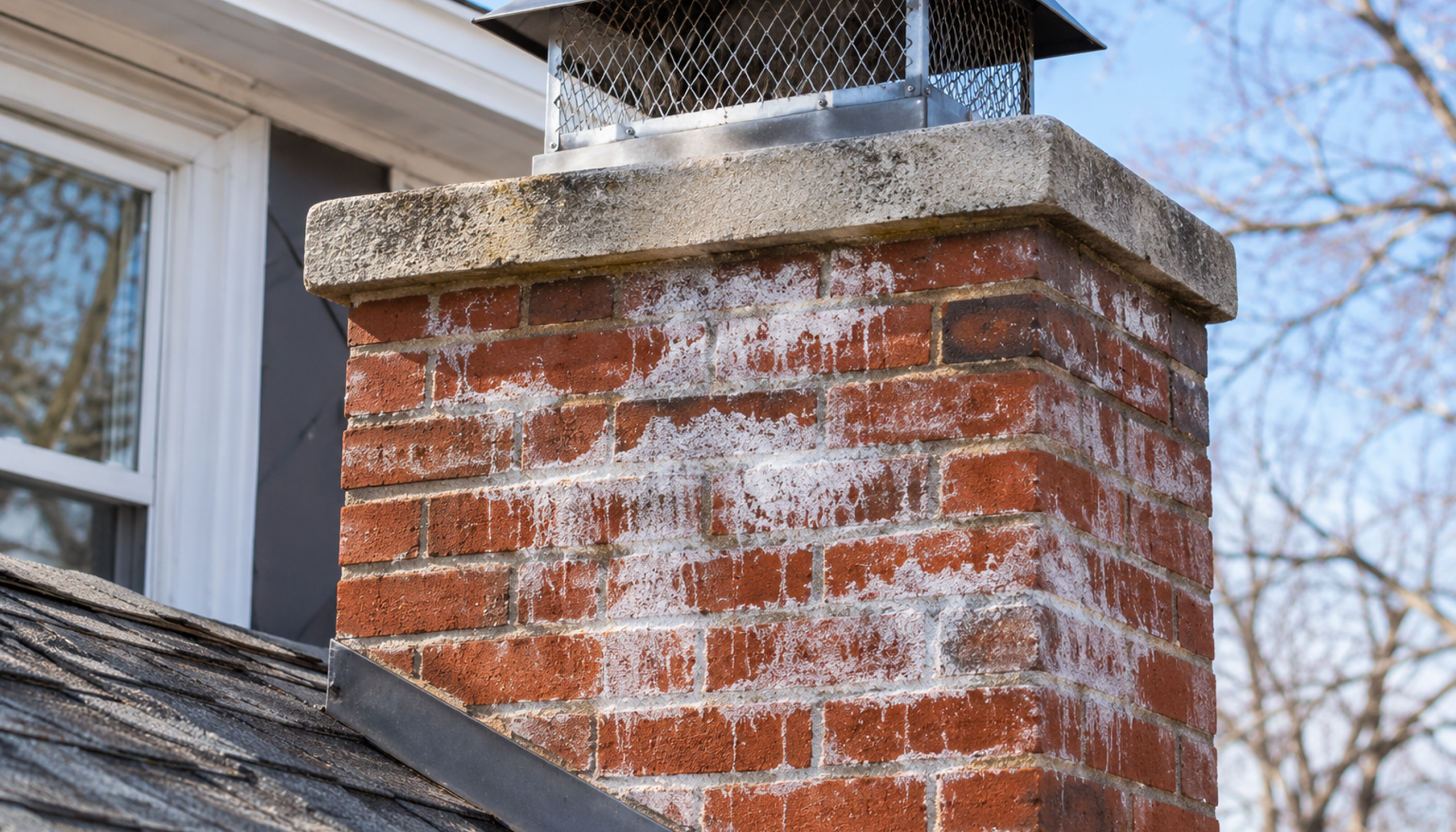
White stains on chimney bricks may be efflorescence: mineral salts left on the surface after moisture moves through masonry and evaporates. However, not every white mark has the same cause. Identifying the deposit and understanding the moisture conditions should come before cleaning or repairs.
Homeowners arranging chimney cleaning in New York should mention exterior discoloration separately from soot inside the flue. Sweeping the chimney does not diagnose or remove every type of stain on its outer brickwork.
What Is Chimney Efflorescence?
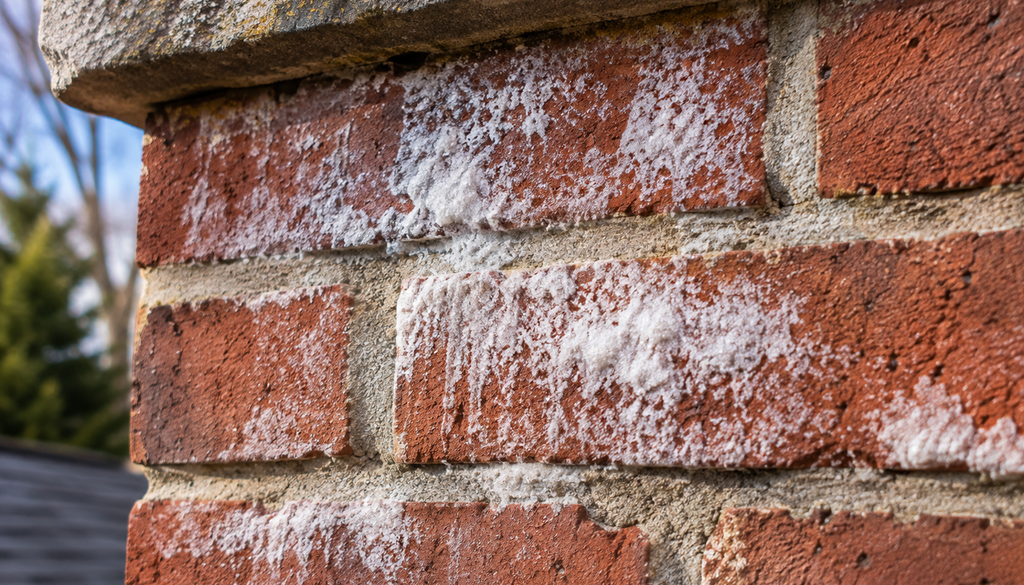
Efflorescence forms when water dissolves soluble salts within masonry and carries them toward the surface. As the water evaporates, the salts remain as a white, powdery or crystalline deposit.
It can appear on bricks, mortar joints, or both. The Brick Industry Association describes efflorescence as normally harmless to the masonry itself, while noting that other white deposits can look similar.
The appearance alone does not reveal where the moisture came from or establish that the chimney needs rebuilding.
Are All White Marks Efflorescence?
No. Lime deposits, residues from previous cleaning, paint, and other materials can create pale marks.
Their appearance may differ, but a photograph is not always enough to identify them reliably. Avoid assuming that every white patch is mold or that every deposit can be treated with the same cleaner.
A professional should consider the surface texture, previous repairs, cleaning history, and surrounding masonry before recommending treatment.
Why Can White Deposits Appear on a Chimney?
Rain and Snow Exposure
Chimneys stand above the roof and face repeated weather exposure. Moisture reaching the masonry can dissolve and transport salts.
The amount of visible deposit can vary with moisture and temperature. Sika’s technical guidance explains that efflorescence can occur throughout the year and may become more noticeable during winter weather.
This makes changing stains useful to document, but it does not prove that cold weather is the only cause.
Moisture from Recent Masonry Work
New construction or recent repairs can introduce moisture into masonry. Deposits appearing afterward do not automatically mean the work has failed.
Tell the contractor when the chimney was built, repaired, or washed. That history helps distinguish a recent change from a long-standing pattern.
Conditions That Allow Repeated Wetting
Open joints, damaged chimney-top components, or defects around the roof connection may contribute to moisture exposure. These possibilities need assessment rather than assumptions.
Professional chimney restoration and repair should address confirmed defects. A stain by itself is not enough to justify replacing otherwise sound components.
When Should White Stains Receive Closer Attention?
Arrange an assessment if deposits repeatedly return or appear alongside other changes.
Useful observations include:
- Mortar that is missing or crumbling.
- Brick faces that are flaking or breaking.
- Damp patches inside the home near the chimney.
- Water appearing in the fireplace after rain.
- Cracks or visibly displaced masonry.
- A staining pattern that is spreading.
These signs can have different causes. Their presence should guide investigation, not an automatic conclusion that the chimney needs major reconstruction.
Take photographs from the ground or another safe, accessible position. Avoid climbing onto the roof to inspect the stained area.
Can Damaged Mortar Contribute?
Deteriorated joints can provide routes for water to enter masonry. However, white deposits do not establish that every joint needs replacement.
The contractor should assess whether the mortar is sound, where deterioration occurs, and whether the surrounding bricks remain suitable.
Professional brick pointing in NYC can repair deteriorated joints where appropriate. The replacement mortar should suit the existing masonry rather than simply match its color.
Latest Blog: Before you’re First Fireplace Fire
Exterior staining is only one part of chimney care. Our latest guide, Before Your First Fireplace Fire: A Winter Checklist for NYC Homeowners, covers inspection history, cleaning needs, damper operation, and preparations before seasonal use.
Should You Clean the Stains Immediately?
Identify the deposit and review the moisture conditions first.
Cleaning may improve appearance without explaining why the marks developed. A treatment suitable for one deposit or brick type may be unsuitable for another.
Do not begin with strong acids, aggressive pressure washing, or abrasive tools. Ask a masonry professional about a compatible method and whether a small test area is needed.
If cleaning forms part of the proposal, the estimate should distinguish it from repairs intended to address moisture entry.
Will Painting or Sealing the Chimney Fix It?
A coating does not repair missing mortar, cracked masonry, or defective flashing.
Before applying any treatment, the contractor should consider the moisture source, the condition of the brickwork, and whether the proposed product is appropriate for that construction.
Avoid choosing ordinary paint or a generic waterproof coating solely to hide discoloration. Covering the surface can make future changes harder to observe without resolving the underlying concern.
Could the Crown or Cap Be Involved?
A crown covers the masonry top around the flue, while a rain cap typically protects the flue opening. Their condition can influence how the chimney is exposed to rain.
A cracked crown or missing cap may require work, but neither should be diagnosed from white stains alone. Flashing and other parts of the chimney may also need assessment.
Professional chimney crown and cap services can address confirmed chimney-top defects. Ask for photographs showing which component needs attention and why.

Does White Staining Mean the Fireplace Is Unsafe?
The stain alone cannot establish whether the fireplace is suitable for use.
Surface deposits and the condition of the flue are different matters. A chimney may need maintenance without obvious exterior staining, while visible deposits may occur on otherwise sound brickwork.
Keep up with professional inspections and follow any recommendations about repairs or continued use. Do not light a fire to test whether a stained chimney is functioning properly.
Arrange a Chimney Masonry Assessment
Contact Chimney Experts Cleaning & Repair if white deposits keep returning or appear alongside leaks, deteriorated joints, or damaged bricks. Share photographs and any recent repair history so the team can discuss an appropriate assessment.
Frequently Asked Questions
Is white powder on chimney bricks always efflorescence?
No. Other deposits and residues can look similar. Identification should come before treatment.
Does efflorescence mean the chimney needs rebuilding?
Not automatically. The extent of masonry deterioration and any underlying defects should guide the repair scope.
Can chimney sweeping remove exterior white stains?
Sweeping addresses deposits inside the chimney. Exterior masonry cleaning is a separate task.
Will the marks return after cleaning?
They may return if moisture continues to transport salts to the surface. Cleaning alone does not explain or resolve every moisture condition.
Should I use vinegar on the bricks?
Do not assume a household acid is suitable. Ask about a cleaning method compatible with the brick, mortar, and identified deposit.

Chimney Experts Cleaning & Repair
Lorem ipsum dolor sit ametLorem ipsum dolor sit amet, consectetur adipiscing elit, sed do eiusmod tempor incididunt ut labore et dolore magna aliqua.
See All Blog