
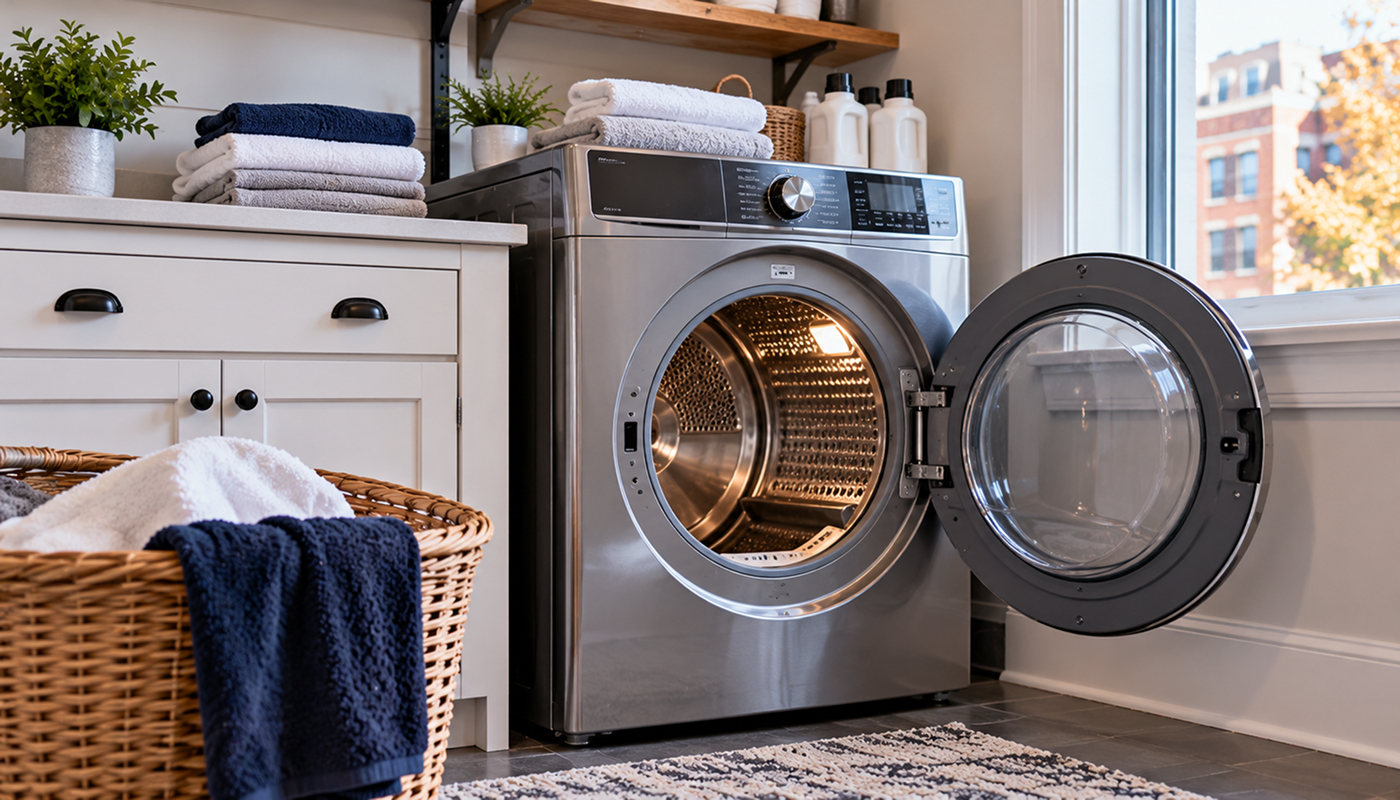
A dryer taking too long to dry can make everyday laundry frustrating. Clothes may remain damp after a normal cycle, towels may need another round, or the appliance may run noticeably longer than it used to. Possible causes include restricted airflow, lint buildup, unsuitable settings, overloaded laundry, or an appliance fault.
Chimney Experts Cleaning & Repair provides dryer vent services alongside its chimney services in New York. When discussing a drying problem, explain when it started, whether the dryer produces heat, and whether you have noticed unusual smells or changes in performance.
Longer drying times do not automatically mean that the dryer needs replacing. Understanding the condition of the appliance and its exhaust system helps determine the appropriate next step. This guide applies to conventional vented dryers; ventless models have different maintenance requirements.
Common Reasons Your Dryer Takes Too Long to Dry
Drying performance depends on heat, airflow, load size, and the moisture remaining in clothing after washing. A change in any of these can affect how long a cycle takes.
1. A Lint Filter That Needs Cleaning
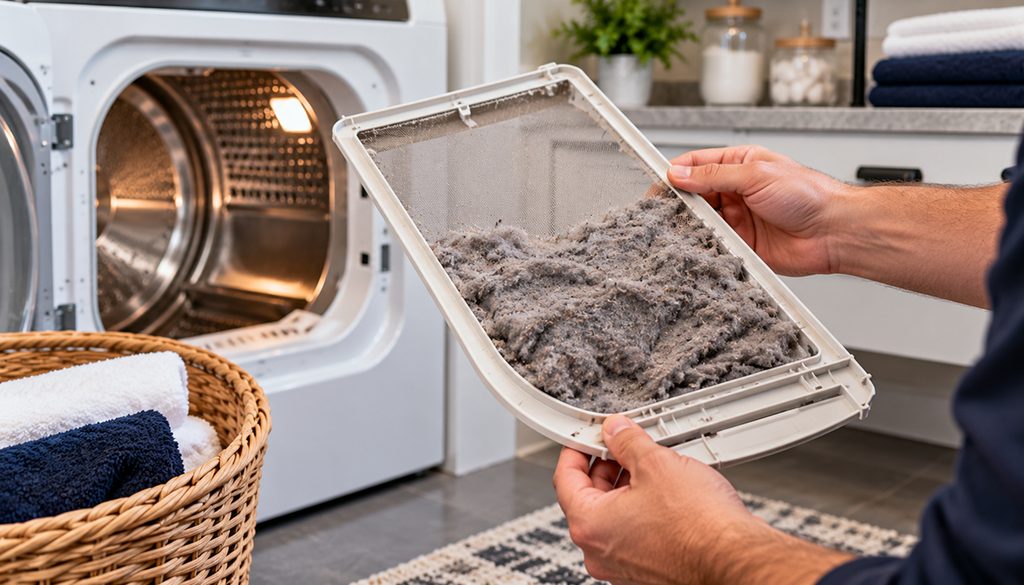
The lint filter collects fibers released from clothing. When lint covers the filter, it can restrict airflow through the appliance.
Clean the filter before or after each load according to the manufacturer’s instructions. Check the manual for any additional cleaning needed to remove residue from laundry products.
A clean filter does not establish that the exhaust duct is clear. Material can accumulate beyond the filter and along the route leading outdoors.
2. Lint Buildup Inside the Exhaust Duct
A clogged dryer vent can restrict the movement of moist air outside. Deposits may collect in the duct, around bends, or near the exterior outlet.
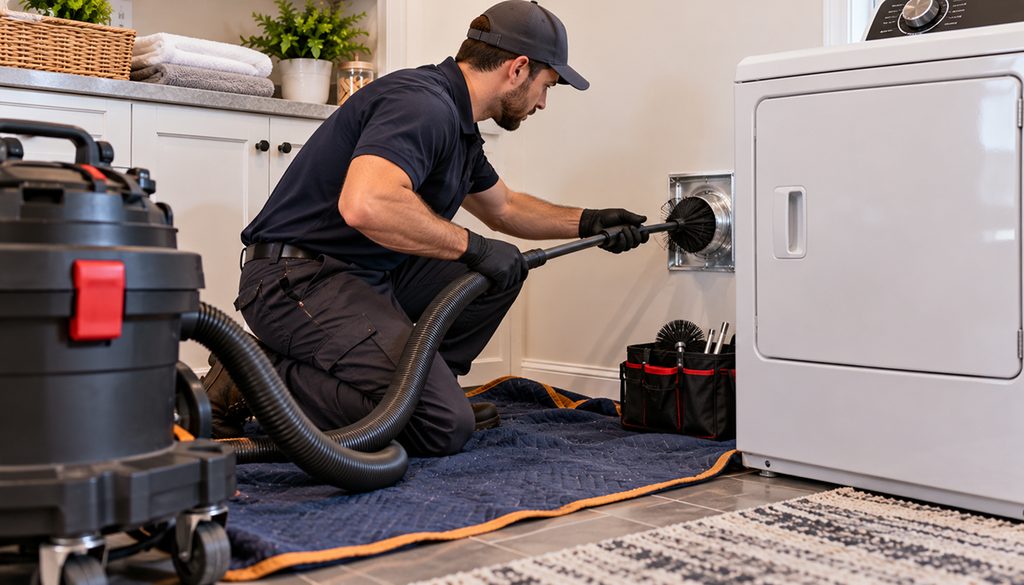
Our dryer vent cleaning in NYC service starts with an assessment of the dryer and exhaust vent. Cleaning addresses accessible accumulated lint and debris, with the approach determined by the system’s condition and access.
If the assessment identifies damaged connections or an unsuitable exhaust arrangement, cleaning alone may not resolve the problem. Further work should be explained separately.
3. A Crushed or Damaged Connection
The exhaust connection behind the dryer can become compressed when the appliance is pushed too close to the wall. A damaged or sharply restricted connection may interfere with airflow.
Avoid pulling out a heavy dryer or disturbing gas and electrical connections without appropriate knowledge and assistance. Accessing the connection may require a qualified professional.
The assessment should consider both deposits and the physical condition of the connection rather than assuming every restriction is caused by lint.
4. An Overloaded Drum
Clothes need room to tumble. An oversized load can limit movement and leave some items damp while others appear dry.
Follow the manufacturer’s loading guidance and choose a cycle suitable for the fabrics. Heavy bedding and towels may need different settings from lightweight garments.
If your usual load suddenly takes longer, do not assume that load size is the only explanation. Look for other changes in the dryer’s operation.
5. Clothing That Is Too Wet After Washing
A washer that leaves clothing unusually wet increases the amount of moisture the dryer must remove.
Check whether the spin cycle completed and whether the load became unbalanced. Follow the washer’s troubleshooting instructions if its performance has changed.
A washer problem and an exhaust restriction can occur together, so unusually wet clothing should not automatically rule out checking the dryer vent.
6. An Appliance Fault
Heating components, sensors, controls, and other parts can develop faults. A dryer that fails to heat, stops unexpectedly, or displays an error code may need an appliance technician.
Vent cleaning is not a guaranteed repair for every slow-drying problem. Identifying whether the issue involves the appliance, exhaust system, or both helps establish the right service.
What Other Signs Should You Watch For?
Longer drying times deserve attention, particularly when accompanied by other changes.
Useful observations include:
- Clothes becoming unusually hot.
- A burning smell during operation.
- Repeated overheating or automatic shutdowns.
- A vent-related warning on the appliance.
- Lint collecting around accessible exhaust connections.
- An exterior outlet that appears obstructed.
The U.S. Department of Energy’s Building America guidance identifies slow drying, unusually hot clothing, and burning smells as possible indications of exhaust-duct problems. These symptoms still need assessment to establish the cause.
Stop using the dryer if it overheats or smells like burning. Do not run repeated cycles to test whether the problem disappears. If smoke or an active fire is present, leave the area and call emergency services.
Is Cleaning the Lint Filter Enough?
No. The lint filter and exhaust duct are separate parts of the system. Removing lint from the filter does not confirm that the route outdoors is clear.
The U.S. Fire Administration advises maintaining both lint filters and dryer vents. Its guidance also recommends checking that the outdoor vent covering opens during operation.
Only observe an outlet from a safely accessible position. Roof outlets and difficult-to-reach locations require appropriate access arrangements.
Latest Blog
If your property also has a fireplace, moisture around the chimney needs a separate investigation. Our latest blog, Why Is My Chimney Leaking? Common Causes for NYC Homeowners, explains how caps, crowns, flashing, and masonry can contribute to water entry.
How Often Should You Arrange Dryer Vent Cleaning?
NFPA safety guidance published by the Chimney Safety Institute of America recommends cleaning lint from the vent pipe annually, or sooner when clothes take longer than normal to dry. Appliance instructions and actual usage should also inform maintenance.
A heavily used household dryer may have different needs from a lightly used appliance. Keep maintenance records and report changes rather than waiting for a scheduled date when symptoms appear.
For dryer vent cleaning in Brooklyn, share your property type, dryer location, and any known access restrictions when booking. Apartment residents may need to coordinate with the building owner or manager.
If your home also uses a boiler or furnace, keep its maintenance separate from dryer vent care. Our boiler and furnace cleaning services address cleaning needs for those heating systems.
What Happens During a Dryer Vent Assessment?
An assessment should consider the accessible appliance connection, exhaust duct, and exterior outlet. The technician should also review the symptoms you have noticed and explain the agreed scope.
Depending on access and the service booked, work may include:
- Checking accessible exhaust connections.
- Identifying visible damage or restrictions.
- Removing accumulated lint from appropriate areas.
- Cleaning the exhaust duct and outlet.
- Reconnecting components disturbed during cleaning.
- Explaining access limitations or further work needed.
Cleaning cannot correct every installation defect or appliance fault. Concealed ducts, shared systems, and roof outlets may require additional arrangements, so mention these when booking.
Arrange an Assessment Before Replacing Your Dryer
Slow drying can result from loading practices, washer performance, restricted exhaust airflow, or an equipment fault. An assessment helps identify which area needs attention.
Contact Chimney Experts Cleaning & Repair with your location, dryer details, and maintenance history. The team can discuss the vent-cleaning scope, access requirements, and whether another specialist may be needed.
Frequently Asked Questions
Can a blocked dryer vent leave clothes damp?
Restricted exhaust airflow can affect moisture removal. Damp clothing can also result from loading, settings, washer performance, or an appliance fault.
Will dryer vent cleaning fix every drying problem?
No. Cleaning addresses removable lint and debris. It does not repair defective appliance components or correct every installation issue.
Does a ventless dryer need outdoor vent cleaning?
A ventless dryer does not use a conventional outdoor exhaust duct. Follow its manufacturer’s instructions for filters, condensers, drains, and other maintenance.
Should I keep using a dryer that smells like burning?
No. Stop using it and arrange an assessment. If smoke or fire is present, leave the area and call emergency services.

Chimney Experts Cleaning & Repair
Lorem ipsum dolor sit ametLorem ipsum dolor sit amet, consectetur adipiscing elit, sed do eiusmod tempor incididunt ut labore et dolore magna aliqua.
See All Blog