

If your laundry room is humid when the dryer runs, moisture may be escaping from the exhaust connection, airflow may be restricted, or the room may have ventilation problems. However, humidity alone does not prove that the dryer vent is blocked. The dryer type and installation both matter.
Homeowners exploring chimney and vent cleaning services in New York should describe when the humidity appears and whether drying performance has changed. These observations help distinguish an exhaust problem from other sources of indoor moisture.
Where Should Dryer Moisture Go?
A conventional vented dryer removes water from clothing and carries the moisture outside through its exhaust duct.
If that connection separates or leaks, some exhaust can enter the laundry area. A vent that terminates inside the building can also introduce moisture where it does not belong. Proper venting guidance calls for conventional dryer exhaust to discharge outdoors.
Ventless dryers work differently. Condensing and heat-pump models collect moisture rather than relying on a conventional outdoor exhaust duct. Check the model information before assuming your appliance should have an exterior vent.
Common Reasons the Laundry Room Feels Damp
A Loose or Disconnected Exhaust Connection
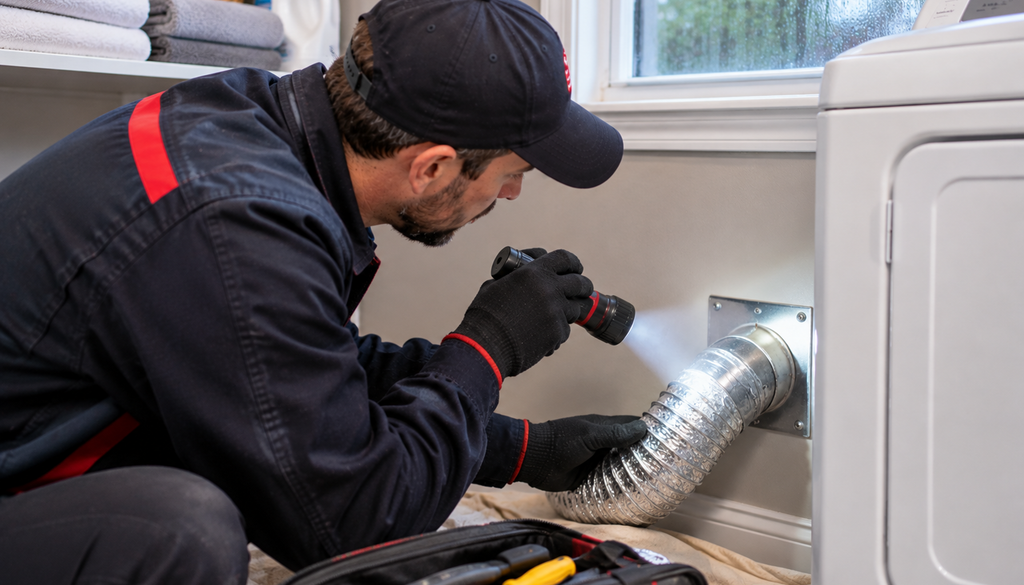
The connection behind a vented dryer may become loose or damaged, particularly after the appliance has been moved.
Possible clues include lint collecting behind the machine or warm, damp air noticeable near the connection. These observations justify an assessment, but they do not establish the condition of the entire duct.
Do not pull a heavy dryer away from the wall to investigate, especially where gas piping or other connections could be disturbed.
Restricted Exhaust Airflow
Lint buildup, a crushed connector, or an obstructed termination can interfere with airflow. Restrictions can leave excess heat and moisture inside the appliance, according to manufacturer troubleshooting guidance.
A blockage does not automatically explain moisture throughout the room. The technician should also consider whether exhaust is leaking and whether the installation is appropriate.
Professional dryer vent cleaning in NYC can address accumulated lint where cleaning is needed. Damaged connections and unsuitable duct arrangements require separate attention.
Limited Room Ventilation
A small laundry closet can become warm during use. Its installation may require specific clearances and ventilation openings.
If moisture appears mainly when the closet door is closed, tell the technician. Do not assume that removing a door or adding a random grille will satisfy the appliance requirements.
Room size and ventilation can influence condensation, including in spaces containing some condenser dryers. Follow the instructions for the actual model.
Why Does Condensation Appear on Windows?
Condensation forms when moist air contacts a sufficiently cold surface. A laundry-room window may therefore show droplets before other surfaces appear damp.
This can make the problem more noticeable during colder weather, but the window does not identify the moisture source.
Observe whether condensation occurs only during drying or also when the appliance is off. Persistent dampness may involve other sources, such as plumbing leaks, indoor clothes drying, or broader household humidity.
Does a Clean Lint Filter Mean the Vent Is Clear?
No. The removable lint filter and the exhaust duct are different parts of the system.
Cleaning the filter according to the manufacturer’s instructions is important, but it does not establish that the duct farther downstream is free of deposits or damage.
Likewise, a vent-cleaning appointment does not automatically include appliance repairs. Ask the provider to explain which components will be examined and cleaned.
Latest Blog: Scratching Sounds in Your Chimney?
Home maintenance problems often begin with a change you can hear or feel. Our latest article, Scratching Sounds in Your Chimney? What NYC Homeowners Should Do, explains how to respond to suspected animal activity without disturbing wildlife or blocking an occupied opening.
What If You Have a Ventless Dryer?
A ventless dryer should not be assessed as though its outdoor exhaust duct is missing.
Heat-pump dryers remove moisture through a condenser and reuse air within the drying process. Depending on the model, collected water drains away or enters a container that needs emptying.
Check the instructions for filter maintenance, condensate drainage, room conditions, and installation clearances. If humidity persists, appliance servicing may be more appropriate than conventional dryer vent cleaning.
Do not connect an improvised exhaust duct to a model that was not designed for one.
Will a Dehumidifier Solve the Problem?
A dehumidifier may reduce room humidity, but it does not reconnect a separated duct, remove an obstruction, or repair damaged venting.
Identify the source before treating only the moisture in the room. Otherwise, the appliance could continue operating with an unresolved installation or exhaust problem.
Similarly, opening a window may temporarily change room conditions without explaining why humidity rises during each cycle.

When Should You Stop Using the Dryer?
Pause use and arrange an assessment if you discover a disconnected exhaust on a vented dryer, repeated overheating, smoke, or a burning smell.
Never operate a gas dryer without its required exhaust connection. Manufacturer guidance warns that combustion gases could enter the room.
If a carbon monoxide alarm activates or you suspect a gas leak, leave the building and contact emergency services from outside.
What Should You Tell the Technician?
Before the appointment, note:
- Whether the dryer is vented or ventless.
- Whether it uses gas or electricity.
- When humidity or condensation appears.
- Whether the appliance was recently moved.
- Any changes in drying time, heat, or visible lint.
Photographs taken from an accessible position can help explain the concern. Avoid dismantling ductwork or opening appliance panels yourself.
In an apartment building, coordinate with the landlord or building manager where the exhaust route passes through shared or inaccessible areas.
Arrange a Dryer Vent Assessment
If dampness repeatedly develops while your vented dryer operates, contact Chimney Experts Cleaning & Repair to discuss an exhaust assessment. Explain the appliance type and symptoms so the team can clarify the appropriate service.
Frequently Asked Questions
Is humidity always a sign of a clogged dryer vent?
No. Leaking connections, room ventilation, other moisture sources, and the dryer type can also matter.
Can an electric dryer release moisture indoors?
A conventional vented electric dryer produces moisture-laden exhaust that should discharge outdoors. Ventless models manage moisture differently.
Does cleaning the lint filter clean the exhaust duct?
No. Filter maintenance does not establish that the full exhaust route is clear.
Can a ventless dryer cause room condensation?
Room conditions and installation can contribute. Follow the model’s requirements and arrange servicing if the issue persists.
Will vent cleaning repair a disconnected duct?
Cleaning and connection repairs are different tasks. Ask the provider to identify and explain any additional work required.

Chimney Experts Cleaning & Repair
Lorem ipsum dolor sit ametLorem ipsum dolor sit amet, consectetur adipiscing elit, sed do eiusmod tempor incididunt ut labore et dolore magna aliqua.
See All Blog