
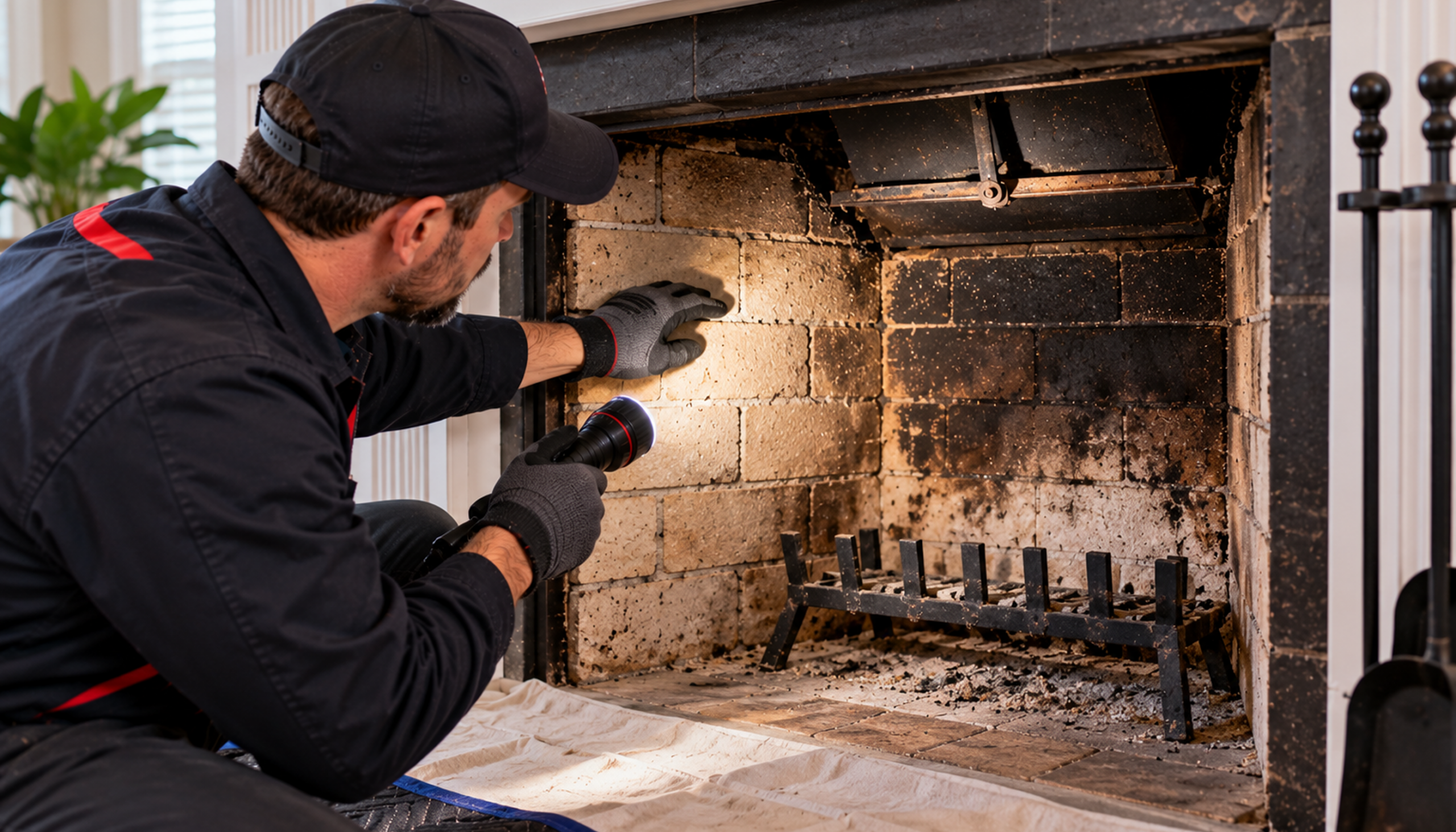
Cracks in fireplace firebox walls can raise questions about whether the fireplace needs a small repair or more extensive work. The answer depends on the fireplace’s construction, the material affected, and the extent of the damage. A photograph or crack measurement alone cannot establish whether the system is suitable for continued use.
Homeowners arranging chimney cleaning in New York should mention visible cracks, missing mortar, or loose material when booking. Cleaning and firebox repairs serve different purposes, so the technician needs to understand both concerns.
What Is the Fireplace Firebox?
The firebox is the chamber where the fire burns. In a traditional masonry fireplace, it commonly contains firebrick and heat-resistant mortar designed for that application.
Factory-built fireplaces may instead have refractory panels that line a metal assembly. Although these panels can resemble brickwork, their inspection and replacement requirements differ from those of a masonry firebox.
Identifying the fireplace type is an important first step. A repair suitable for masonry should not automatically be applied to a manufactured panel system.
Why Can Firebox Cracks Develop?
Repeated Heating and Cooling
Fireplace materials expand and contract as temperatures change. Over time, these cycles can contribute to cracking or joint deterioration.
The significance depends on the affected component and its condition. Some manufacturers address limited surface cracking in their instructions, but those allowances should not be applied to every fireplace.
A technician should assess the actual system rather than dismissing all cracks as normal wear.
Moisture Exposure
Water entering through the chimney can contribute to deterioration inside the fireplace. Signs may include damp masonry, staining, or materials that repeatedly crumble.
Repairing the visible firebox damage without investigating ongoing water entry can leave another problem unresolved.
Tell the inspector whether the area becomes wet after rainfall or whether moisture appeared before the cracking developed.
Impact or Previous Repairs
Logs striking the walls, rough handling, or unsuitable previous repairs may damage firebox materials.
A patch can also fail if the product or preparation does not suit the location. Ordinary household mortar, caulk, and general-purpose fillers should not be assumed appropriate for a fireplace interior.
Professional firebox repair should use materials and methods suitable for the fireplace’s construction and operating conditions.
Signs That Deserve Closer Attention
Mortar Is Missing Between Firebricks
Open joints can indicate that mortar has deteriorated or separated from the surrounding masonry.
The technician should assess the depth and extent of the missing material, the condition of adjacent bricks, and whether a localized joint repair is appropriate.
Spreading a thin coating over the surface may hide the opening without addressing the underlying defect.
Bricks or Panels Are Loose or Displaced
A component that has shifted, separated, or broken needs assessment. Do not push it back into place and assume the fireplace is ready to use.
Keep the fireplace out of service until a qualified professional has evaluated loose or displaced lining components.

Cracks Return After a Previous Repair
Recurring damage may mean that the original cause remains unresolved or that the previous repair was unsuitable.
Keep records of earlier work and share them with the inspector. Before recommending another patch, the contractor should consider why the same area continues to deteriorate.
Pieces Collect on the Firebox Floor
Fragments may come from firebrick, mortar, refractory panels, or components farther up the chimney.
Take photographs before removing anything, when practical. The material’s source matters because debris on the firebox floor does not automatically prove that the firebox itself is failing.
Latest Blog: Does Your Boiler Flue Need Cleaning?
A fireplace and a boiler have different maintenance needs, even when both rely on chimney systems. Our latest guide, Does Your Boiler Flue Need Cleaning? Signs NYC Homeowners Should Know, explains visible venting concerns and the difference between appliance servicing and flue cleaning.
Can You Tell Whether a Crack Is Safe by Its Size?
There is no universal crack-width rule suitable for every fireplace.
A narrow surface line in one manufacturer’s panel may be evaluated differently from an opening through a masonry joint. Depth, location, movement, missing material, and the surrounding construction also matter.
Avoid relying on online coin tests or photographs of another fireplace. The assessment should follow the requirements appropriate to your system.
Professional chimney inspection services can help identify the affected components and determine whether additional examination is needed.
Does a Cracked Firebox Always Need Rebuilding?
Not necessarily. Localized masonry deterioration may be suitable for targeted repair, while more extensive damage can require rebuilding part of the firebox.
For a factory-built fireplace, a damaged panel may require a compatible replacement specified for that model. Improvised panels or masonry alterations should not be treated as interchangeable solutions.
Ask the contractor to explain what was found, why the proposed work is appropriate, and whether the fireplace can be used before repairs are completed.
What About a Gas Fireplace or Insert?
Gas fireplaces and inserts have their own components, clearances, and service instructions. Decorative liners and combustion-chamber parts should not be assessed using assumptions from a traditional wood-burning masonry fireplace.
If your system contains a gas appliance, professional gas fireplace repair in New York can help address appliance-specific concerns. Share the make and model when arranging service, if available.
What Should You Do Before the Appointment?
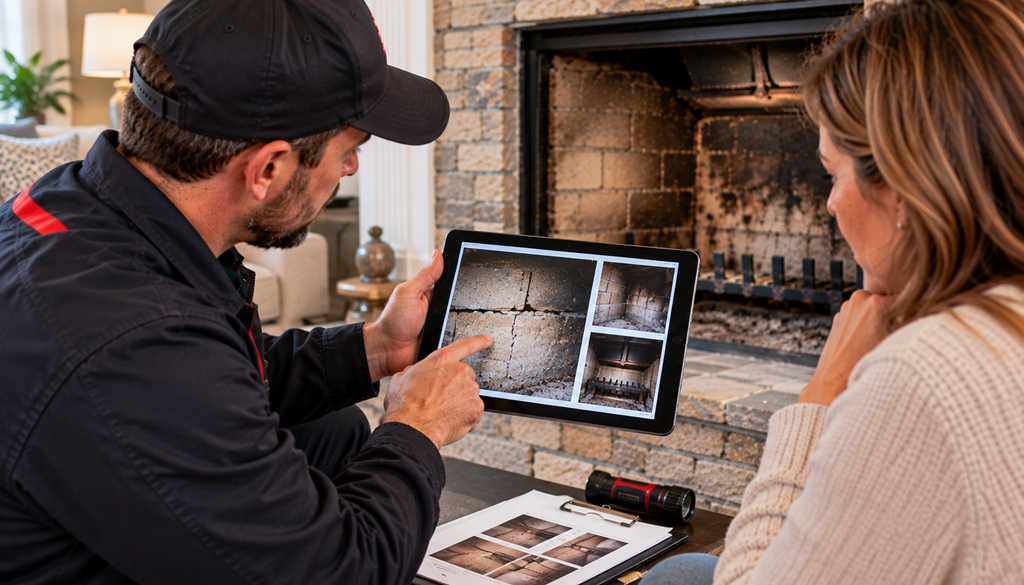
Let the fireplace become completely cold and keep the area accessible. Photograph visible changes without reaching into unfamiliar components.
Gather previous inspection reports, repair invoices, and manufacturer information. Note whether the cracks have changed or whether debris has recently appeared.
Do not test a questionable fireplace by lighting another fire. Ask the inspecting professional when the system can return to use and whether repaired materials require a curing period.
Arrange a Firebox Assessment
Contact Chimney Experts Cleaning & Repair if you notice damaged joints, loose firebrick, broken panels, or recurring cracks. An assessment can help distinguish a localized repair from work requiring a broader approach.
Frequently Asked Questions
Are all firebox cracks dangerous?
Their significance varies. The fireplace type, affected material, and extent of damage need assessment before deciding on continued use.
Can chimney cleaning fix firebox cracks?
No. Cleaning removes deposits as appropriate; it does not restore damaged bricks, panels, or mortar joints.
Can I patch a crack with ordinary mortar?
Do not assume ordinary mortar is suitable. The repair material must match the fireplace application and any manufacturer requirements.
Does a cracked panel mean the entire fireplace needs replacement?
Not automatically. A compatible replacement panel may be available, depending on the model and condition of the wider system.
How soon can I use the fireplace after repair?
Follow the contractor’s and product manufacturer’s instructions. Some repairs require curing or controlled initial use before normal operation.

Chimney Experts Cleaning & Repair
Lorem ipsum dolor sit ametLorem ipsum dolor sit amet, consectetur adipiscing elit, sed do eiusmod tempor incididunt ut labore et dolore magna aliqua.
See All Blog