
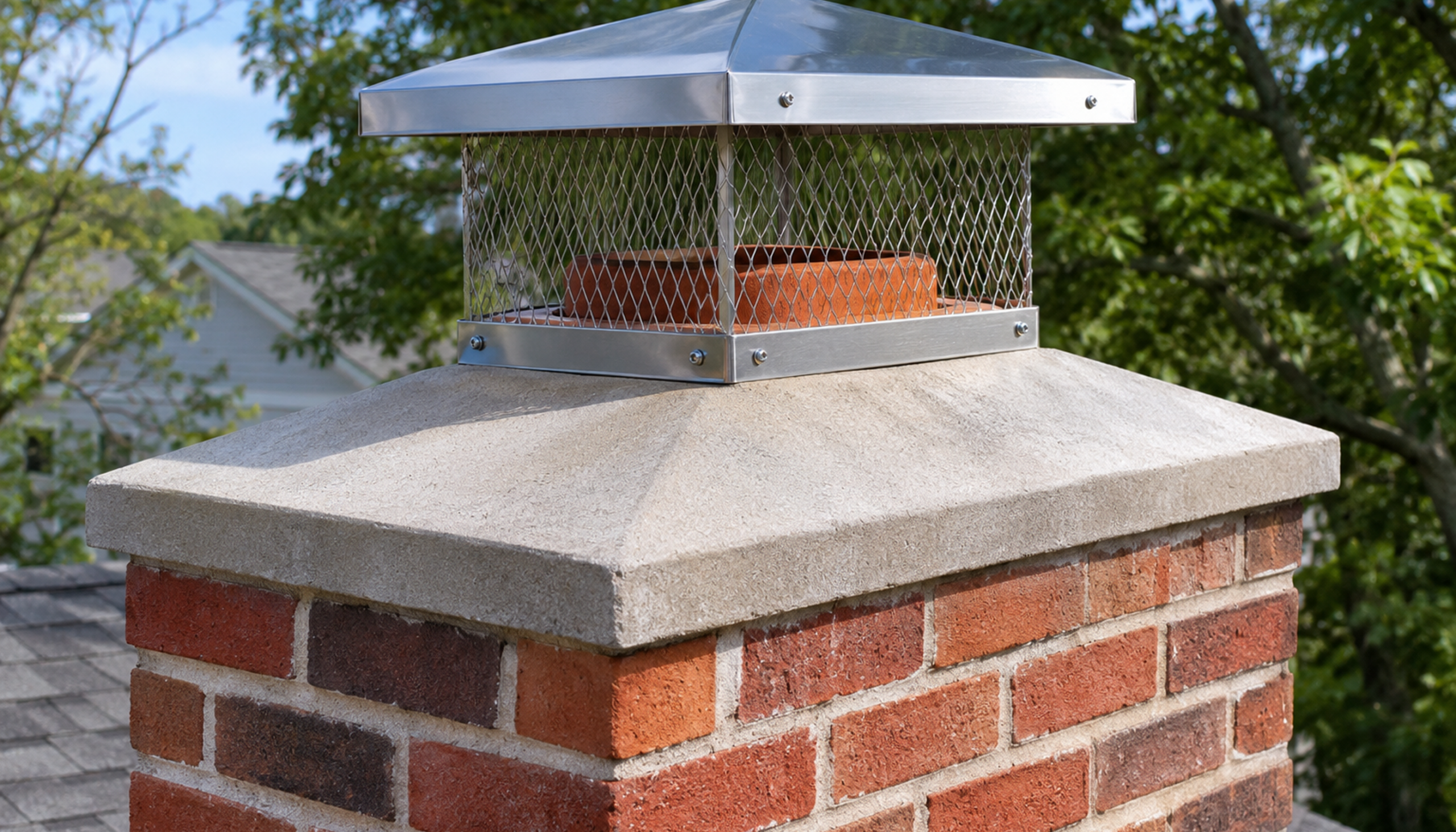
Understanding chimney crown vs chimney cap terminology can make a repair estimate easier to understand. Both components sit near the top of the chimney, but they protect different areas. The crown covers the top of the masonry around the flue, while the cap typically covers the flue opening itself.
Homeowners arranging chimney cleaning in New York should mention missing covers, visible deterioration, or water entering the fireplace. These concerns may require attention beyond cleaning, even if the chimney still appears to vent normally.
What Is a Chimney Crown?
A chimney crown is the sloped top surface of a masonry chimney surrounding the projecting flue. It closes off the exposed masonry top and helps direct rainwater toward the edges.
Concrete is commonly used for this component. Its design, condition, and connection details matter because water should drain away rather than collect on the chimney.
The Brick Industry Association’s chimney construction guidance identifies the concrete crown and flue liner as separate components within the chimney-top assembly.
A crown should not be confused with the metal rain cover above the flue opening.
What Is a Chimney Cap?
A chimney cap is a cover fitted above a flue opening. Many masonry chimney caps have a metal roof and screened sides, allowing exhaust to leave while helping limit direct rain entry, animals, and debris.
Some designs cover a single flue. Others span multiple openings. Factory-built chimney systems may require a specific listed termination rather than a general-purpose masonry cap.
Professional chimney cap installation should account for the chimney system, flue dimensions, attachment method, and required exhaust clearance. Appearance alone is not enough to establish compatibility.
Chimney Crown and Cap: A Quick Comparison
| Component | Location | Main purpose | Common concerns |
| Chimney crown | Across the masonry top, around the flue | Covers the masonry top and sheds water | Cracking, erosion, missing sections, poor drainage |
| Chimney cap | Above the flue opening | Helps limit direct rain, animal entry, and debris | Corrosion, damaged mesh, loose attachment, missing cover |
Terminology can vary between contractors and construction documents. If an estimate refers to a “cap,” ask for a photograph showing exactly which component needs work.
Can a New Cap Fix a Cracked Crown?
A new rain cap does not repair cracks or missing material in the crown.
Although a larger cover may shelter more of the chimney top, the underlying crown still needs assessment. Covering damaged masonry does not establish that the deterioration has been addressed.
The reverse is also true: rebuilding the crown does not replace a missing rain cap over an exposed flue. Each component should be evaluated separately.
What Signs Suggest Crown Damage?
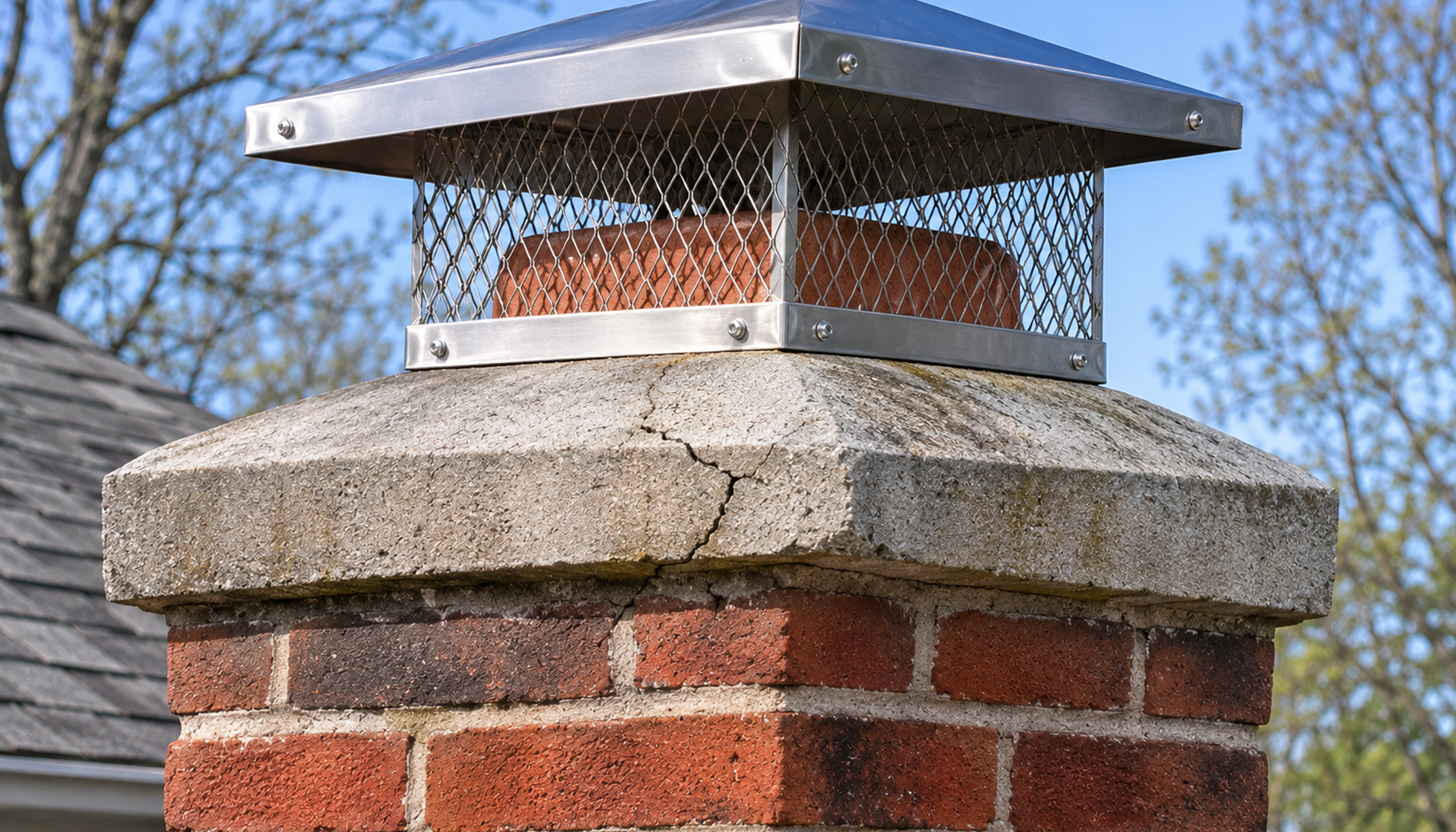
Possible concerns include cracks across the top surface, eroded sections, broken edges, or gaps near the flue penetration. Water collecting on the surface may also indicate a drainage issue.
These conditions can be difficult to see from ground level. Avoid climbing onto the roof or leaning from an upstairs window to investigate.
Professional chimney crown repair should begin with identifying the extent of deterioration. Depending on the findings, localized repair or more extensive reconstruction may be appropriate.
Latest Blog: Why Is My Laundry Room So Humid?
Moisture problems can affect different systems throughout the home. Our latest article, Why Is My Laundry Room So Humid? Dryer Vent Problems NYC Homeowners Should Check, explains leaking exhaust connections, restricted airflow, and the difference between vented and ventless dryers.
What Signs Suggest Cap Damage?
A missing or visibly displaced cover is a clear reason to request an assessment. Other concerns include broken screening, substantial corrosion, bent metal, or loose attachment points.
However, noises or water inside the fireplace do not automatically prove that the cap has failed. The source may be elsewhere in the chimney.
CSIA guidance treats rain caps and chimney crowns as separate parts of a broader approach to preventing water damage. Flashing and other chimney components also require attention.
Does Every Chimney Leak Come From the Top?
No. Water can enter through several routes, including defective flashing, deteriorated mortar joints, damaged masonry, or problems around the crown.
Where you see water indoors may not reveal where it first entered. For example, ceiling staining near the chimney and moisture inside the firebox can require different investigations.
Professional chimney leak repair should address the identified source rather than assume that replacing the cap will resolve every problem.
How Is a Chase Cover Different?
A chase cover is generally a cover across the top of a framed chimney enclosure, often associated with a factory-built fireplace system. A separate termination may project above it.
It is not automatically interchangeable with a masonry crown or a rain cap. The correct component depends on the construction and the system manufacturer’s requirements.
If you are unsure what your home has, share photographs or existing installation records with the contractor. Identifying the assembly first helps avoid ordering an unsuitable replacement.

Should the Crown and Cap Be Replaced Together?
Only if their individual conditions justify that work.
An intact, compatible cap may remain serviceable while the crown needs repair. Likewise, a damaged cap can require replacement even where the crown is sound.
Ask the contractor to separate the proposed work in the estimate. Useful details include:
- Which component is damaged.
- What photographs show the concern.
- Whether repair or replacement is proposed.
- How the work addresses the identified problem.
- Whether related masonry or flashing repairs are needed.
A clear scope makes it easier to understand the purpose of each item without assuming that every chimney-top component must be replaced.
Arrange a Chimney-Top Assessment
Contact Chimney Experts Cleaning & Repair if your chimney has a missing cover, visible deterioration, or recurring water entry. Explain what you have noticed so the team can discuss an assessment and the appropriate work.
Frequently Asked Questions
Are a chimney crown and chimney cap the same thing?
In this guide, the crown is the sloped masonry-top surface and the cap is the cover above the flue. Terminology varies, so confirm which component an estimate describes.
Can a chimney have both?
Yes. A masonry chimney can have a crown around the flue and a separate rain cap above the opening.
Will replacing the cap stop a chimney leak?
It may address direct rain entry through an exposed opening, but other sources of leakage can require separate repairs.
Does a small crown crack always require replacement?
Not automatically. The crack’s extent, surrounding material, and overall crown condition should guide the recommendation.
Can I check the chimney top myself?
Observe from a safe, accessible position. Leave rooftop access and close examination to an appropriately equipped professional.

Chimney Experts Cleaning & Repair
Lorem ipsum dolor sit ametLorem ipsum dolor sit amet, consectetur adipiscing elit, sed do eiusmod tempor incididunt ut labore et dolore magna aliqua.
See All Blog