
Water leaking from a chimney cleanout door can leave homeowners wondering whether rain entered from above or something is wrong with the heating system. Both outside moisture and condensation are possible, but a wet patch alone cannot identify the source.
The cleanout is near the bottom of a chimney, so moisture may travel some distance before appearing there. The location of the drip does not necessarily show where the problem started.
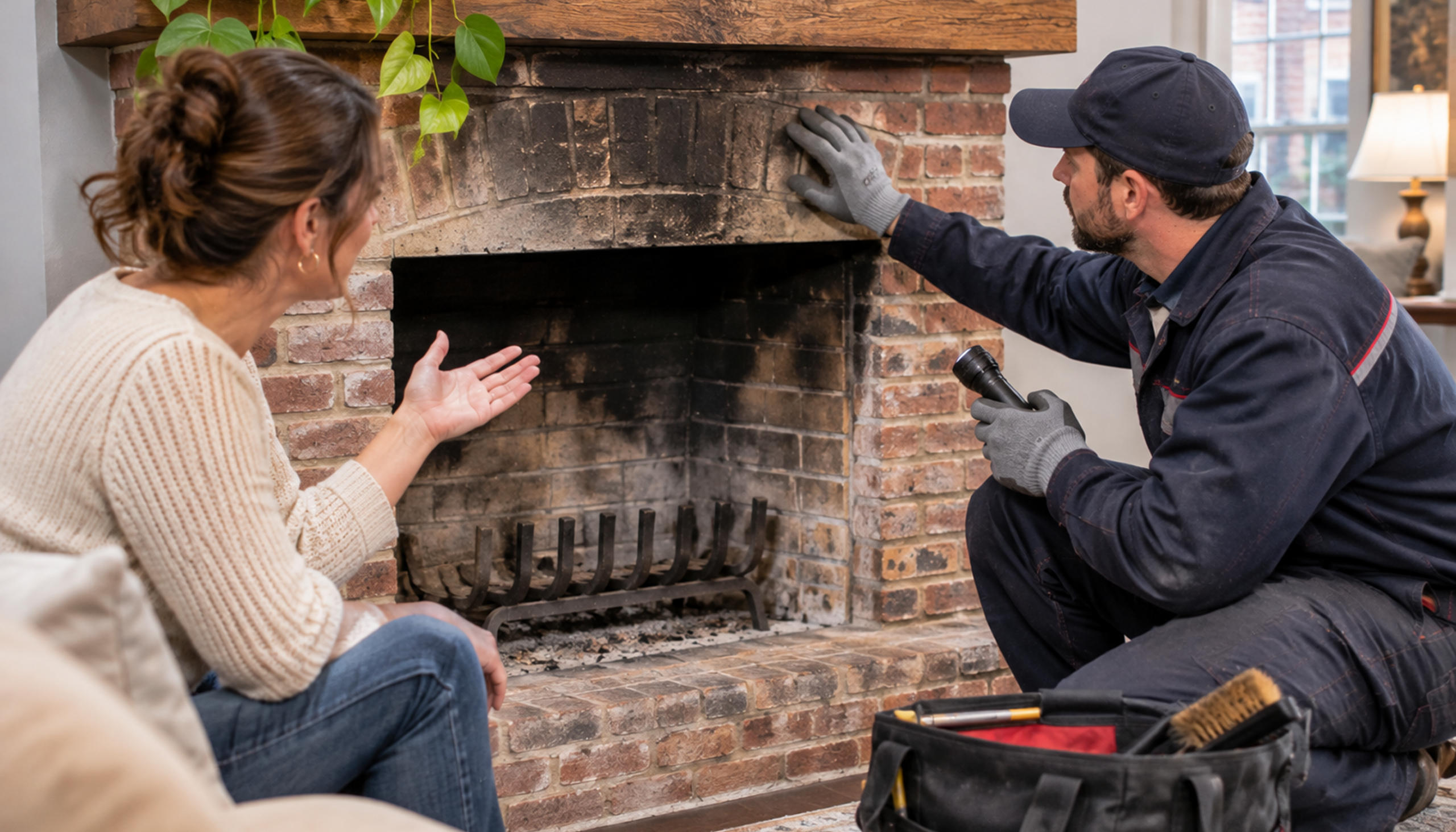
Homeowners arranging chimney cleaning in New York should mention water, rusty streaks, or damp masonry when booking. These observations may require an assessment beyond routine cleaning.
What Is a Chimney Cleanout Door?
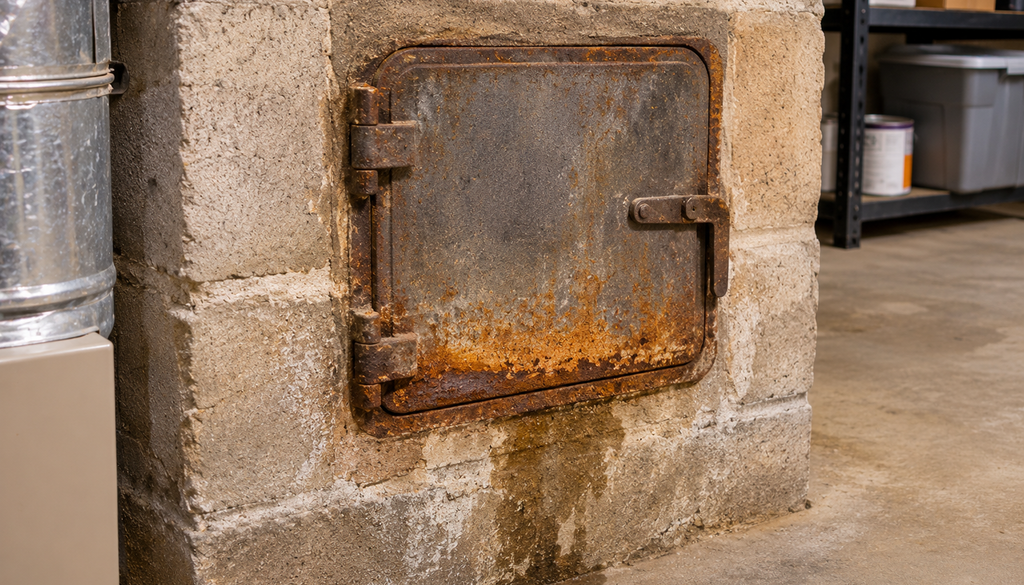
A chimney cleanout door provides access to a collection area near the base of certain masonry chimneys. It allows a professional to remove accumulated material and examine accessible parts of the system.
Depending on the property, the door may be in a basement, utility room, or exterior wall. Not every metal opening serves the same purpose; some fireplaces have a separate ash disposal arrangement.
Keep the door closed and do not remove connected vent pipes to investigate. If you are unsure what the opening serves, ask the technician to identify it.
1. Rainwater May Be Entering From Above
If the dampness appears after rainfall, outside water entry is one possibility. A missing or damaged cap, deteriorated chimney crown, defective masonry, or a roof connection problem may need examination.
Water can follow concealed paths before collecting near the bottom. That makes it difficult to identify the entry point from an indoor stain alone.
A professional assessment for chimney leak repair should investigate the route of water entry before recommending work. Replacing the cleanout door alone may leave the original problem unresolved.
Record whether the leak follows every rainstorm or only wind-driven rain. Photographs taken from a safe indoor location can help document changes.
2. Condensation Can Form Inside the Flue
Fuel-burning appliances produce water vapor as part of combustion. Under certain conditions, that vapor can condense when exhaust gases contact cooler chimney surfaces.
Persistent condensation may relate to the appliance, flue sizing, liner condition, or other installation factors. It deserves particular attention when moisture appears during heating operation without recent rain. Heating-system guidance identifies water at the cleanout as a possible sign of chimney condensation.
That timing is a clue, not proof. Do not run the heating equipment simply to recreate the leak.
If the system needs correction, chimney liner installation or replacement may be considered after assessment. The appropriate liner must suit the connected appliance and installation; a new liner is not automatically required for every wet cleanout.
3. Nearby Basement Moisture Can Be Misleading
Water beside a chimney does not always originate inside it. A plumbing leak, foundation seepage, or water traveling across the basement floor may create a similar appearance.
Without touching equipment or opening the cleanout, observe where the damp area begins. Is there a visible trail from the door, or is the surrounding floor also wet?
Tell the professional about nearby plumbing, previous basement leaks, and any recent flooding. These details help avoid repairing chimney components when another source needs attention.
Latest Blog: Smoke Coming Into Your House?
If you have also noticed indoor smoke, read Why Is Smoke Coming Into My House From the Fireplace? NYC Guide.
Water leakage and smoke spillage are separate symptoms that both deserve attention. Mention both when booking, without assuming one repair will solve them together.
4. Rust and Loose Material Need Assessment
A rusty cleanout door may show prolonged moisture exposure. Crumbling material or fragments near the opening can also provide information about conditions inside the chimney.
However, homeowners should not attempt to identify liner damage from loose pieces alone. Inspection guidance notes that material found in the cleanout can help a professional assess the chimney interior.
Do not scrape out deposits, reach into the opening, or disturb unknown material. Photograph what is visible and leave the area accessible for the technician.
What Should You Record Before the Visit?
A short record is more useful than guessing which component has failed. Note:
- When you first noticed the moisture.
- Whether it followed rain or melting snow.
- Whether the heating system had been operating.
- Whether the amount is increasing.
- Any recent appliance replacement or chimney work.
Include photographs of the closed door, surrounding wall, and damp floor. Share previous inspection reports if available.
You do not need roof photographs or measurements from inside the chimney. Leave climbing, opening, and testing to the appropriate professional.
What Will a Professional Check?
The assessment may include accessible chimney surfaces, the cleanout assembly, liner condition, exterior masonry, chimney-top components, and roof connections.
Where a boiler or furnace uses the chimney, its vent connection and venting requirements may also need review. Some cases require coordination with a qualified heating professional.
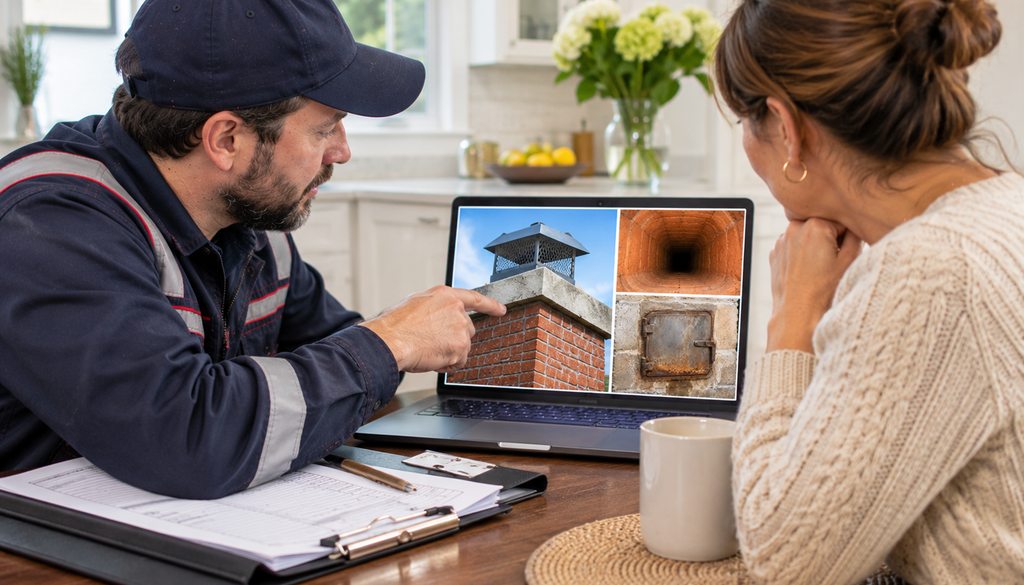
A chimney inspection helps establish what additional examination is appropriate. Explain the water problem when booking so the visit addresses more than deposit removal.
Avoid Sealing the Door as a Quick Fix
Applying sealant around a leaking cleanout may hide the exit point while moisture continues entering elsewhere. It can also interfere with access needed for maintenance.
Do not drill drainage holes, block vents, or disconnect a flue pipe. Repairs should follow identification of the source.
The appropriate work may involve weather protection, masonry repairs, a cleanout component, or a venting correction. There is no single product that fixes every wet chimney.
When Does It Need Urgent Attention?
Arrange prompt assessment for recurring leakage, increasing moisture, a damaged door, or visible deterioration.
If a carbon monoxide alarm sounds, anyone feels unwell, or combustion fumes enter the home, leave immediately and call emergency services from outside. Do not return until responders say it is safe.
Water alone cannot establish whether the connected appliance is safe to operate. Ask the appropriate professional for guidance, particularly if venting components are damaged.
Get the Source Checked
A dry floor after wiping up water does not confirm the problem has stopped. Identifying why moisture reached the cleanout is the important next step.
Contact Chimney Experts NY to discuss the symptoms and arrange an assessment. Describe when the water appears and which heating appliances use the chimney, if known.
Frequently Asked Questions
Is water at a chimney cleanout always rainwater?
No. Condensation or nearby basement water may also be responsible. The source needs investigation.
Does a wet cleanout mean I need a new liner?
Not necessarily. Liner work should follow an assessment of its condition and compatibility with the connected equipment.
Will a chimney cap stop the leak?
It may help if rain is entering an unprotected flue opening. It will not correct every masonry, roof, or condensation problem.
Should I leave the cleanout door open to dry?
No. Keep it closed and ask a professional how the moisture should be addressed.
Can chimney cleaning fix the water problem?
Cleaning removes appropriate deposits and debris. It does not automatically correct water entry, damaged components, or condensation.

Chimney Experts Cleaning & Repair
Lorem ipsum dolor sit ametLorem ipsum dolor sit amet, consectetur adipiscing elit, sed do eiusmod tempor incididunt ut labore et dolore magna aliqua.
See All Blog