
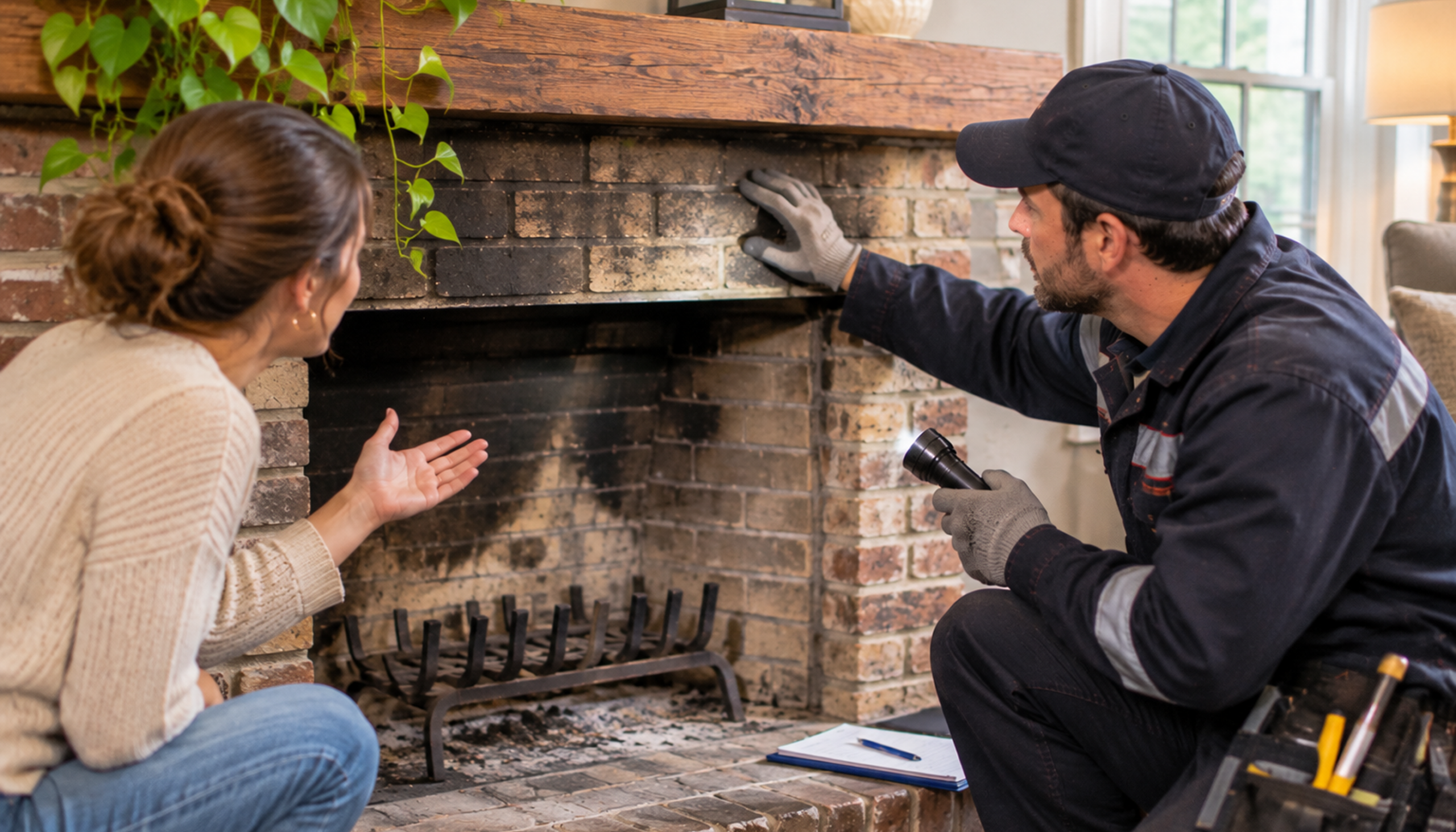
Fireplace smoke coming into your house can indicate that combustion gases are not moving outside as intended. Possible causes include a restricted flue, damper problems, insufficient airflow, or chimney draft issues. The timing matters: smoke appearing at startup may have a different cause from smoke spilling into the room throughout a fire.
Homeowners arranging chimney cleaning in New York should mention any indoor smoke when booking. Explain when it happens, whether it affects one fireplace, and whether anything recently changed in the home.
This guide focuses on wood-burning fireplaces. Gas fireplaces require appliance-specific assessment, while electric fireplaces do not produce combustion smoke during normal operation.
What Should You Do if Smoke Enters the Room?
Stop adding wood and keep people away from the affected area. Do not close the damper while a fire or hot embers remain, because that can further restrict the escape of combustion gases.
If smoke is heavy, a carbon monoxide alarm sounds, anyone feels unwell, or you suspect a chimney fire, leave the home and call 911 from outside. Do not return until emergency responders say it is safe.
For repeated smoke spillage, stop using the fireplace until the cause has been assessed. A working carbon monoxide alarm is essential, but it does not make a smoking fireplace safe to operate.
1. The Damper May Not Be Opening Properly
The damper controls the passage between the fireplace and chimney. If it is closed, partly open, damaged, or obstructed, smoke may struggle to escape.
A handle that moves does not necessarily prove that the damper opens fully. Rust, loose components, and accumulated debris can affect its operation.
With the fireplace completely cold, follow its operating instructions to identify the damper controls. Do not force a stuck mechanism or reach into an inaccessible area.
If the damper does not operate correctly, a professional can assess whether chimney damper repair or replacement is appropriate. Replacing a damper should follow diagnosis rather than serve as an automatic fix for every smoke problem.
2. A Cold Chimney Can Affect Startup Draft
Chimney draft is the movement that carries combustion gases outside. A cold chimney can be more vulnerable to reversed airflow, particularly when the home’s air pressure pulls air down the flue.
This can explain why smoke appears when a fire first starts. However, repeated startup smoke should not simply be dismissed as normal winter behavior. Fireplace design, ventilation, and other conditions may contribute.
Avoid improvised methods such as using a torch or burning paper inside the chimney to force airflow. Follow the fireplace manufacturer’s instructions and arrange an assessment if smoke continues to enter the home.
3. Deposits or Debris May Restrict the Flue
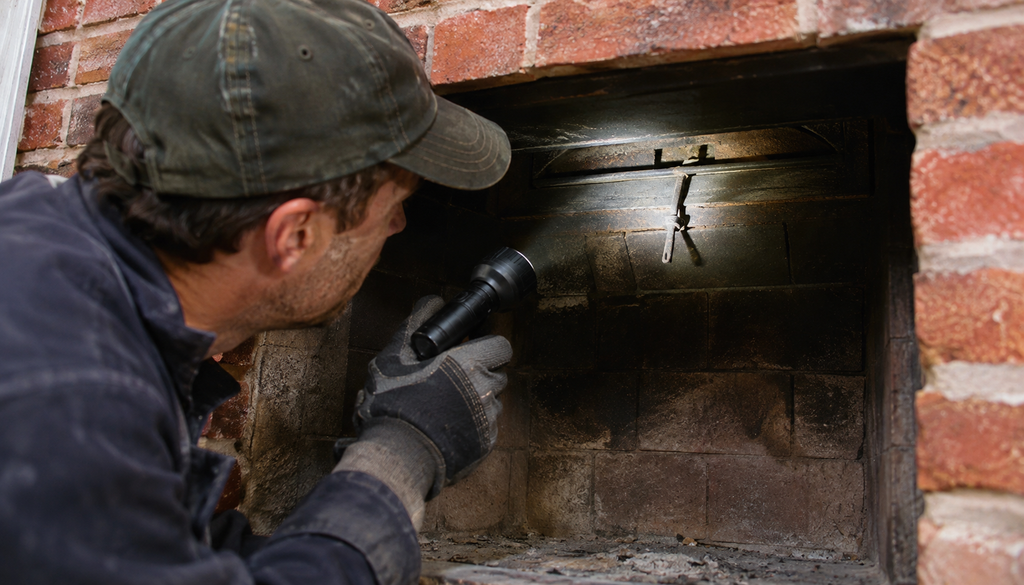
Soot, creosote, nesting material, or fallen debris can reduce the available passage for exhaust. A fireplace that previously worked well can develop a restriction between periods of use.
The appearance of the firebox alone cannot show whether the entire chimney is clear. Avoid climbing onto the roof or attempting to remove an obstruction yourself.
Professional chimney cleaning and sweep services can remove appropriate deposits and accessible debris when needed. Cleaning addresses buildup; it does not automatically resolve a damaged liner, pressure imbalance, or unsuitable chimney design.
Latest Blog: White Stains on Your Chimney Bricks
Have you also noticed white marks on the exterior masonry? Read White Stains on Your Chimney Bricks? What NYC Homeowners Should Know to understand how moisture and salt deposits can affect chimney surfaces.
White staining and indoor smoke are different symptoms. Mention both during an assessment without assuming they share the same cause.
4. Exhaust Fans Can Change Indoor Airflow
Kitchen range hoods, bathroom fans, and vented clothes dryers remove air from a home. When replacement air is limited, pressure differences can interfere with a naturally vented fireplace.
A useful observation is whether smoke problems coincide with another appliance operating. Recently installed windows, air sealing, or ventilation equipment may also be relevant. Cold chimneys are particularly vulnerable to pressure-related backdrafting.
Share these details with the technician. Do not disable required ventilation or treat opening a window as a permanent repair. Some cases need coordination between a chimney specialist and a qualified ventilation professional.
5. Firewood and Operating Practices Matter
Wet or unsuitable fuel can contribute to smoky combustion. Use properly seasoned firewood suitable for the fireplace, and follow the manufacturer’s instructions for loading and operation.
Do not burn household rubbish, treated lumber, or packaging. Avoid overloading the firebox or changing glass-door positions contrary to the appliance instructions.
Fuel quality is only one part of the assessment. Even suitable wood cannot compensate for a blocked flue or a damaged venting system. If smoke repeatedly enters the room, changing firewood alone is not enough to establish safe operation.
6. Wind or Chimney Design May Contribute
Some smoke problems occur mainly during windy weather. Nearby roof surfaces, surrounding buildings, and the chimney’s termination can influence airflow.
The relationship between the fireplace opening and flue also matters. A previous renovation or fireplace alteration may be relevant, especially if the problem began afterward.
Do not buy a different chimney cap solely because it is advertised as a draft solution. A professional should assess the installation before recommending changes. The appropriate correction depends on the cause.
What Will a Professional Assessment Check?
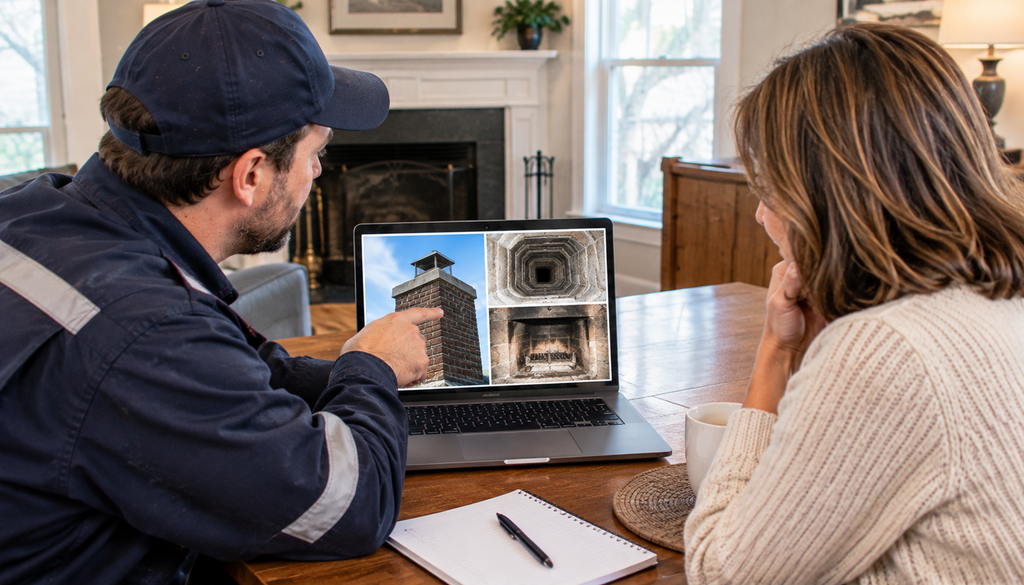
An assessment may include the damper, accessible flue surfaces, deposits, visible damage, chimney termination, and operating conditions. The technician may recommend additional examination depending on the findings.
When booking a chimney inspection in New York, provide maintenance records and explain whether smoke occurs at startup, during the fire, or as it burns down.
Also mention recent renovations, unusual noises, water intrusion, and exhaust equipment operating at the time. These observations help guide the investigation without requiring you to recreate the problem.
Arrange an Assessment before Using It Again
A smoky fireplace needs a clear explanation before further use. The appropriate work might involve cleaning, repairing a component, or investigating airflow.
Contact Chimney Experts NY to discuss the symptoms and arrange the appropriate service. Describe the problem as “smoke entering the room” rather than requesting a particular repair before the system has been checked.
Frequently Asked Questions
Why does my fireplace smoke only when I first light it?
A cold chimney or reversed airflow may contribute. Damper operation, restrictions, and household pressure can also matter. Repeated startup smoke warrants assessment.
Will chimney cleaning stop smoke coming into my house?
It may help when deposits or debris restrict the flue. Cleaning alone will not correct every airflow, design, or repair issue.
Can an extractor fan affect my fireplace?
Yes. Exhaust equipment can alter indoor pressure and interfere with naturally vented fireplaces when replacement air is insufficient.
Should I close the damper to stop smoke?
No. Closing it while a fire or hot embers remain can restrict exhaust further. If conditions are dangerous, leave and contact emergency services.
Is a little indoor smoke normal?
Do not assume repeated smoke spillage is harmless. Stop using the fireplace and have the cause assessed before using it again.

Chimney Experts Cleaning & Repair
Lorem ipsum dolor sit ametLorem ipsum dolor sit amet, consectetur adipiscing elit, sed do eiusmod tempor incididunt ut labore et dolore magna aliqua.
See All Blog