
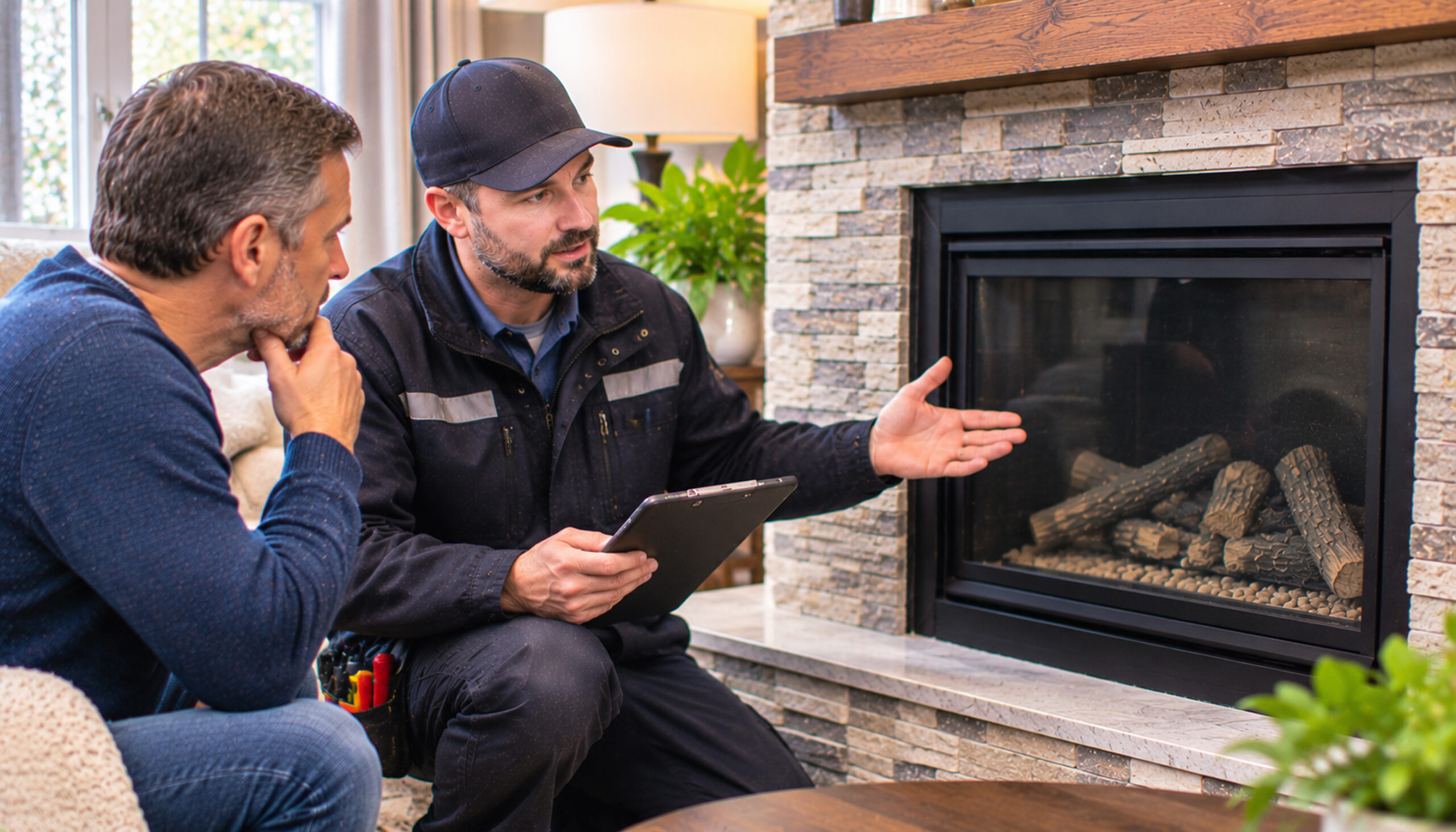
A gas fireplace pilot light that won’t stay lit can have several possible explanations. The issue may involve the ignition system, flame-sensing components, gas supply, or another appliance condition. The symptom alone cannot identify which part needs attention.
First, establish what is happening. Does the pilot fail to ignite, go out during startup, or disappear after the main burner switches off? Different ignition systems behave differently, so an absent pilot flame is not always a fault.
Homeowners exploring fireplace services in New York should describe the exact sequence when booking. Include the appliance model and any displayed warning or error message.
First: What if You Smell Gas?
If you smell gas or suspect a leak, leave the property immediately. Do not attempt to light the fireplace, operate electrical switches, or use a phone inside.
From a safe location outside, contact your gas utility’s emergency service or call 911. Do not return until responders say it is safe.
A carbon monoxide alarm or symptoms such as dizziness and headache also require immediate action. Leave and contact emergency services.
The checks below apply only when there is no suspected leak, alarm, or other emergency.
Does Your Fireplace Have a Standing Pilot?
A standing-pilot system normally maintains a small pilot flame while the appliance is set for that mode of operation.
Other fireplaces use electronic ignition, which lights the pilot when heat is requested. Depending on the model and selected settings, that flame may switch off afterward.
Before assuming the pilot is failing, find the correct operating manual. Check whether the appliance is designed to maintain a continuous pilot.
Do not use lighting instructions from a different fireplace simply because the controls look similar.
Describe the Problem Before Choosing a Repair
These situations can look similar but mean different things:
- The fireplace clicks, but no pilot flame appears.
- The pilot appears briefly and then goes out.
- The pilot remains lit, but the main burner does not start.
- The burner operates and later shuts down unexpectedly.
- The pilot switches off when the fireplace is turned off.
Record what you have already observed without repeatedly attempting ignition.
When arranging gas fireplace repair in NYC, share that sequence with the provider. Confirm that the technician can service your particular brand and model.
Why Might the Pilot Fail to Stay Lit?
The explanation depends on the appliance’s design. A qualified technician may need to assess the pilot assembly, flame-sensing system, controls, power supply, or gas delivery.
For example, older standing-pilot appliances and newer electronic systems do not necessarily use the same components or diagnostic procedures.
A brief flame does not prove that one particular sensor has failed. Likewise, clicking does not establish that gas is reaching the pilot correctly.
Manufacturer troubleshooting guidance assigns detailed ignition diagnosis and corrective work to qualified service technicians.
Avoid buying replacement parts based solely on an online description of a similar symptom.
What Can You Check Without Dismantling Anything?
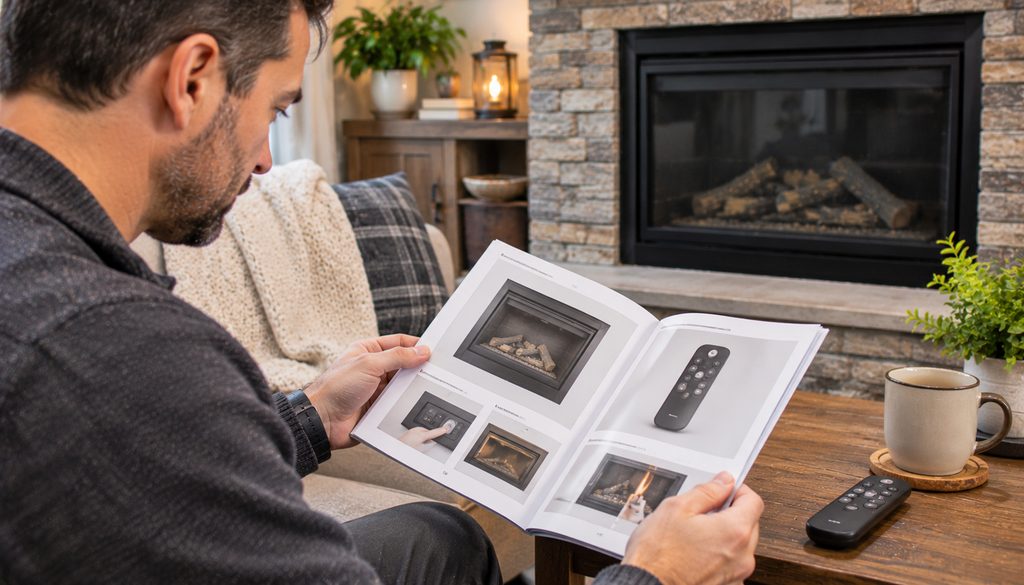
Start with the user controls and instructions for your model.
Check whether the remote is requesting heat and whether a thermostat setting or timer explains the shutdown. If the manual identifies user-replaceable batteries, check them as directed.
Some appliances have a particular operating mode, power requirement, or startup sequence. Follow the manual rather than guessing how the controls should be positioned.
Do not remove the glass, open service compartments, or touch wiring to continue troubleshooting.
If the instructions do not clearly identify a check as suitable for the homeowner, leave it to the service technician.
Latest Blog: Buying a Home With a Fireplace?
Recently moved into a property with an unfamiliar appliance? Read Buying a Home With a Fireplace? NYC Chimney Inspection Guide.
That article explains which maintenance records to request and how to clarify inspection scope. Appliance service and chimney inspection may involve different work, so confirm what each visit includes.
Can Dust or Deposits Affect Operation?
Material around ignition components can be relevant, but accessing and cleaning those parts is not automatically a homeowner task.
Gas fireplaces contain components whose position and condition matter. Moving decorative logs, disturbing the pilot assembly, or using unsuitable cleaning methods can create additional problems.
Clean only the user-accessible areas identified in the manual, with the appliance off and fully cool.
Do not insert a needle into a pilot opening, adjust the flame, or spray household cleaner into the assembly. Ask the technician whether servicing is needed and what the findings support.
Could Venting Be Involved?
Venting concerns may form part of the assessment, depending on the appliance and symptoms. However, a pilot problem does not automatically mean the chimney needs sweeping.
Some gas fireplaces use a dedicated direct-vent system rather than a conventional masonry chimney. The correct examination must match the installation.
For a fireplace connected to an existing chimney, ask whether a separate chimney inspection is appropriate. Explain the appliance type so the provider can confirm the relevant scope.
Do not modify a vent termination or remove an obstruction yourself.
Why Repeated Relighting Is Not a Solution
A pilot that repeatedly goes out needs an explanation. Restarting the fireplace does not correct the underlying condition.
Follow the model’s instructions about failed ignition attempts and when to stop. Do not keep cycling the controls after the permitted attempts or repeatedly reset a lockout.
Never bypass a protective switch, hold a control in place with an object, or bridge electrical connections.
Instructions intended for a trained technician should not be treated as a home troubleshooting checklist.

What Information Should You Provide When Booking?
Have the brand, model, and available service records ready. Use documents or a safely accessible label; do not dismantle the appliance to find identification.
Explain when the problem began, whether it happens every time, and whether the appliance has been unused for a long period.
Mention recent servicing, installation changes, power interruptions, and error messages you have already seen.
In a rented or managed property, notify the owner or building management before arranging repairs.
Arrange Model-Specific Service
A gas fireplace needs an assessment suited to its ignition system and installation.
Contact Chimney Experts NY to discuss the symptoms and confirm service availability for your appliance. Ask the provider to explain the diagnosis, recommended work, and any checks required before reuse.
Avoid requesting a particular replacement part before the cause has been established.
Frequently Asked Questions
Should the pilot always remain on?
Not necessarily. Electronic ignition systems may switch the pilot off during normal operation. Check the instructions for your model.
Does a pilot that goes out mean the thermocouple is faulty?
No. Some appliances use different components, and several conditions can produce similar symptoms. Professional diagnosis is needed.
Can changing remote batteries fix it?
It may resolve a control issue on some models, but it will not correct every ignition problem. Follow the manual’s battery instructions.
Should I clean the pilot myself?
Only perform maintenance specifically assigned to the homeowner in the manual. Leave pilot assembly servicing and adjustments to a qualified technician.
Can I continue using it if relighting works?
Repeated unexplained shutdowns warrant service. A successful restart does not establish that the underlying problem has been resolved.

Chimney Experts Cleaning & Repair
Lorem ipsum dolor sit ametLorem ipsum dolor sit amet, consectetur adipiscing elit, sed do eiusmod tempor incididunt ut labore et dolore magna aliqua.
See All Blog