
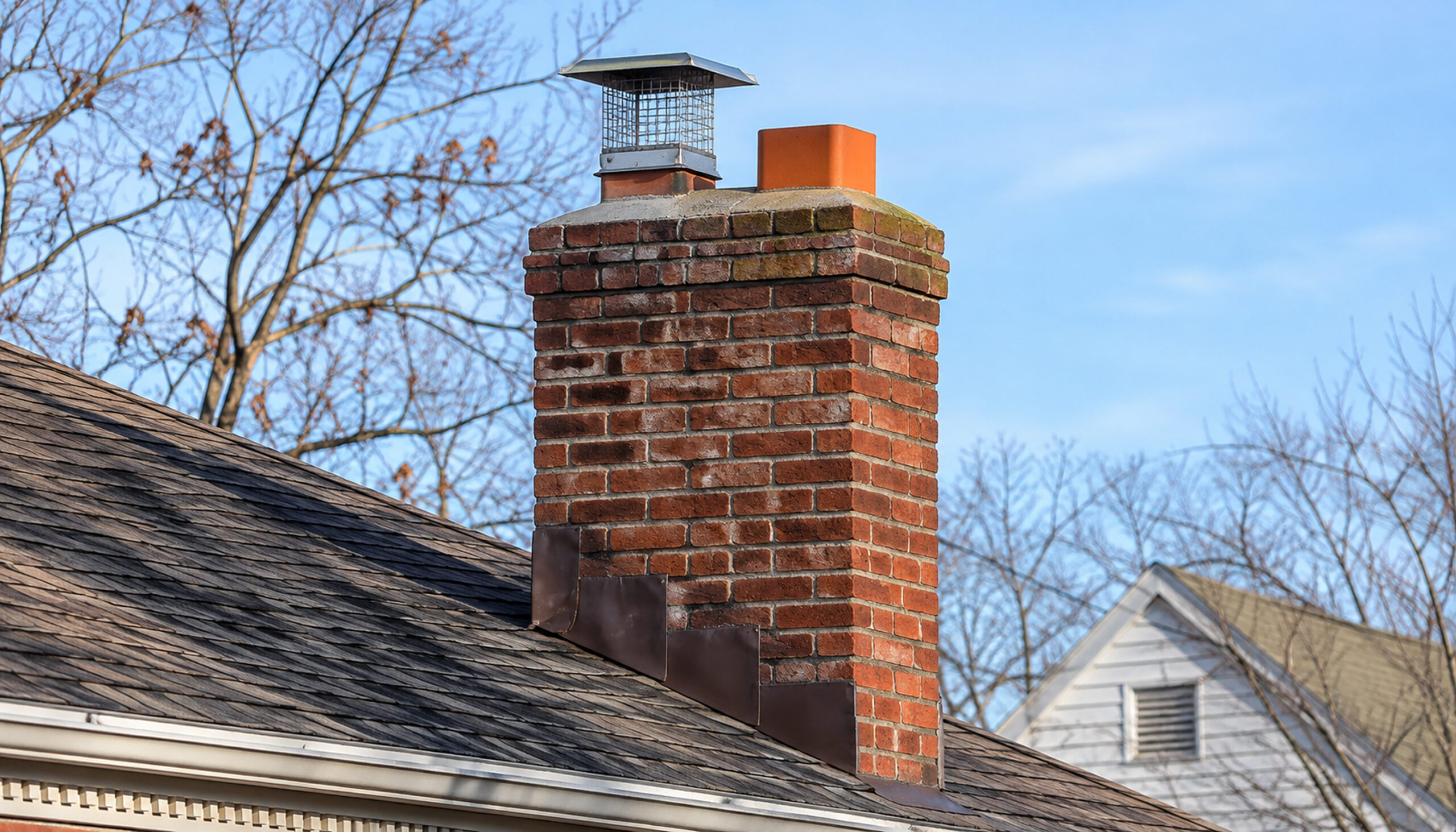
If your chimney cap is missing after strong winds, arrange a professional assessment before treating the problem as a simple replacement. The cap may have detached, but its mounting points, surrounding masonry, or other chimney-top components could also need attention.
A cap that looks tilted or loose deserves investigation too. Avoid climbing onto the roof, particularly while conditions remain windy, wet, or icy.
Homeowners arranging chimney cleaning in New York should mention the suspected wind damage when booking. Explain what changed and whether you have noticed indoor water, unusual noises, or fallen material.
What Does a Chimney Cap Do?
A chimney cap covers a flue opening while allowing combustion gases to escape through the intended passage. Depending on its design, it can help limit rain entry and animal access.
A cap is different from the masonry crown surrounding the flue. A metal chase cover on a factory-built chimney enclosure is another separate component.
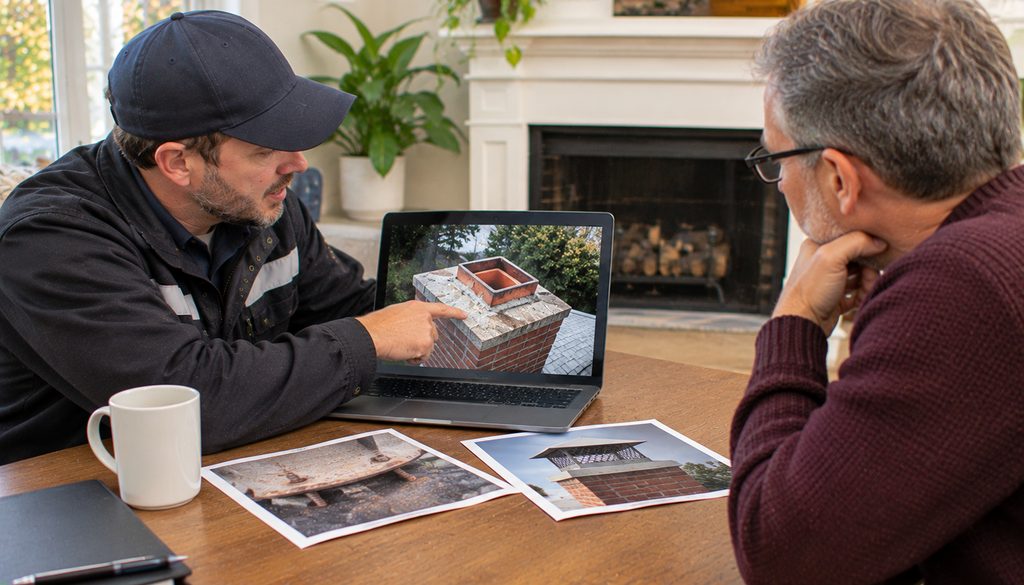
These names are sometimes used loosely, so photographs can help a professional identify what appears damaged. A missing cap, cracked crown, and lifted chase cover may require different work.
1. Check from the Ground Only
Once outdoor conditions are safe, observe the chimney from a location away from anything that could fall.
A phone camera’s zoom or binoculars may help you notice:
- A cap that appears absent or crooked.
- Metal hanging over the chimney edge.
- Pieces on the ground or nearby roof.
- Changes to visible brickwork or flue tiles.
- A branch or other object against the chimney.
Do not stand beneath loose components or attempt to retrieve material from the roof. Keep children and pets away from areas where pieces may fall.
The absence of obvious damage from below does not establish that the chimney is undamaged.
2. Why Might a Cap Come Loose?
Wind can expose problems with an attachment, but the weather alone does not explain every failure.
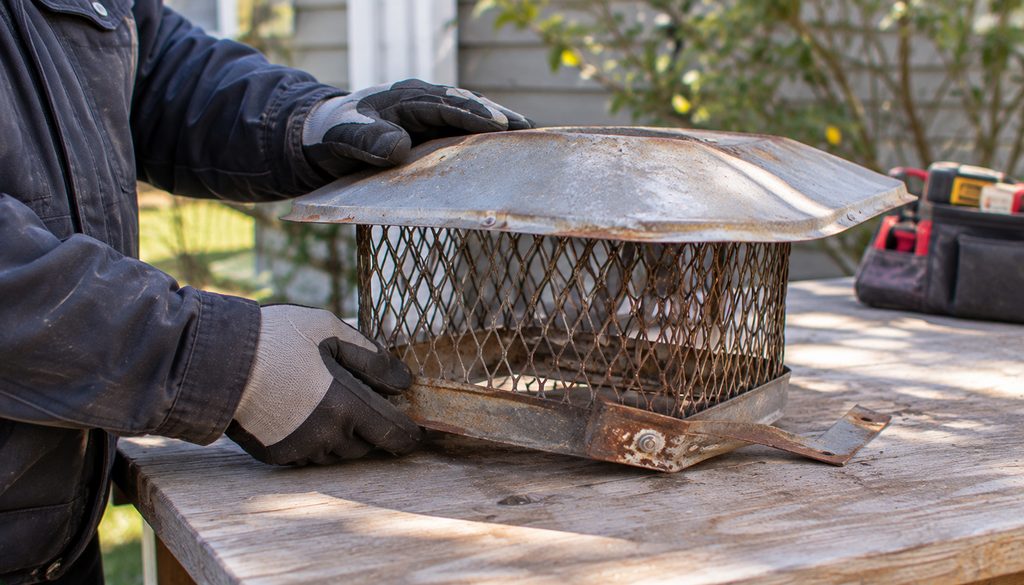
Corrosion, an unsuitable fit, deteriorated supporting material, or a previous installation problem may contribute. A cap may also have been struck by a branch or another object.
A professional should examine the cap and how it was secured before recommending reuse or replacement.
When discussing chimney cap replacement, describe the event and share earlier photographs if available. Comparing before-and-after images can help identify what changed.
3. Can You Keep Using the Fireplace?
Do not assume the fireplace is suitable to use simply because smoke previously traveled up the chimney.
If the cap is loose, displaced, or missing after a damaging event, have the condition assessed before another fire. The concern may extend beyond the cap itself.
A tilted component could interfere with the outlet, while debris or other damage may not be visible from the room below.
For a chimney serving a boiler, furnace, or water heater, contact the appropriate professional promptly for guidance about continued operation. Do not disconnect equipment or modify its venting yourself.
4. Does a Missing Cap Always Cause a Leak?
No. A missing cap can leave the flue opening exposed, but indoor moisture may also involve the crown, flashing, masonry, or another source.
Tell the technician when the dampness appeared and where you first noticed it. Photographs of accessible indoor staining can help document the concern.
Likewise, fitting a replacement cap should not automatically be presented as a solution to every chimney leak.
The assessment should connect the proposed repair to the observed findings.
Latest Blog: Fireplace Damper Stuck?
Having trouble operating the fireplace controls as well? Read Fireplace Damper Stuck Open or Closed? NYC Homeowner’s Guide.
That article explains why a moving handle does not necessarily confirm correct damper operation. Mention both concerns when booking, without assuming the same repair will resolve them.
5. Why Replacement Compatibility Matters
A replacement must suit the chimney or listed venting system. Choosing a cap by appearance or approximate size alone is not enough.
The professional should consider the flue arrangement, attachment method, clearance, and the space needed for exhaust to discharge.
For factory-built systems, the manufacturer’s requirements are especially important. CSIA inspection guidance calls for an appropriate cap that does not obstruct or restrict the outlet.
Do not substitute a decorative cover, improvised screen, or generic component without confirming compatibility.
6. When Is Further Inspection Appropriate?
Further examination may be needed if the event involved a branch strike, falling masonry, displaced flue components, or other suspected damage.
A chimney inspection in New York can help establish the appropriate scope. Describe the event before the visit so the provider understands why the assessment is needed.
Ask which areas were examined, whether access was limited, and what additional investigation is recommended.
CSIA has highlighted that wind, flying debris, and other storm effects can damage both exterior and interior chimney components.
That does not mean every missing cap requires rebuilding. Recommendations should follow the actual findings.
What if You Hear Animals Inside?
Do not light a fire to drive animals out or fit a new cap over a potentially occupied flue.
Scratching, fluttering, or nesting material warrants assessment before the opening is closed. A professional should determine what is present and how it can be addressed appropriately.
Discuss chimney animal removal if activity is suspected. Tell the provider about the sounds and when they occur, and ask whether wildlife-specific assistance is needed.
A missing cap does not prove that animals have entered, but suspected occupancy should be resolved before replacement.
What Should the Estimate Explain?
Ask for a written scope identifying the component being replaced and any related work.
The estimate should clarify the cap specification, attachment method, access arrangements, and whether supporting repairs are necessary.
Request photographs showing why the old cap cannot be reused, if replacement is recommended.
Also ask whether further inspection or repairs must be completed before the fireplace or connected appliance returns to use. Avoid comparing quotations solely by the price of the metal cap.
Arrange a Safe Assessment
Do not attempt to cover the chimney yourself with plastic, a bucket, or another improvised material. Blocking an active flue can interfere with exhaust.
Contact Chimney Experts NY to discuss a missing or loose cap and arrange an assessment. Share ground-level photographs and mention any water entry, unusual sounds, or visible debris.
If there is immediate danger from falling components, keep people away and contact the appropriate emergency service or building authority.
Frequently Asked Questions
Can a chimney cap be reattached instead of replaced?
Possibly. Its condition, compatibility, mounting points, and supporting materials must be assessed first.
Can I install a temporary cover?
Do not improvise a cover over an active flue. Ask a professional how the opening should be managed.
Does a new cap fix every chimney leak?
No. Water can enter through other components, so the source needs investigation.
Should I buy a cap before the assessment?
Confirm the required type and dimensions first. An unsuitable cap may interfere with exhaust or fail to attach correctly.
What if the cap looks fine from the ground?
A ground-level view has limitations. Report suspected damage or new symptoms and let the professional determine whether closer examination is needed.

Chimney Experts Cleaning & Repair
Lorem ipsum dolor sit ametLorem ipsum dolor sit amet, consectetur adipiscing elit, sed do eiusmod tempor incididunt ut labore et dolore magna aliqua.
See All Blog