
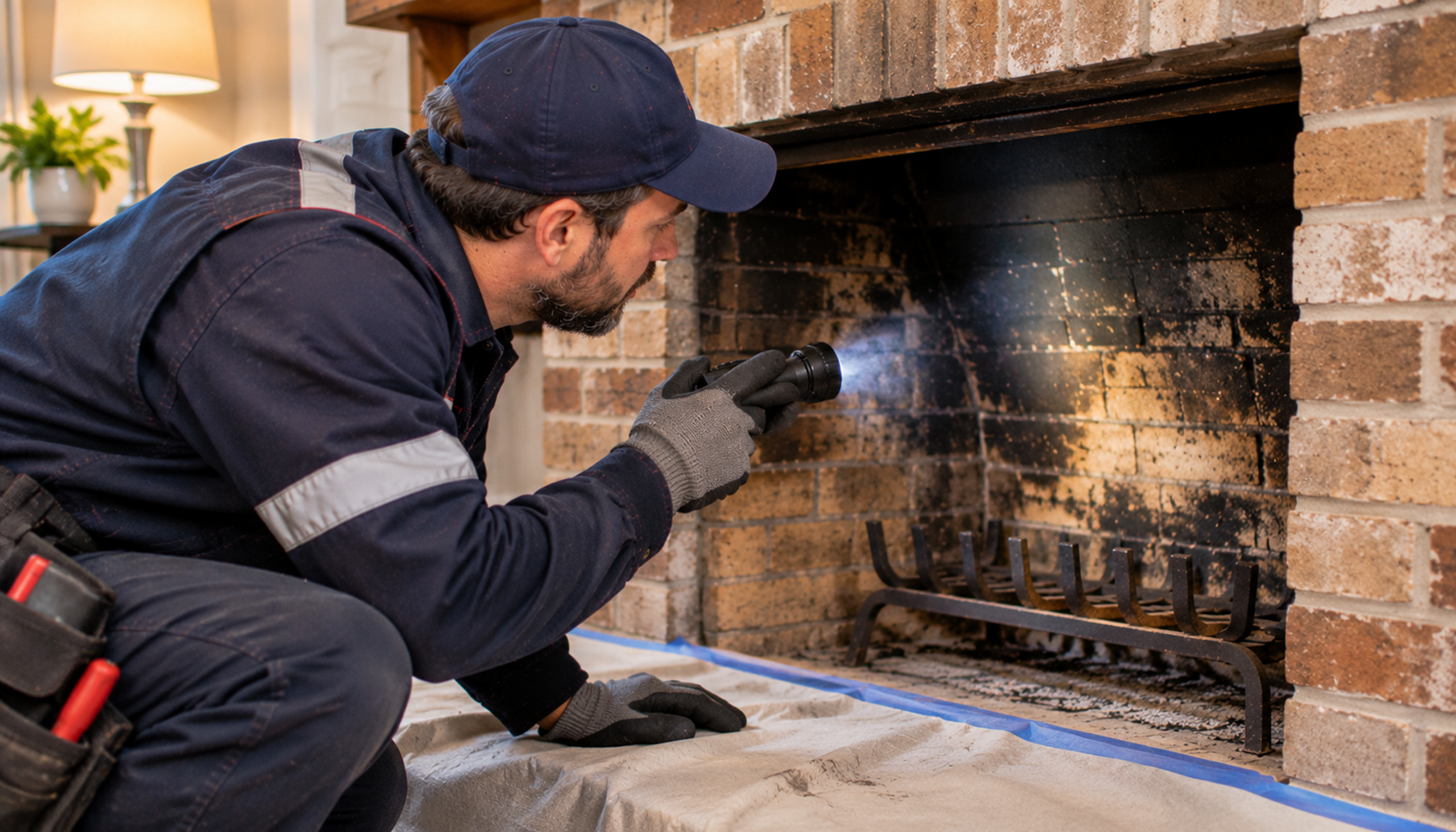
Creosote buildup in a chimney can appear as dark flakes, crusty deposits, or a hard, shiny coating. These materials can develop during wood burning, but appearance alone cannot establish the condition of the entire chimney.
If you notice unfamiliar deposits around an accessible fireplace opening, avoid scraping them or lighting another fire to see whether they disappear. Have the system assessed before further use if glazed buildup is suspected.
Homeowners arranging chimney cleaning in New York should mention shiny deposits, falling flakes, or changes in fireplace performance when booking. These details help the technician understand what needs examination.
What Is Creosote?
Creosote is residue that can accumulate as the products of wood combustion pass through a chimney. When those gases cool, material can collect on interior surfaces.
Deposits vary in texture. Some are loose and flaky, while others form a dense coating commonly described as glazed creosote. Restricted airflow, unseasoned wood, and cooler chimney temperatures can accelerate accumulation.
This article concerns wood-burning fireplaces and stoves. Gas appliances have different combustion and venting concerns, while electric fireplaces do not produce wood-burning creosote during normal operation.
Is Black Buildup Always Creosote?
Not every dark mark is glazed creosote. Soot staining, loose deposits, and other surface conditions can look similar in photographs.
A shiny appearance deserves attention, but it does not tell you the deposit’s thickness, its extent farther up the flue, or whether underlying components are damaged.
Avoid trying to classify deposits by touching, chipping, or heating them. A professional can examine the material and explain what the findings mean for cleaning and further use.
Why Can Creosote Accumulate?
Unseasoned or Damp Firewood
Wood containing too much moisture can contribute to smoky combustion and conditions that encourage deposits.
Use suitable, properly seasoned firewood and follow the appliance instructions. However, changing the wood does not remove material already inside the chimney.
Restricted Airflow
Insufficient combustion air or an improperly operated damper can affect how exhaust moves through the system.
Follow the manufacturer’s instructions for controls and glass doors. Door positions and operating methods differ between open fireplaces and enclosed appliances.
Cooler Flue Conditions
A chimney’s temperature and the way the fireplace or stove operates can influence deposit formation.
Persistent buildup may require a review of the complete system. Do not assume that using the fireplace more aggressively will correct the underlying issue.
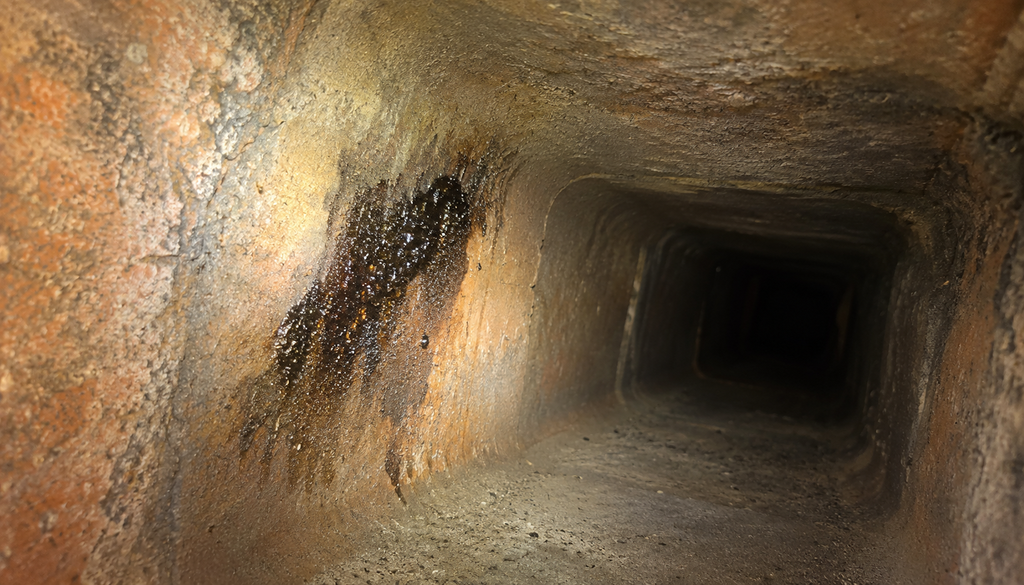
Why Does Shiny Buildup Need Attention?
Creosote is combustible. Accumulated deposits can provide fuel for a chimney fire, and a damaged chimney may no longer contain combustion products as intended.
Glazed deposits can also require a different removal approach from loose soot. CSIA advises attention to glaze even before ordinary soot deposits reach its usual cleaning threshold. Homeowners should leave deposit assessment and measurement to a qualified professional.
Suspected glaze is a reason to stop using the appliance and arrange assessment. It does not automatically mean that the chimney must be rebuilt or relined.
Latest Blog: White Stains on Your Chimney Bricks?
Dark deposits inside the chimney and white marks on exterior bricks are different concerns. Read White Stains on Your Chimney Bricks? What NYC Homeowners Should Know to learn what exterior staining may indicate and when to arrange an assessment.
Can a Normal Chimney Sweep Remove It?
The appropriate method depends on the deposit and the condition of the chimney.
Loose material may respond to conventional mechanical sweeping. Hard, bonded glaze may require additional professional treatment and further evaluation before removal.
When booking chimney cleaning and sweep services, describe what you have noticed rather than requesting a particular treatment. Ask the technician to explain the findings, proposed method, and any limitations.
Do not use household chemicals, improvised scraping tools, or power-tool attachments inside the flue. An unsuitable method can damage chimney components.
Do Chimney Cleaning Logs Replace Professional Cleaning?
No. Chemical chimney products should not replace an inspection and appropriate mechanical cleaning.
Some professional treatments can help change the character of glazed deposits so they can be removed. That does not mean a consumer cleaning log will clear every chimney or establish that it is safe to use.
If a technician recommends a treatment, ask how it fits into the cleaning process and what follow-up is required. Avoid lighting fires to activate a product when the system has not been cleared for use.
What Will a Professional Inspection Check?
An assessment may examine accessible deposits, the flue lining, connections, and other components relevant to the appliance.
The technician may recommend additional examination if there are signs of damage, an obstruction, or a possible previous chimney fire.
A chimney inspection in New York can help establish the next steps. Provide previous reports and mention changes in fuel, operating habits, or appliance installation.
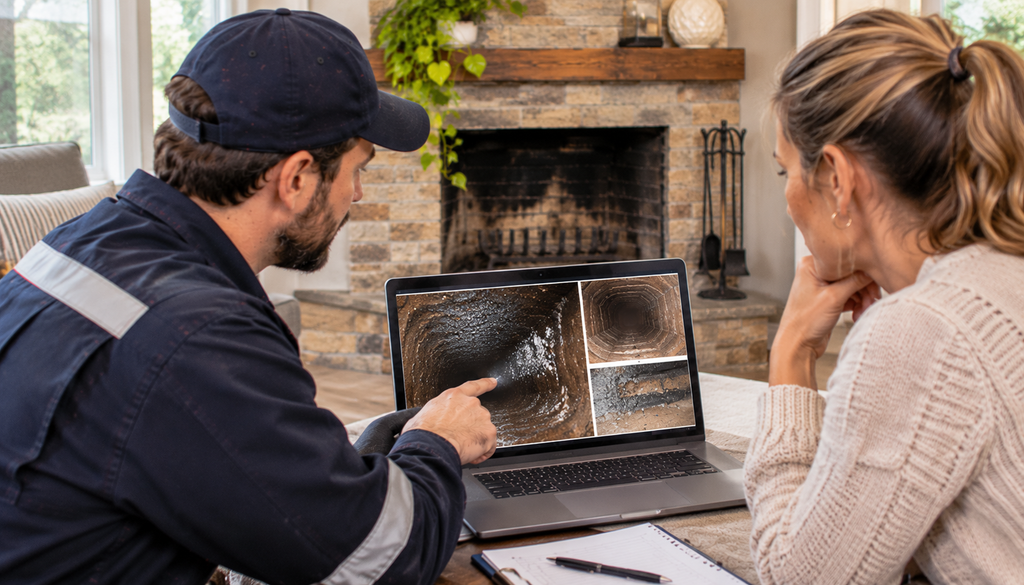
Ask for photographs and a clear explanation of any recommended work. Deposit removal and repair address different problems; one should not be presented as an automatic substitute for the other.
Can You Reduce Future Buildup?
After the system has been assessed and cleared for use, follow its operating instructions and maintenance recommendations.
Use suitable seasoned wood, avoid burning rubbish or treated lumber, and operate the appliance controls as directed. Keep records of inspections and cleaning.
Do not attempt to “burn out” deposits with an unusually hot fire. A deliberate high-temperature burn can ignite accumulated material instead of safely removing it.
Good operating habits can reduce contributing factors, but they do not eliminate the need for regular professional assessment.
What if You Suspect a Chimney Fire?
A loud roaring sound, unusual vibration, or flames or sparks from the chimney can indicate an emergency. Chimney fires can also occur without obvious dramatic signs.
If you suspect a fire, leave the property and call 911 from outside. Do not climb onto the roof or attempt another fire afterward.
Have the chimney evaluated before reuse, even if the fireplace appears normal once it has cooled.
Arrange an Assessment before another Fire
Shiny deposits deserve a clear explanation rather than a guess based on color or texture.
Contact Chimney Experts NY to discuss what you have noticed and arrange an appropriate visit. Mention any falling material, smoke problems, unusual sounds, or previous cleaning recommendations.
Frequently Asked Questions
Is shiny black material always dangerous creosote?
Appearance alone cannot confirm the material or its condition. Suspected glazed deposits should be professionally assessed before further use.
Can dry firewood remove existing buildup?
No. Suitable seasoned wood may reduce contributing factors, but it does not remove deposits already present.
Does glazed creosote mean I need a new liner?
Not automatically. Liner recommendations should follow an assessment of its condition and the installation.
Can I clean the visible part myself?
Avoid disturbing suspected creosote or reaching into the chimney. Visible deposits may represent only a small part of the system.
How often should the chimney be checked?
Arrange an annual inspection, with cleaning and repairs as needed. Seek earlier assessment if you notice unusual deposits or operating problems.

Chimney Experts Cleaning & Repair
Lorem ipsum dolor sit ametLorem ipsum dolor sit amet, consectetur adipiscing elit, sed do eiusmod tempor incididunt ut labore et dolore magna aliqua.
See All Blog