
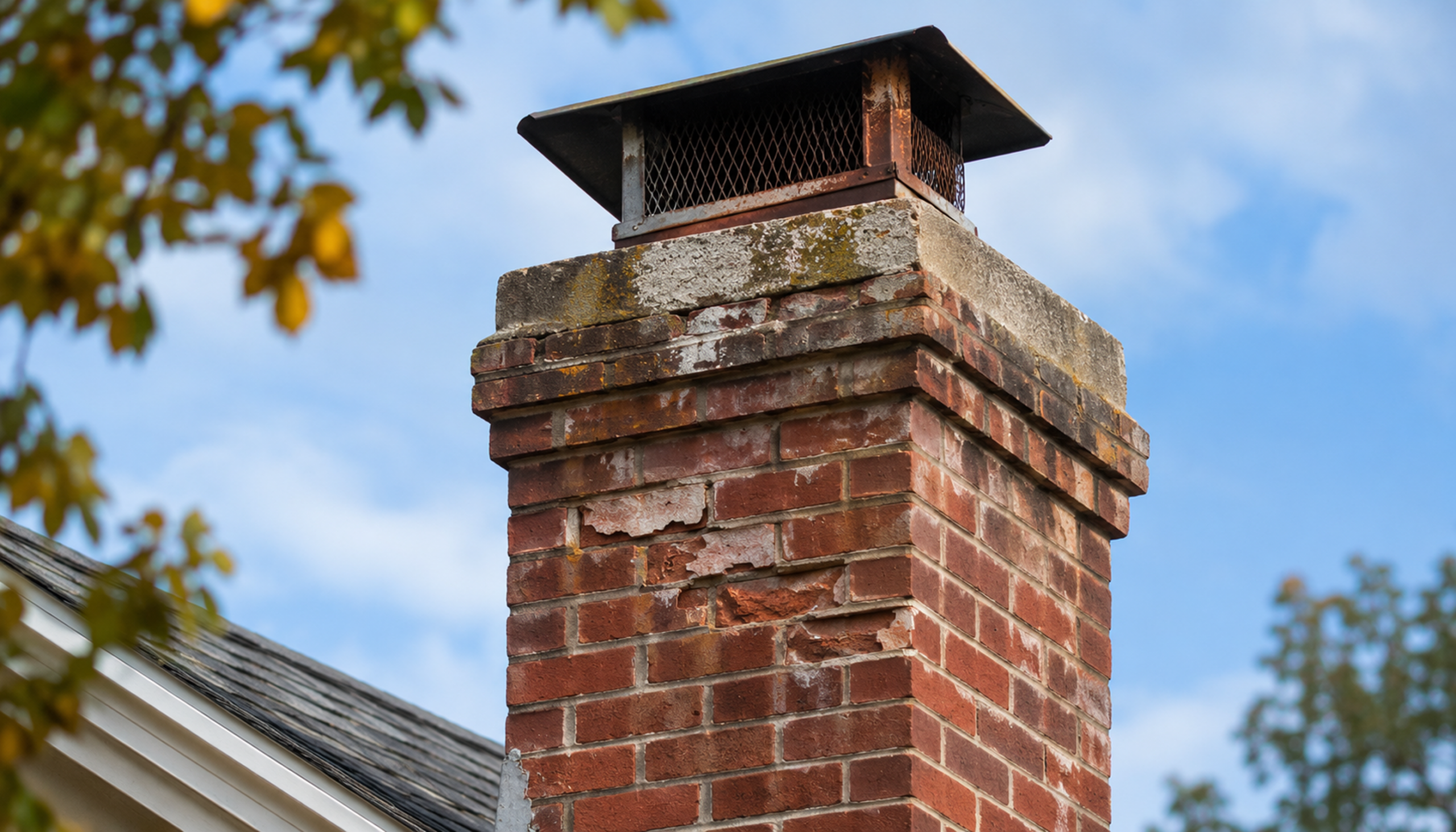
Chimney bricks flaking can look like thin layers peeling away, chipped corners, or missing sections of the brick surface. This type of deterioration is often called spalling, but its cause and extent need professional assessment.
A damaged brick face is different from crumbling mortar between bricks. Both may appear on the same chimney, yet they do not necessarily require the same repair.
Homeowners arranging chimney cleaning in New York should mention exterior brick damage when booking. Cleaning removes appropriate deposits; assessing deteriorating masonry requires attention to the chimney’s condition and exposure to moisture.
What Does Brick Spalling Look Like?
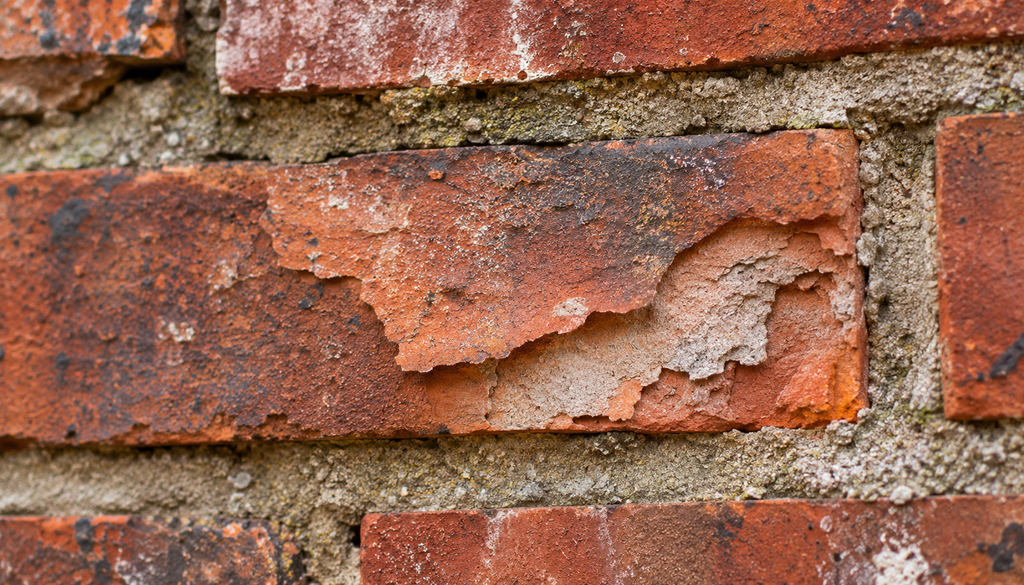
Spalling describes material breaking away from a masonry surface. On a chimney, you might notice rough patches where a previously smooth brick face has separated.
Possible signs include:
- Thin flakes or chips below the chimney.
- Recessed areas on individual brick faces.
- Exposed, uneven material beneath the outer surface.
- Damage affecting several nearby bricks.
These observations cannot establish structural stability. A photograph may help document the problem, but it cannot show the condition of concealed masonry or the flue lining.
Do not climb onto the roof or tap damaged bricks to test whether more material comes loose.
1. Moisture and Freezing Can Contribute
Brick masonry exposed to excessive water can deteriorate through repeated freezing and thawing. The amount of moisture, material characteristics, and exposure conditions all influence the outcome.
For NYC homeowners, this makes visible damage worth assessing before further cold-weather exposure. However, a flaking surface does not prove that freezing is the only cause.
A professional should investigate why the masonry is becoming wet and whether the damage is localized or widespread.
An assessment for chimney repair and restoration can help establish whether individual bricks, surrounding joints, or a larger section need attention.
2. Water May Be Entering Somewhere Else
The most visibly damaged brick is not necessarily the original entry point.
Defects around the chimney top, deteriorated joints, or roof connections may allow moisture to reach masonry below. The pattern of staining and damage can help guide the investigation.
Tell the technician whether the problem becomes more noticeable after rain or melting snow. Mention indoor dampness, previous leaks, and any recent roof or chimney work.
Replacing a few damaged bricks without addressing continuing water exposure may leave the conditions that contributed to deterioration unresolved.
3. Previous Treatments May Matter
A chimney’s repair history can provide useful clues. Tell the professional about earlier painting, coating, patching, or aggressive cleaning.
Some unsuitable treatments can affect how masonry dries. Abrasive cleaning can also damage brick surfaces and accelerate deterioration. Preservation guidance identifies both trapped moisture and inappropriate cleaning as potential contributors to spalling.
Do not assume that applying another coating will stop the damage. Product selection should follow assessment of the masonry, existing finishes, and moisture conditions.
Older chimneys may need particular care when choosing compatible repair materials.
Is This the Same as Crumbling Mortar?
No. Mortar is the material in the joints between bricks. Spalling affects the masonry unit itself.
If the joints are deteriorated while the bricks remain serviceable, repointing may be appropriate. Where brick faces have broken away, joint repair alone may not address the damaged units.
Professional brick pointing and chimney mortar repair should follow an assessment of both the joints and surrounding bricks. Ask which materials need repair and why.
A chimney may need a combination of repairs rather than one treatment applied everywhere.
Latest Blog: Dryer Stopping Mid-Cycle?
Looking after other maintenance concerns at home? Read Why Does My Dryer Keep Stopping Mid-Cycle? NYC Homeowner’s Guide.
The article explains how restricted ventilation and appliance faults can cause different symptoms, helping you understand when vent cleaning or appliance service may be appropriate.
What Can You Check Safely From the Ground?
Observe the chimney from a safe distance. A phone camera’s zoom can help record visible changes without approaching the roof.
Note which side appears affected, whether loose pieces are accumulating, and whether the damage seems to be spreading.
Avoid standing beneath areas shedding material. Keep children, visitors, and pets away from the affected location, and do not collect debris while additional pieces may fall.
If you rent or live in a managed building, report the concern to the owner or building manager.
When Does It Need Urgent Attention?
Falling masonry, an obvious lean, bulging sections, or visibly displaced bricks need prompt professional attention. Keep people away from the area.
Do not try to secure loose masonry yourself or rely on a surface patch to hold it in place.
If there appears to be an immediate risk to people or property, contact the appropriate emergency services or building authority.
A few surface flakes do not automatically mean the chimney is about to collapse. Equally, limited visible damage cannot establish that the rest of the structure is sound.
What Might a Professional Recommend?
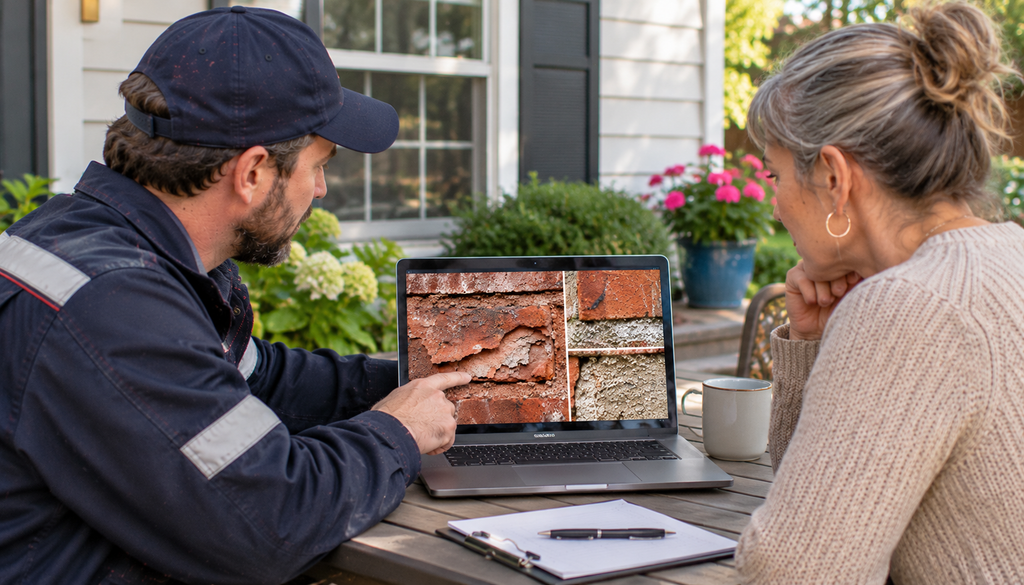
Recommendations depend on the findings. Localized damage may call for replacement of affected bricks and compatible joint repairs. More extensive deterioration may require rebuilding part of the chimney.
The assessment should also address contributing moisture sources. Repairing the appearance without understanding exposure conditions may not provide a lasting result.
Ask for photographs showing the affected areas and an explanation of:
- Which bricks or joints are damaged.
- Whether further examination is needed.
- What may be allowing water into the masonry.
- How the proposed work addresses those findings.
Do not assume that exterior brick damage automatically requires a new chimney liner. Interior recommendations should have their own supporting findings.
Will Waterproofing Fix Flaking Bricks?
A water-repellent treatment cannot replace missing brick material or stabilize loose masonry.
Whether any treatment is appropriate depends on the condition of the chimney and the materials involved. Some coatings can interfere with drying, so applying a generic sealer without assessment may create further problems.
Address necessary repairs and moisture sources first. Ask the professional to explain any proposed product’s suitability rather than choosing one solely because it is labeled “waterproof.”
Arrange an Assessment Before Damage Spreads
Document visible changes and arrange a professional visit. Avoid cosmetic patches that conceal the condition before it has been examined.
Contact Chimney Experts NY to discuss flaking bricks, falling fragments, or deteriorated joints. Share ground-level photographs and any previous repair records.
The aim is to establish what is damaged, what contributed to it, and which work is appropriate.
Frequently Asked Questions
What is it called when chimney bricks peel or flake?
Surface material breaking away is commonly called spalling. A professional should assess its cause and extent.
Does repointing fix damaged brick faces?
Not by itself. Repointing addresses mortar joints; damaged bricks may need separate attention.
Can white stains and flaking appear together?
Yes, but they are different conditions. White deposits alone do not establish that bricks are structurally damaged.
Should I paint the chimney to cover the damage?
Have it assessed first. Paint does not replace missing material, and an unsuitable coating can affect moisture movement.
Can I use the fireplace while exterior bricks are flaking?
Appearance alone cannot establish whether the system is suitable for use. Ask the inspecting professional, particularly where there is loose masonry or suspected wider damage.

Chimney Experts Cleaning & Repair
Lorem ipsum dolor sit ametLorem ipsum dolor sit amet, consectetur adipiscing elit, sed do eiusmod tempor incididunt ut labore et dolore magna aliqua.
See All Blog