
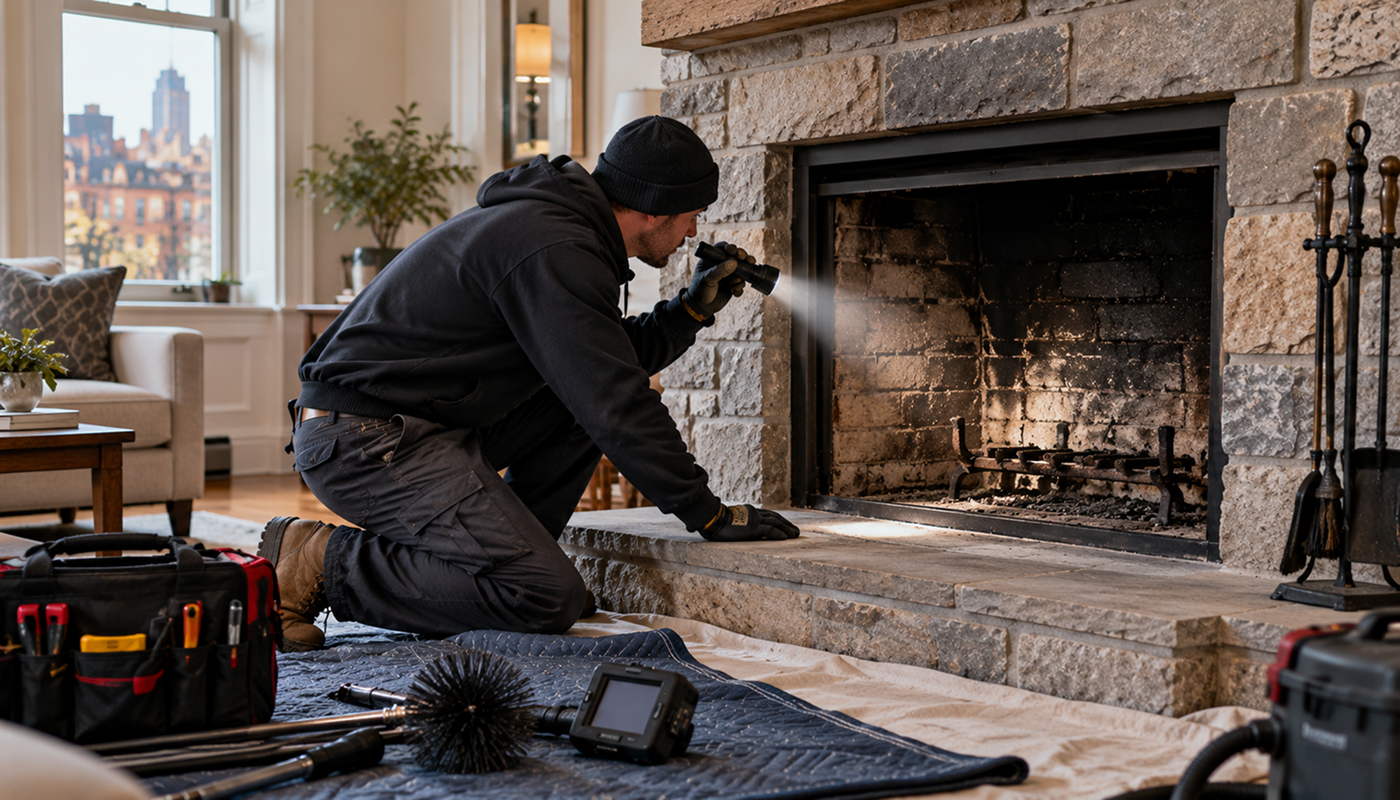
What does a chimney inspection include? The answer depends on your fireplace or heating appliance, the chimney’s construction, and the reason for the assessment. An inspection may examine accessible masonry, the cap and crown, fireplace components, and internal flue surfaces. The agreed scope determines which areas are checked and whether additional equipment is needed.
Chimney Experts Cleaning & Repair provides chimney services in New York, including inspections to assess condition and explain maintenance needs. Share your appliance details, previous service records, and any concerns when booking so the team can discuss an appropriate assessment.
An inspection is different from cleaning or repair. Its purpose is to examine the system within a defined scope, identify observable concerns, and explain the next steps. It should also make clear which areas could not be assessed.
What Happens Before the Inspection?
The appointment should begin with a discussion about your chimney and how you use it. A wood-burning fireplace, a manufactured insert, and a boiler-connected chimney can have different assessment requirements.
Useful information includes:
- The appliance type and fuel used.
- How frequently the system operates.
- Previous inspection, cleaning, or repair dates.
- Recent appliance replacements or alterations.
- Smoke, odors, leaks, or visible deterioration.
- Any known history of a chimney fire.
Our chimney inspection in New York service considers the chimney configuration and the concerns reported. Confirm the scope when booking, including whether video inspection, cleaning, or additional testing is included.
Which Parts of the Chimney May Be Checked?
The components examined depend on construction, access, and the inspection level. Not every chimney has the same features.
1. Exterior Brickwork and Mortar
Accessible masonry may be checked for cracks, loose material, deteriorated joints, and signs of moisture exposure.
These observations help establish whether localized attention or further investigation is appropriate. A visible crack does not automatically mean the entire chimney needs rebuilding.
The inspector should explain the location and significance of any findings rather than treating every masonry defect as the same problem.
2. The Chimney Cap and Crown
The cap covers the flue opening, while the crown covers the top of a masonry chimney around the flue. They perform different roles in weather protection.
Where accessible, an assessment may identify a missing or damaged cap, crown deterioration, or visible obstructions.
The appropriate next step depends on the affected component. Replacing a cap, for example, does not repair cracked masonry or defective flashing.
3. Flashing and Signs of Water Entry
The connection between the chimney and roof may be examined within the agreed scope and access arrangements.
Dampness, staining, corrosion, or deterioration can help guide further investigation. However, the place where water becomes visible does not necessarily identify where it entered.
Some concerns may require assessment by a roofing professional as well as a chimney specialist.
4. The Firebox and Damper
For a fireplace, accessible firebox surfaces and mortar joints may be examined for deterioration. The damper may also be checked for visible damage and operation.
A damper that is difficult to move can have several causes. An inspection helps determine whether repair, replacement, or another investigation is appropriate.
Manufactured fireplaces and inserts have their own component requirements, which should be considered alongside the product instructions.
5. The Flue and Liner
A chimney flue inspection may examine accessible internal surfaces for deposits, obstructions, cracks, gaps, or deterioration.
Visibility can be limited by bends, deposits, and the chimney’s construction. Additional equipment or cleaning may be needed to assess particular areas.
If findings indicate that relining should be considered, our chimney liner installation service addresses liner selection and installation requirements for the appliance and chimney configuration.
An inspection does not automatically establish that a new liner is required. Recommendations should follow the findings and compatibility requirements.
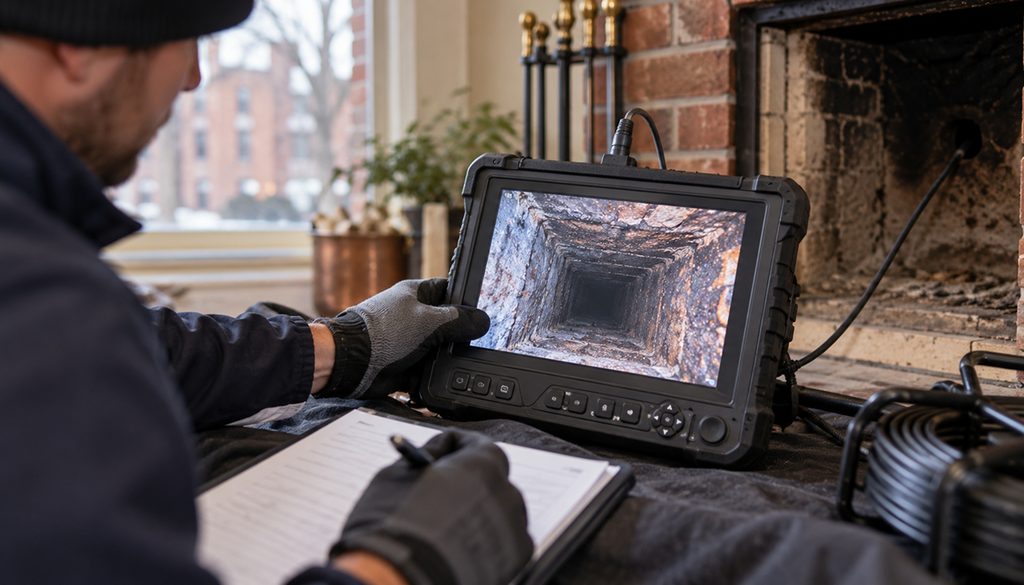
What Is a Chimney Video Inspection?
A chimney video inspection uses camera equipment to examine internal surfaces that may be difficult to see directly.
It can help document visible deposits, damaged surfaces, or obstructions. The quality of the assessment depends on access, visibility, equipment, and the areas examined.
CSIA’s published Level 2 inspection procedures include examination of accessible chimney areas and video scanning, or similar inspection, of the interior. A camera check alone should not be assumed to cover every other requirement of that inspection level.
Ask what the appointment includes and how any limitations will be recorded.
Latest Blog
Chimneys and dryer vents require different assessments, but changes in performance deserve attention in both systems. Our latest blog, Why Is My Dryer Taking So Long to Dry? NYC Homeowner’s Guide, explains possible airflow restrictions, lint buildup, and appliance problems.
Is a Smoke Test Included in Every Inspection?
No. A smoke test and a visual or camera inspection serve different purposes.
Smoke testing may be appropriate when investigating particular venting concerns. It does not replace examination of the chimney’s physical condition, and it should not be assumed necessary for every appointment.
Describe smoke entering the room or other operating problems when booking. The professional can explain which checks are appropriate and whether specialist testing requires a separate scope.
Does an Inspection Include Cleaning?
Not automatically. Inspection assesses condition, while cleaning removes suitable deposits and debris.
Some appointments combine these services. Others require separate arrangements, particularly when buildup limits visibility or access is difficult.
Confirm what is included before the visit. A recommendation for cleaning should explain why it is needed, rather than suggesting every inspection requires identical work.
What Happens If Damage Is Found?
The findings should guide the next step. Some concerns may need monitoring or routine maintenance, while others require repair or further investigation before continued use.
Our chimney repair and restoration services address assessed masonry, crown, and water-entry concerns. The appropriate work depends on the location and extent of deterioration.
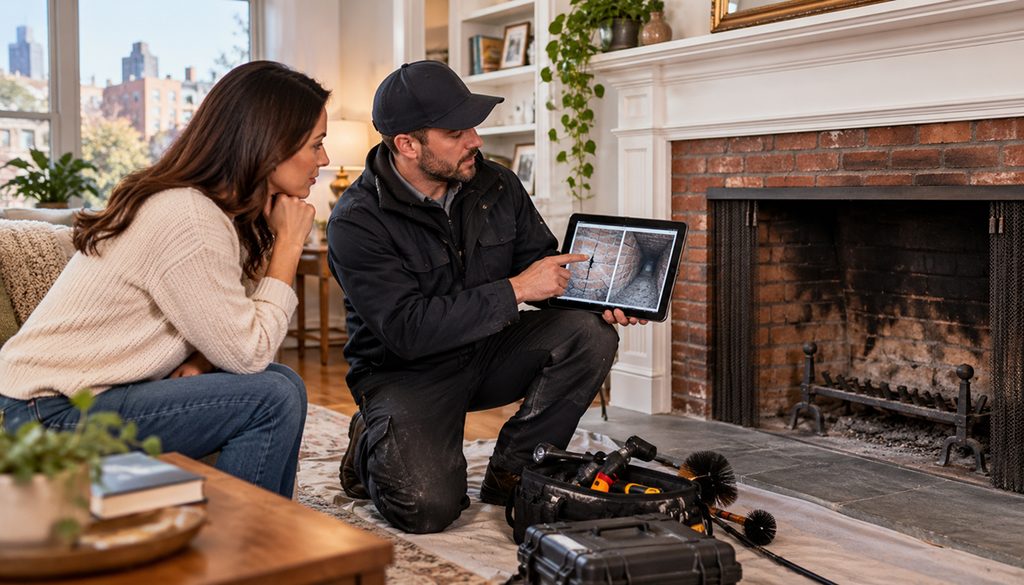
Ask for an explanation of the affected areas, the proposed work, and whether any issues remain unresolved. Photographs or written findings can help you understand the recommendation.
How Should You Prepare for the Appointment?
Allow the fireplace and appliance to cool before the visit, following the provider’s instructions. Keep the surrounding work area accessible and move fragile items away from the hearth.
Have maintenance records available and explain any building access restrictions in advance. Apartment properties may require coordination with the owner or building manager.
Do not climb onto the roof or dismantle components to prepare. Let the service provider explain the access arrangements needed.
Arrange an Inspection That Matches Your Chimney
A useful inspection explains what was examined, what was found, and what remains uncertain. Its scope should match your chimney, appliance, and reason for booking.
Contact Chimney Experts Cleaning & Repair with your property location, appliance details, and concerns. The team can discuss an appropriate assessment and explain any additional services that may be required.
Frequently Asked Questions
Does every inspection include a camera?
No. The method depends on the inspection scope and reason for the assessment. Confirm whether video scanning is included when booking.
Can an inspection find every hidden defect?
No. Access and visibility can limit what can be examined. The inspector should explain those limitations and any further investigation recommended.
Is chimney cleaning the same as inspection?
No. Cleaning removes deposits and debris, while inspection assesses condition. They may be booked together, but the scope should be confirmed.
Does finding damage mean the chimney needs rebuilding?
Not necessarily. Localized repairs, component replacement, or further assessment may be appropriate. Recommendations depend on the findings.

Chimney Experts Cleaning & Repair
Lorem ipsum dolor sit ametLorem ipsum dolor sit amet, consectetur adipiscing elit, sed do eiusmod tempor incididunt ut labore et dolore magna aliqua.
See All Blog